


Thermal oxidation of Ni films for p-type thin-film transistors
Literature Information
Publication Date
2013-03-15
DOI
10.1039/C3CP50197C
Impact Factor
3.676
Authors
Jie Jiang, Xinghui Wang, Qing Zhang, Jingqi Li, X. X. Zhang
View Original
Abstract
p-Type nanocrystal NiO-based thin-film transistors (TFTs) are fabricated by simply oxidizing thin Ni films at temperatures as low as 400 °C. The highest field-effect mobility in a linear region and the current on–off ratio are found to be 5.2 cm2 V−1 s−1 and 2.2 × 10³, respectively. X-ray diffraction, transmission electron microscopy and electrical performances of the TFTs with “top contact” and “bottom contact” channels suggest that the upper parts of the Ni films are clearly oxidized. In contrast, the lower parts in contact with the gate dielectric are partially oxidized to form a quasi-discontinuous Ni layer, which does not fully shield the gate electric field, but still conduct the source and drain current. This simple method for producing p-type TFTs may be promising for the next-generation oxide-based electronic applications.
Recommended Journals

Fibre Chemistry

Molecular Pharmacology

Pure and Applied Chemistry

Israel Journal of Chemistry

Planta Medica

European Journal of Wood and Wood Products

Journal of Physics and Chemistry of Solids

Proceedings of the National Academy of Sciences of the United States of America

Science Progress

Journal of Organometallic Chemistry
Related Literature
Anti-inflammatory unimolecular micelles of redox-responsive hyperbranched polycurcumin amphiphiles with enhanced anti-inflammatory efficacy in vitro and in vivo
Qiang Tang, Minglang Zou, Yongming Wang, Jinyi Mu, Yuanzi Wu, Zhenyu Lin
2023-11-14
Paper
DOI: 10.1039/D3PY01071F
Green synthesis of the copper and iron phthalocyanine-based metal–organic framework as an efficient catalyst for methylene blue dye degradation and oxidation of cyclohexane
Rupali S. Bhise, Yogesh A. Patil, Ganapati S. Shankarling
2023-08-22
Paper
DOI: 10.1039/D3RE00343D
Development of an open-source flow-through cyclic voltammetry cell for real-time inline reaction analytics
Hans-Michael Eggenweiler, Thomas Fuchss, Alena Sommer
2023-11-18
Communication
DOI: 10.1039/D3RE00535F
Facile synthesis of N-phenoxycarbonyl amino acids by a two-phase reaction for direct polymerization
2023-12-06
Paper
DOI: 10.1039/D3PY01031G
Efficient all polymer active layers with long-range ordered 1D p–n nanoheterojunctions confirmed by TEM tomography
Seon-Mi Jin, Jun Ho Hwang, Jaehyeong Park, Du Hyeon Ryu, BongSoo Kim, Chang Eun Song, Eunji Lee
2023-10-25
Paper
DOI: 10.1039/D3PY00718A
Efficient metal-free crosslinking of common propellant binders using nitrile oxide–alkene click ligation
Jinkang Dou, Lijie Cheng, Bojun Tan, Binghui Duan, Minghui Xu, Bozhou Wang, Ning Liu
2023-11-02
Paper
DOI: 10.1039/D3PY01081C
Monomer-controlled self-switchable polymerization: a metal-free strategy for synthesizing multiblock copolymers from epoxides, O-phthalaldehyde, and CO2
Haotian Zhang, Chenyang Hu
2023-10-12
Paper
DOI: 10.1039/D3PY01035J
Molecular engineering of donor–acceptor sp2-carbon-linked covalent organic frameworks for enhancing photocatalytic hydrogen production
Mei Xu, Shanshan Yu, Wanru Li, Chuangye Li, Yukai Peng, Fengtao Yu
2023-11-03
Paper
DOI: 10.1039/D3PY01069D
You might also like
Compound Q&A
What is the market or research trend for N-(4-Methoxybenzyl)-2-pyridinamine (CAS: 52818-63-0)?
N-(4-Methoxybenzyl)-2-pyridinamine (CAS: 52818-63-0) is increasingly being used ...
52818-63-0N-(4-Methoxybenzyl)-...
Compound Q&A
What precautions should be taken when handling Ethyl 4-(2-chlorophenyl)-1,3-thiazole-2-carboxylate (CAS: 1050507-06-6)?
When handling Ethyl 4-(2-chlorophenyl)-1,3-thiazole-2-carboxylate, appropriate p...
1050507-06-6Ethyl 4-(2-chlorophe...
Compound Q&A
What regulatory guidelines apply to diethyldiselane (CAS: 628-39-7)?
Diethyldiselane (CAS: 628-39-7) is classified under the Globally Harmonized Syst...
628-39-7Diethyldiselane
Compound Q&A
What is the market or research trend for oxocopper (CAS: 12053-18-8)?
The market for oxocopper (CAS: 12053-18-8) is primarily driven by its use in cat...
12053-18-8oxocopper; oxo-(oxoc...
Compound Q&A
What is the market or research trend for 5-{[(2-Methyl-2-propanyl)oxy]carbonyl}-5-azaspiro[2.4]heptane-7-carboxylic acid?
The market for 5-{[(2-Methyl-2-propanyl)oxy]carbonyl}-5-azaspiro[2.4]heptane-7-c...
1268519-54-55-{[(2-Methyl-2-prop...
Compound Q&A
What is 2-(1-Pyrrolidinyl)-4-pyridinamine (CAS: 35981-63-6)?
2-(1-Pyrrolidinyl)-4-pyridinamine is a chemical compound with the CAS number 359...
35981-63-62-(1-Pyrrolidinyl)-4...
Compound Q&A
What are the physical and chemical properties of 2-(3-Pyridinyl)-1-azabicyclo[2.2.2]octane (CAS: 91556-75-1)?
2-(3-Pyridinyl)-1-azabicyclo[2.2.2]octane (CAS: 91556-75-1) is a crystalline sol...
91556-75-12-(3-Pyridinyl)-1-az...
Compound Q&A
How is (S)-Alpha-allyl-proline hydrochloride (CAS: 129704-91-2) typically synthesized?
(S)-Alpha-allyl-proline hydrochloride is usually synthesized via a Wittig reacti...
129704-91-2(S)-Alpha-allyl-prol...
Compound Q&A
What is 3-Methyl-1,2-oxazole-5-carboxylic acid (CAS: 4857-42-5)?
3-Methyl-1,2-oxazole-5-carboxylic acid (CAS: 4857-42-5) is an organic compound w...
4857-42-53-Methyl-1,2-oxazole...
Compound Q&A
How is Lys-SMCC-DM1 (CAS: 1281816-04-3) typically synthesized?
Lys-SMCC-DM1 is synthesized via a multi-step process involving the coupling of S...
1281816-04-3Lys-SMCC-DM1
Source Journal
Physical Chemistry Chemical Physics

CiteScore:
5.5
Self-citation Rate:
10.3%
Articles per Year:
3036
Physical Chemistry Chemical Physics (PCCP) is an international journal co-owned by 19 physical chemistry and physics societies from around the world. This journal publishes original, cutting-edge research in physical chemistry, chemical physics and biophysical chemistry. To be suitable for publication in PCCP, articles must include significant innovation and/or insight into physical chemistry; this is the most important criterion that reviewers and Editors will judge against when evaluating submissions. The journal has a broad scope and welcomes contributions spanning experiment, theory, computation and data science. Topical coverage includes spectroscopy, dynamics, kinetics, statistical mechanics, thermodynamics, electrochemistry, catalysis, surface science, quantum mechanics, quantum computing and machine learning. Interdisciplinary research areas such as polymers and soft matter, materials, nanoscience, energy, surfaces/interfaces, and biophysical chemistry are welcomed if they demonstrate significant innovation and/or insight into physical chemistry. Joined experimental/theoretical studies are particularly appreciated when complementary and based on up-to-date approaches.
Recommended Compounds
![1-{3-[4-Amino-3-(4-phenoxyphenyl)-1H-pyrazolo[3,4-d]pyrimidin-1-yl]-1-piperidinyl}-2,3-dihydroxy-1-propanone structure](https://static.chemtradehub.com/structs/122/1226872-27-0-e037.webp "1-{3-[4-Amino-3-(4-phenoxyphenyl)-1H-pyrazolo[3,4-d]pyrimidin-1-yl]-1-piperidinyl}-2,3-dihydroxy-1-propanone structure")
1-{3-[4-Amino-3-(4-phenoxyphenyl)-1H-pyrazolo[3,4-d]pyrimidin-1-yl]-1-piperidinyl}-2,3-dihydroxy-1-propanone
CAS Number:
1226872-27-0
Molecular Formula:
C25H26N6O4

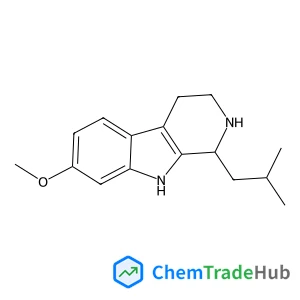
1-Isobutyl-7-methoxy-2,3,4,9-tetrahydro-1H-beta-carboline
CAS Number:
175975-76-5
Molecular Formula:
C16H22N2O
Recommended Suppliers






Disclaimer
This page provides academic journal information for reference and research purposes only. We are not affiliated with any journal publishers and do not handle publication submissions. For publication-related inquiries, please contact the respective journal publishers directly.
If you notice any inaccuracies in the information displayed, please contact us at support@chemtradehub.com. We will promptly review and address your concerns.