













Dextrin and poly(lactide)-based biocompatible and biodegradable nanogel for cancer targeted delivery of doxorubicin hydrochloride
Literature Information
Publication Date
2016-03-24
DOI
10.1039/C6PY00213G
Impact Factor
5.582
Authors
Dipankar Das, Priyapratim Patra, Paulomi Ghosh, Arun Prabhu Rameshbabu, Santanu Dhara, Sagar Pal
View Original
Abstract
Herein, we report the development and application of a novel biocompatible, chemically crosslinked nanogel for use in anticancer drug delivery. The nanogel [n-Dxt-p(lactide)] has been synthesized from dextrin and poly (lactide) by in situ crosslinking with a homobifunctional crosslinker through a conventional radical polymerization technique. The properties of the nanogel have been investigated using FTIR spectroscopy, 1H NMR spectroscopy, TGA, FESEM, TEM and DLS. The stimuli responsiveness of the nanogel has been detected by measuring its pH dependent swelling in different buffer solutions at 37 ± 0.5 °C. It was found that the size of nanogel was less than 10 nm. Degradation experiments using hen egg lysozyme revealed that the nanogel is biodegradable. In vitro cytocompatibility studies against human mesenchymal stem cell (hMSCs) suggested that the nanogel is non-toxic. The nanogel can efficiently load and encapsulate doxorubicin hydrochloride (Dox) within the matrix with 28.26 ± 0.20% loading efficiency and 91.16 ± 0.64% encapsulation efficiency. Additionally, the native nanogel showed non-toxic effects on MG 63 cancer cells, while Dox-loaded nanogel demonstrated high toxicity towards cancer cells. Because of its very small size, the nanogel can effortlessly enter into the cell cytoplasm and destroy cancer cells. The n-Dxt-p(lactide) nanogel released doxorubicin in a sustained manner and appears to be a high-quality option for doxorubicin hydrochloride delivery.
Related Literature
Grob-type fragmentation of an oxonium ylide generated from α-imino rhodium carbene
Tao Chen, Zhenxing Yan, Shengguo Duan, Ze-Feng Xu, Chuan-Ying Li
2021-09-19
Research Article
DOI: 10.1039/D1QO01226F
Iron promoted C3–H nitration of 2H-indazole: direct access to 3-nitro-2H-indazoles
Arumugavel Murugan, Koteswar Rao Gorantla, Bhabani S. Mallik, Duddu S. Sharada
2018-07-06
Communication
DOI: 10.1039/C8OB00931G
Computational study of the mechanism of amide bond formation via CS2-releasing 1,3-acyl transfer
Yuan-Ye Jiang, Tian-Tian Liu, Xue Sun, Zhong-Yan Xu, Xia Fan, Ling Zhu, Siwei Bi
2018-07-25
Paper
DOI: 10.1039/C8OB01338A
Nα-Amino acid containing privileged structures: design, synthesis and use in solid-phase peptide synthesis
Eva Schütznerová, Adam Přibylka
2018-07-12
Paper
DOI: 10.1039/C8OB01485J
Metal-free, base promoted sp2 C–H functionalization in the sulfonamidation of 1,4-naphthoquinones
Ramanathan Devenderan
2018-06-30
Paper
DOI: 10.1039/C8OB00818C
Enantioselective total synthesis and biological evaluation of (−)-solanacol
L. J. Bromhead, A. R. Norman, K. C. Snowden, B. J. Janssen, C. S. P. McErlean
2018-07-12
Paper
DOI: 10.1039/C8OB01287C
Efficient syntheses and anti-cancer activity of xenortides A–D including ent/epi-stereoisomers
N. Esmati, A. R. Maddirala, N. Hussein, H. Amawi, A. K. Tiwari, P. R. Andreana
2018-07-05
Paper
DOI: 10.1039/C8OB00452H
An MeSeSO3Na reagent for oxidative aminoselenomethylation of maleimides
Yujing Yao, Wenliang Zhang
2021-09-14
Research Article
DOI: 10.1039/D1QO01252E
Asymmetric organocatalytic synthesis of chiral 3,3-disubstituted oxindoles via a 1,6-conjugate addition reaction
Abdul Rahman, Qiaoxia Zhou, Xufeng Lin
2018-06-28
Paper
DOI: 10.1039/C8OB01169A
You might also like
Compound Q&A
What are the main uses of 4-Nitrophenyl phosphate disodium salt hexahydrate (CAS: 333338-18-4)?
4-Nitrophenyl phosphate disodium salt hexahydrate is primarily used as a substra...
333338-18-44-Nitrophenyl phosph...
Compound Q&A
What are the main uses of 2-(Trifluoromethyl)-1,3-oxazole-4-carboxylic Acid (CAS: 1060816-01-4)?
2-(Trifluoromethyl)-1,3-oxazole-4-carboxylic Acid (CAS: 1060816-01-4) is widely ...
1060816-01-42-(Trifluoromethyl)-...
Compound Q&A
How should 2-Fluoro-4-biphenylcarboxylic acid (CAS: 137045-30-8) be stored?
2-Fluoro-4-biphenylcarboxylic acid should be stored in a cool, dry place at room...
137045-30-82-Fluoro-4-biphenylc...
Compound Q&A
What industries use Prednisolone-21-Carboxylic Acid (CAS: 61549-70-0)?
Prednisolone-21-Carboxylic Acid is primarily used in the pharmaceutical industry...
61549-70-0Prednisolone-21-Carb...
Compound Q&A
How should 4-(Hydrazinomethyl)-1,2,3-benzenetriol (CAS: 3614-72-0) be stored?
4-(Hydrazinomethyl)-1,2,3-benzenetriol (CAS: 3614-72-0) should be stored in a co...
3614-72-04-(Hydrazinomethyl)-...
Compound Q&A
What industries use 4-Amino-1-methyl-1H-pyrazole-5-carboxylic acid hydrochloride (CAS: 92534-70-8)?
4-Amino-1-methyl-1H-pyrazole-5-carboxylic acid hydrochloride (CAS: 92534-70-8) i...
92534-70-84-Amino-1-methyl-1H-...
Compound Q&A
What regulatory guidelines apply to dehydropachymic acid (CAS: 77012-31-8)?
Dehydropachymic acid (CAS: 77012-31-8) is regulated by various agencies. It fall...
77012-31-8Dehydropachymic acid
Compound Q&A
What is the market or research trend for 6-[(2,2-Dimethylpropanoyl)amino]nicotinic acid (CAS: 898561-66-5)?
The market and research trends for 6-[(2,2-Dimethylpropanoyl)amino]nicotinic aci...
898561-66-56-[(2,2-Dimethylprop...
Compound Q&A
How should 1,10-Phenanthroline-2,9-dicarbaldehyde (CAS: 57709-62-3) be stored?
1,10-Phenanthroline-2,9-dicarbaldehyde should be stored in a cool, dry place awa...
57709-62-31,10-Phenanthroline-...
Compound Q&A
How is 5-Carbamoyl-11-oxo-10,11-dihydro-5H-dibenzo[b,f]azepin-10-yl acetate (CAS: 113952-21-9) typically synthesized?
5-Carbamoyl-11-oxo-10,11-dihydro-5H-dibenzo[b,f]azepin-10-yl acetate can be synt...
113952-21-95-Carbamoyl-11-oxo-1...
Source Journal
Polymer Chemistry

CiteScore:
8.6
Self-citation Rate:
7.3%
Articles per Year:
457
Polymer Chemistry welcomes submissions in all areas of polymer science that have a strong focus on macromolecular chemistry. Manuscripts may cover a broad range of fields, yet no direct application focus is required.
Recommended Compounds

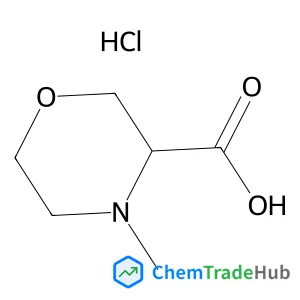
4-Methyl-3-morpholinecarboxylic acid hydrochloride (1:1)
CAS Number:
1240518-90-4
Molecular Formula:
C6H12ClNO3
Recommended Suppliers







Disclaimer
This page provides academic journal information for reference and research purposes only. We are not affiliated with any journal publishers and do not handle publication submissions. For publication-related inquiries, please contact the respective journal publishers directly.
If you notice any inaccuracies in the information displayed, please contact us at support@chemtradehub.com. We will promptly review and address your concerns.