












Back cover
Literature Information
Publication Date
DOI
10.1039/C6CP90142E
Impact Factor
3.676
Authors
View Original
Abstract
A graphical abstract is available for this content
Related Literature
Controlled direct growth of Al2O3-doped HfO2 films on graphene by H2O-based atomic layer deposition
Li Zheng, Xinhong Cheng, Yuehui Yu, Yahong Xie, Xiaolong Li, Zhongjian Wang
2014-12-11
Paper
DOI: 10.1039/C4CP04957H
Abstraction and addition kinetics of C2H radicals with CH4, C2H6, C3H8, C2H4, and C3H6: CVT/SCT/ISPE and hybrid meta-DFT methods
Manas Ranjan Dash, B. Rajakumar
2014-12-09
Paper
DOI: 10.1039/C4CP04677C
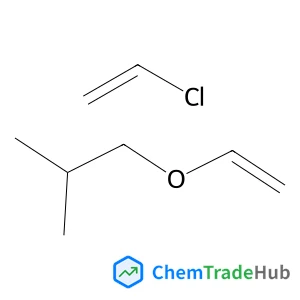
The molecular interfacial structure and plasticizer migration behavior of “green” plasticized poly(vinyl chloride)
Xiaoxian Zhang, Yaoxin Li, Jeanne M. Hankett, Zhan Chen
2015-01-02
Paper
DOI: 10.1039/C4CP05287K
Carbon nanoscroll from C4H/C4F-type graphene superlattice: MD and MM simulation insights
Yehan Tao, Xiaofang Li, Tiantian Wu, Yakang Jin, Zhongyang Zhang
2014-12-04
Paper
DOI: 10.1039/C4CP04102J
Phenolic resin-grafted reduced graphene oxide as a highly stable anode material for lithium ion batteries
Mochen Li, Huaihe Song, Xiaohong Chen, Jisheng Zhou, Zhaokun Ma
2014-12-18
Paper
DOI: 10.1039/C4CP04556D
Stabilities and electronic properties of monolayer MoS2 with one or two sulfur line vacancy defects
Yang Han, Ting Hu, Rui Li, Jian Zhou, Jinming Dong
2014-12-12
Paper
DOI: 10.1039/C4CP04319G
Formation of complex organic molecules in methanol and methanol–carbon monoxide ices exposed to ionizing radiation – a combined FTIR and reflectron time-of-flight mass spectrometry study
Surajit Maity, Ralf I. Kaiser, Brant M. Jones
2014-11-10
Paper
DOI: 10.1039/C4CP04149F
Voronoi dipole moments for the simulation of bulk phase vibrational spectra
Martin Thomas, Martin Brehm, Barbara Kirchner
2014-12-15
Paper
DOI: 10.1039/C4CP05272B
Exploring the binding mechanisms of MIF to CXCR2 using theoretical approaches
Lei Xu, Youyong Li, Dan Li, Peng Xu, Sheng Tian, Huiyong Sun, Hui Liu, Tingjun Hou
2014-12-11
Paper
DOI: 10.1039/C4CP05095A
Preparation of water-dispersible porous g-C3N4 with improved photocatalytic activity by chemical oxidation
Hui-Jun Li, Bo-Wen Sun, Li Sui, Dong-Jin Qian, Meng Chen
2014-12-11
Paper
DOI: 10.1039/C4CP05020G
You might also like
Compound Q&A
What precautions should be taken when handling 4-(2-Furylmethyl)thiomorpholine 1,1-dioxide (CAS: 79206-94-3)?
When handling 4-(2-Furylmethyl)thiomorpholine 1,1-dioxide (CAS: 79206-94-3), it ...
79206-94-34-(2-Furylmethyl)thi...
Compound Q&A
What precautions should be taken when handling 4-Chloro-N-[2-(4-morpholinyl)ethyl]benzamide (CAS: 71320-77-9)?
When handling 4-Chloro-N-[2-(4-morpholinyl)ethyl]benzamide (CAS: 71320-77-9), it...
71320-77-94-Chloro-N-[2-(4-mor...
Compound Q&A
How should waste containing 2-[2-(2-Methoxyethoxy)ethoxy]ethyl 4-methylbenzenesulfonate (CAS: 62921-74-8) be handled?
Waste containing this compound (CAS: 62921-74-8) should be handled according to ...
62921-74-82-[2-(2-Methoxyethox...
Compound Q&A
How should waste containing (S)-Methyl 2-amino-3-cyclohexylpropanoate be handled?
Waste containing (S)-Methyl 2-amino-3-cyclohexylpropanoate should be collected i...
40056-18-6(S)-Methyl 2-amino-3...
Compound Q&A
How is 5-({4-[(2S,4R)-4-Hydroxy-2-methyltetrahydro-2H-pyran-4-yl]-2-thienyl}sulfanyl)-1-methyl-1,3-dihydro-2H-indol-2-one (CAS: 166882-70-8) typically synthesized?
This compound can be synthesized using a multi-step process involving the conjug...
166882-70-85-({4-[(2S,4R)-4-Hyd...
Compound Q&A
Are there alternatives to (2E)-3-(3,4-Dichlorophenyl)acrylic acid (CAS: 7312-27-8) in synthesis?
There are several alternatives to (2E)-3-(3,4-Dichlorophenyl)acrylic acid in syn...
7312-27-8(2E)-3-(3,4-Dichloro...
Compound Q&A
How should Ethyl 6-(2-nitrophenyl)imidazo[2,1-b][1,3]thiazole-3-carboxylate (CAS: 925437-84-9) be stored?
Ethyl 6-(2-nitrophenyl)imidazo[2,1-b][1,3]thiazole-3-carboxylate (CAS: 925437-84...
925437-84-9Ethyl 6-(2-nitrophen...
Compound Q&A
How should waste containing 2-(1,3-Thiazol-2-yl)ethanamine (CAS: 18453-07-1) be handled?
Waste containing 2-(1,3-Thiazol-2-yl)ethanamine (CAS: 18453-07-1) should be coll...
18453-07-12-(1,3-Thiazol-2-yl)...
Compound Q&A
How is Methyl 5-iodo-2-methylbenzoate (CAS: 103440-54-6) typically synthesized?
Methyl 5-iodo-2-methylbenzoate can be synthesized through the iodination of meth...
103440-54-6Methyl 5-iodo-2-meth...
Compound Q&A
How is 5-Chloro[1,2,4]triazolo[1,5-a]pyridine (CAS: 1427399-34-5) typically synthesized?
5-Chloro[1,2,4]triazolo[1,5-a]pyridine is commonly synthesized via the condensat...
1427399-34-55-Chloro[1,2,4]triaz...
Source Journal
Physical Chemistry Chemical Physics

CiteScore:
5.5
Self-citation Rate:
10.3%
Articles per Year:
3036
Physical Chemistry Chemical Physics (PCCP) is an international journal co-owned by 19 physical chemistry and physics societies from around the world. This journal publishes original, cutting-edge research in physical chemistry, chemical physics and biophysical chemistry. To be suitable for publication in PCCP, articles must include significant innovation and/or insight into physical chemistry; this is the most important criterion that reviewers and Editors will judge against when evaluating submissions. The journal has a broad scope and welcomes contributions spanning experiment, theory, computation and data science. Topical coverage includes spectroscopy, dynamics, kinetics, statistical mechanics, thermodynamics, electrochemistry, catalysis, surface science, quantum mechanics, quantum computing and machine learning. Interdisciplinary research areas such as polymers and soft matter, materials, nanoscience, energy, surfaces/interfaces, and biophysical chemistry are welcomed if they demonstrate significant innovation and/or insight into physical chemistry. Joined experimental/theoretical studies are particularly appreciated when complementary and based on up-to-date approaches.
Recommended Compounds

Recommended Suppliers






Disclaimer
This page provides academic journal information for reference and research purposes only. We are not affiliated with any journal publishers and do not handle publication submissions. For publication-related inquiries, please contact the respective journal publishers directly.
If you notice any inaccuracies in the information displayed, please contact us at support@chemtradehub.com. We will promptly review and address your concerns.