













Stabilities and electronic properties of monolayer MoS2 with one or two sulfur line vacancy defects
Literature Information
Publication Date
2014-12-12
DOI
10.1039/C4CP04319G
Impact Factor
3.676
Authors
Yang Han, Ting Hu, Rui Li, Jian Zhou, Jinming Dong
View Original
Abstract
Stimulated by the recent experimental observation that single sulfur vacancies in monolayer MoS2 are mobile under the electron beam and easily agglomerate into the sulfur line vacancy defects [Phys. Rev. B: Condens. Matter Mater. Phys., 2013, 88, 035301], the stabilities and electronic properties of monolayer MoS2 with one or two staggered sulfur line vacancy defects (SV or DV), along the armchair or zigzag direction (AC–SV, AC–DV or ZZ–SV, ZZ–DV), have been investigated systematically by first-principles calculations. It is found that: (1) The ZZ-types (ZZ–SV and ZZ–DV) are more stable at different line vacancy densities than the AC-types (AC–SV and AC–DV), which is in good agreement with previous experimental findings. (2) More interestingly, it is predicted from our numerical calculations that, in the same ZZ-types, the ZZ–DV is more stable than the ZZ–SV, indicating that two separate ZZ–SV line vacancy defects tend to move closely to each other for coalescing into a ZZ–DV, which is in contrast to the AC-type with AC–SV being a little more stable than the AC–DV. (3) The monolayer MoS2 with the AC–SV or AC–DV are both semiconductors with a direct or an indirect band gap, respectively, both of which are significantly smaller than that of the perfect monolayer. (4) Furthermore, the out-of-plane distortion induced by strain release in the monolayer MoS2 with ZZ–SV or ZZ–DV is more severe than that with the AC-type, which can further considerably decrease the system's gap value or even make the gap nearly closed. Our calculation results will be helpful in future nanoelectronics and nanoelectromechanics based on MoS2 materials.
Related Literature
Combining the spin-separated exact two-component relativistic Hamiltonian with the equation-of-motion coupled-cluster method for the treatment of spin–orbit splittings of light and heavy elements
Zhanli Cao, Zhendong Li, Fan Wang, Wenjian Liu
2017-01-10
Paper
DOI: 10.1039/C6CP07588F
Exploring experimental fitness landscapes for chemical synthesis and property optimization
Katharine Moore Tibbetts, Xiao-Jiang Feng, Herschel Rabitz
2017-01-18
Paper
DOI: 10.1039/C6CP06187G
Effective pair potential between charged nanoparticles at high volume fractions
Guillaume Bareigts, Christophe Labbez
2017-01-20
Paper
DOI: 10.1039/C6CP08056A
Chemically induced topological zero mode at graphene armchair edges
M. Ziatdinov, H. Lim, S. Fujii, K. Kusakabe, M. Kiguchi, T. Enoki, Y. Kim
2017-01-17
Paper
DOI: 10.1039/C6CP08352H
Crystallization kinetics of cerium oxide nanoparticles formed by spontaneous, room-temperature hydrolysis of cerium(iv) ammonium nitrate in light and heavy water
Natasha W. Pettinger, Robert E. A. Williams, Jinquan Chen
2017-01-10
Paper
DOI: 10.1039/C6CP08227K
Intramolecular dehydration of biomass-derived sugar alcohols in high-temperature water
Natsumi Muramatsu, Naoki Mimura, Osamu Sato
2016-11-29
Paper
DOI: 10.1039/C6CP06831F
Correlated/non-correlated ion dynamics of charge-neutral ion couples: the origin of ionicity in ionic liquids
G. W. Driver, Y. Huang, A. Laaksonen, T. Sparrman, Y.-L. Wang, P.-O. Westlund
2016-12-08
Paper
DOI: 10.1039/C6CP05801A
Fast and accurate MAS–DNP simulations of large spin ensembles
Shimon Vega
2017-01-05
Paper
DOI: 10.1039/C6CP07881H
You might also like
Compound Q&A
What precautions should be taken when handling 4-(2-Furylmethyl)thiomorpholine 1,1-dioxide (CAS: 79206-94-3)?
When handling 4-(2-Furylmethyl)thiomorpholine 1,1-dioxide (CAS: 79206-94-3), it ...
79206-94-34-(2-Furylmethyl)thi...
Compound Q&A
What precautions should be taken when handling 4-Chloro-N-[2-(4-morpholinyl)ethyl]benzamide (CAS: 71320-77-9)?
When handling 4-Chloro-N-[2-(4-morpholinyl)ethyl]benzamide (CAS: 71320-77-9), it...
71320-77-94-Chloro-N-[2-(4-mor...
Compound Q&A
How should waste containing 2-[2-(2-Methoxyethoxy)ethoxy]ethyl 4-methylbenzenesulfonate (CAS: 62921-74-8) be handled?
Waste containing this compound (CAS: 62921-74-8) should be handled according to ...
62921-74-82-[2-(2-Methoxyethox...
Compound Q&A
How should waste containing (S)-Methyl 2-amino-3-cyclohexylpropanoate be handled?
Waste containing (S)-Methyl 2-amino-3-cyclohexylpropanoate should be collected i...
40056-18-6(S)-Methyl 2-amino-3...
Compound Q&A
How is 5-({4-[(2S,4R)-4-Hydroxy-2-methyltetrahydro-2H-pyran-4-yl]-2-thienyl}sulfanyl)-1-methyl-1,3-dihydro-2H-indol-2-one (CAS: 166882-70-8) typically synthesized?
This compound can be synthesized using a multi-step process involving the conjug...
166882-70-85-({4-[(2S,4R)-4-Hyd...
Compound Q&A
Are there alternatives to (2E)-3-(3,4-Dichlorophenyl)acrylic acid (CAS: 7312-27-8) in synthesis?
There are several alternatives to (2E)-3-(3,4-Dichlorophenyl)acrylic acid in syn...
7312-27-8(2E)-3-(3,4-Dichloro...
Compound Q&A
How should Ethyl 6-(2-nitrophenyl)imidazo[2,1-b][1,3]thiazole-3-carboxylate (CAS: 925437-84-9) be stored?
Ethyl 6-(2-nitrophenyl)imidazo[2,1-b][1,3]thiazole-3-carboxylate (CAS: 925437-84...
925437-84-9Ethyl 6-(2-nitrophen...
Compound Q&A
How should waste containing 2-(1,3-Thiazol-2-yl)ethanamine (CAS: 18453-07-1) be handled?
Waste containing 2-(1,3-Thiazol-2-yl)ethanamine (CAS: 18453-07-1) should be coll...
18453-07-12-(1,3-Thiazol-2-yl)...
Compound Q&A
How is Methyl 5-iodo-2-methylbenzoate (CAS: 103440-54-6) typically synthesized?
Methyl 5-iodo-2-methylbenzoate can be synthesized through the iodination of meth...
103440-54-6Methyl 5-iodo-2-meth...
Compound Q&A
How is 5-Chloro[1,2,4]triazolo[1,5-a]pyridine (CAS: 1427399-34-5) typically synthesized?
5-Chloro[1,2,4]triazolo[1,5-a]pyridine is commonly synthesized via the condensat...
1427399-34-55-Chloro[1,2,4]triaz...
Source Journal
Physical Chemistry Chemical Physics

CiteScore:
5.5
Self-citation Rate:
10.3%
Articles per Year:
3036
Physical Chemistry Chemical Physics (PCCP) is an international journal co-owned by 19 physical chemistry and physics societies from around the world. This journal publishes original, cutting-edge research in physical chemistry, chemical physics and biophysical chemistry. To be suitable for publication in PCCP, articles must include significant innovation and/or insight into physical chemistry; this is the most important criterion that reviewers and Editors will judge against when evaluating submissions. The journal has a broad scope and welcomes contributions spanning experiment, theory, computation and data science. Topical coverage includes spectroscopy, dynamics, kinetics, statistical mechanics, thermodynamics, electrochemistry, catalysis, surface science, quantum mechanics, quantum computing and machine learning. Interdisciplinary research areas such as polymers and soft matter, materials, nanoscience, energy, surfaces/interfaces, and biophysical chemistry are welcomed if they demonstrate significant innovation and/or insight into physical chemistry. Joined experimental/theoretical studies are particularly appreciated when complementary and based on up-to-date approaches.
Recommended Compounds
![1,2-Diphenyl-4-[2-(phenylsulfinyl)ethyl]-3,5-pyrazolidinedione structure](https://static.chemtradehub.com/structs/57-/57-96-5-efcc.webp "1,2-Diphenyl-4-[2-(phenylsulfinyl)ethyl]-3,5-pyrazolidinedione structure")
1,2-Diphenyl-4-[2-(phenylsulfinyl)ethyl]-3,5-pyrazolidinedione
CAS Number:
57-96-5
Molecular Formula:
C23H20N2O3S
![[4-Amino-2-(methylsulfanyl)-5-pyrimidinyl]methanol structure](https://static.chemtradehub.com/structs/588/588-36-3-fc73.webp "[4-Amino-2-(methylsulfanyl)-5-pyrimidinyl]methanol structure")
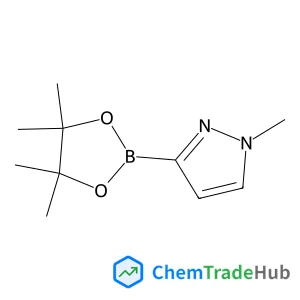
1-Methyl-3-(4,4,5,5-tetramethyl-1,3,2-dioxaborolan-2-yl)-1H-pyrazole
CAS Number:
1020174-04-2
Molecular Formula:
C10H17BN2O2

Recommended Suppliers





Disclaimer
This page provides academic journal information for reference and research purposes only. We are not affiliated with any journal publishers and do not handle publication submissions. For publication-related inquiries, please contact the respective journal publishers directly.
If you notice any inaccuracies in the information displayed, please contact us at support@chemtradehub.com. We will promptly review and address your concerns.