


Erbium ion implantation into diamond – measurement and modelling of the crystal structure
Literature Information
Publication Date
2017-01-26
DOI
10.1039/C6CP08851A
Impact Factor
3.676
Authors
Pavla Nekvindová, David Sedmidubský, Michal Hušák, Zdeněk Remeš, Marián Varga, Alexander Kromka, Roman Böttger, Jiří Oswald
View Original
Abstract
Diamond is proposed as an extraordinary material usable in interdisciplinary fields, especially in optics and photonics. In this contribution we focus on the doping of diamond with erbium as an optically active centre. In the theoretical part of the study based on DFT simulations we have developed two Er-doped diamond structural models with 0 to 4 carbon vacancies in the vicinity of the Er atom and performed geometry optimizations by the calculation of cohesive energies and defect formation energies. The theoretical results showed an excellent agreement between the calculated and experimental cohesive energies for the parent diamond. The highest values of cohesive energies and the lowest values of defect formation energies were obtained for models with erbium in the substitutional carbon position with 1 or 3 vacancies in the vicinity of the erbium atom. From the geometry optimization the structural model with 1 vacancy had an octahedral symmetry whereas the model with 3 vacancies had a coordination of 10 forming a trigonal structure with a hexagonal ring. In the experimental part, erbium doped diamond crystal samples were prepared by ion implantation of Er+ ions using ion implantation fluences ranging from 1 × 10¹⁴ ions per cm2 to 5 × 10¹⁵ ions per cm2. The experimental results revealed a high degree of diamond structural damage after the ion implantation process reaching up to 69% of disordered atoms in the samples. The prepared Er-doped diamond samples annealed at the temperatures of 400, 600 and 800 °C in a vacuum revealed clear luminescence, where the 〈110〉 cut sample has approximately 6–7 times higher luminescence intensity than the 〈001〉 cut sample with the same ion implantation fluence. The reported results are the first demonstration of the Er luminescence in the single crystal diamond structure for the near-infrared spectral region.
Recommended Journals

Critical Reviews in Solid State and Materials Sciences

Main Group Chemistry

Colloid Journal

Bioorganic & Medicinal Chemistry

Chinese Journal of Chemistry

Medicinal Chemistry Research

Polycyclic Aromatic Compounds

Bioorganic & Medicinal Chemistry Letters

Journal of the Indian Institute of Science

Herald of the Russian Academy of Sciences
Related Literature
Synthesis and spectroscopic observation of dendrimer-encapsulated gold nanoclusters
M. Linh Tran, Andrei V. Zvyagin, Taras Plakhotnik
2006-05-03
Communication
DOI: 10.1039/B602079H
Non-stoichiometry induced by differential oxygen/lone pair occupation in chiral bicyclic 1,1′-binaphthoxy cyclodiphosphazanes
Manab Chakravarty, Praveen Kommana, K. C. Kumara Swamy
2005-10-03
Communication
DOI: 10.1039/B509327A
Easy access to the family of thiazole N-oxides using HOF·CH3CN
Elizabeta Amir, Shlomo Rozen
2006-04-25
Communication
DOI: 10.1039/B602594C
A novel route for in-situ H2O2 generation from selective reduction of O2 by hydrazine using heterogeneous Pd catalyst in an aqueous medium
Vasant R. Choudhary, Chanchal Samanta, Prabhas Jana
2005-10-03
Communication
DOI: 10.1039/B510543A
Fabrication of bismuth subcarbonate nanotube arrays from bismuth citrate
Rong Chen, Man Ho So, Jun Yang, Feng Deng, Chi-Ming Che, Hongzhe Sun
2006-04-25
Communication
DOI: 10.1039/B601764A
Demonstration of the optical limiting effect for an hemiporphyrazine
Danilo Dini, Mario J. F. Calvete, Michael Hanack, Vincenzo Amendola, Moreno Meneghetti
2006-05-03
Communication
DOI: 10.1039/B601591C
Switching a molecular shuttle on and off: simple, pH-controlled pseudorotaxanes based on cucurbit[7]uril
Vladimir Sindelar, Serena Silvi, Angel E. Kaifer
2006-03-31
Communication
DOI: 10.1039/B601959E
Construction of superhydrophobic surfaces by fibrous aggregation of perfluoroalkyl chain-containing organogelators
Motoshi Yamanaka, Kazuki Sada, Mikiji Miyata, Kenji Hanabusa, Kazunori Nakano
2006-04-24
Communication
DOI: 10.1039/B601485B
Hosomi–Sakurai reactions of silacyclic allyl silanes
Jonathan D. Sellars, Patrick G. Steel, Michael J. Turner
2006-05-02
Communication
DOI: 10.1039/B602642G
You might also like
Compound Q&A
What are the main uses of 1H-Indazole-6-carbonitrile (CAS: 141290-59-7)?
1H-Indazole-6-carbonitrile finds applications in pharmaceuticals, where it serve...
141290-59-71H-Indazole-6-carbon...
Compound Q&A
How should waste containing Dioctyl (2E)-2-butenedioate (CAS: 2997-85-5) be handled?
Waste containing Dioctyl (2E)-2-butenedioate (CAS: 2997-85-5) should be collecte...
2997-85-5Dioctyl (2E)-2-buten...
Compound Q&A
What industries use Sodium [(1,2-benzoxazol-3-ylmethyl)sulfonyl]azanide (CAS: 68291-98-5)?
Sodium [(1,2-benzoxazol-3-ylmethyl)sulfonyl]azanide is primarily used in pharmac...
68291-98-5Sodium [(1,2-benzoxa...
Compound Q&A
Are there alternatives to Dimethyl 4-(4,4,5,5-tetramethyl-1,3,2-dioxaborolan-2-yl)-2,6-pyridinedicarboxylate (CAS: 741709-66-0) in synthesis?
Dimethyl 4-(4,4,5,5-tetramethyl-1,3,2-dioxaborolan-2-yl)-2,6-pyridinedicarboxyla...
741709-66-0Dimethyl 4-(4,4,5,5-...
Compound Q&A
How should waste containing 2-Fluoro-6-hydrazinopyridine (CAS: 80714-39-2) be handled?
Waste containing 2-Fluoro-6-hydrazinopyridine (CAS: 80714-39-2) should be manage...
80714-39-22-Fluoro-6-hydrazino...
Compound Q&A
What is 6-Formyl-2-pyridinecarboxylic acid (CAS: 499214-11-8)?
6-Formyl-2-pyridinecarboxylic acid is an organic compound with the molecular for...
499214-11-86-Formyl-2-pyridinec...
Compound Q&A
What is the market or research trend for 3-(3,4-dimethoxyphenyl)-2,5-dimethyl-N-(2-morpholin-4-ylethyl)pyrazolo[1,5-a]pyrimidin-7-amine (CAS: 900874-91-1)?
Research trends for this compound indicate a focus on its potential applications...
900874-91-13-(3,4-dimethoxyphen...
Compound Q&A
How is 9H-Tribenzo[b,d,f]azepine (CAS: 29875-73-8) typically synthesized?
9H-Tribenzo[b,d,f]azepine is typically synthesized via a multi-step process invo...
29875-73-89H-Tribenzo[b,d,f]az...
Compound Q&A
How is 1-Cyclopropyl-7-ethoxy-6-fluoro-8-methoxy-4-oxo-1,4-dihydro-3-quinolinecarboxylic acid (CAS: 1797982-51-4) typically synthesized?
1-Cyclopropyl-7-ethoxy-6-fluoro-8-methoxy-4-oxo-1,4-dihydro-3-quinolinecarboxyli...
1797982-51-41-Cyclopropyl-7-etho...
Compound Q&A
How should waste containing Methyl 3-oxo-1,2,3,4-tetrahydro-6-quinoxalinecarboxylate (CAS: 671820-52-3) be handled?
Waste containing Methyl 3-oxo-1,2,3,4-tetrahydro-6-quinoxalinecarboxylate (CAS: ...
671820-52-3Methyl 3-oxo-1,2,3,4...
Source Journal
Physical Chemistry Chemical Physics

CiteScore:
5.5
Self-citation Rate:
10.3%
Articles per Year:
3036
Physical Chemistry Chemical Physics (PCCP) is an international journal co-owned by 19 physical chemistry and physics societies from around the world. This journal publishes original, cutting-edge research in physical chemistry, chemical physics and biophysical chemistry. To be suitable for publication in PCCP, articles must include significant innovation and/or insight into physical chemistry; this is the most important criterion that reviewers and Editors will judge against when evaluating submissions. The journal has a broad scope and welcomes contributions spanning experiment, theory, computation and data science. Topical coverage includes spectroscopy, dynamics, kinetics, statistical mechanics, thermodynamics, electrochemistry, catalysis, surface science, quantum mechanics, quantum computing and machine learning. Interdisciplinary research areas such as polymers and soft matter, materials, nanoscience, energy, surfaces/interfaces, and biophysical chemistry are welcomed if they demonstrate significant innovation and/or insight into physical chemistry. Joined experimental/theoretical studies are particularly appreciated when complementary and based on up-to-date approaches.
Recommended Compounds
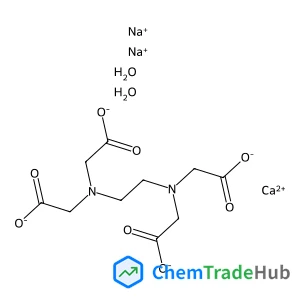
EthylenediaminetetraaceticacidcalciumDisodiumsalthydrate
CAS Number:
23411-34-9
Molecular Formula:
C10H16CaN2Na2O10

Trichloro(3,3,4,4,5,5,6,6,7,7,8,8,8-tridecafluorooctyl)silane
CAS Number:
78560-45-9
Molecular Formula:
C8H4Cl3F13Si
Recommended Suppliers





Disclaimer
This page provides academic journal information for reference and research purposes only. We are not affiliated with any journal publishers and do not handle publication submissions. For publication-related inquiries, please contact the respective journal publishers directly.
If you notice any inaccuracies in the information displayed, please contact us at support@chemtradehub.com. We will promptly review and address your concerns.