


Synthesis of highly functionalised plasma polymer films from protonated precursor ions via the plasma α–γ transition
Literature Information
Publication Date
2017-02-01
DOI
10.1039/C6CP08630F
Impact Factor
3.676
Authors
Solmaz Saboohi, Hans J. Griesser
View Original
Abstract
Chemically functionalized surfaces may be produced via plasma polymerization, however a high degree of functional group retention is often difficult to achieve. Here, the plasma polymerization of three structurally related ester precursors, ethyl isobutyrate (EIB), methyl isobutyrate (MIB) and ethyl trimethylacetate (ETMA) is compared at low and high pressure. In moving from a low pressure to higher pressure regime, significant changes in the plasma chemistry and resulting plasma polymer deposit were observed with much higher retention of chemical functionality at the higher pressure observed. Until now these changes would have been attributed to a decrease in the energy/molecule, however we show by direct measurement of the chemistry and physics of the plasma that there is fundamental shift in the properties of the plasma and surface interactions which explain the results. At low pressure (α regime) precursor fragmentation and neutral deposition dominate resulting in poor functional group retention. Increasing the pressure such that the sheath region close to surfaces becomes collisional (γ regime) favours production of protonated precursor ions which retain functionality and dominate the deposition process rather than radical species.
Recommended Journals

Journal of Asian Natural Products Research

Medicinal Chemistry Research

Chinese Journal of Chemistry

Atomization and Sprays

Acta Metallurgica Sinica-English Letters

Topics in Catalysis

Critical Reviews in Solid State and Materials Sciences

NDT & E International

Colloid Journal

Bioorganic & Medicinal Chemistry
Related Literature
Hexagonally ordered mesoporous ternary Li2O–TiO2–P2O5 oxides with high lithium content
Donglin Li, Haoshen Zhou, Itaru Honma, Masaki Ichihara
2005-09-20
Communication
DOI: 10.1039/B509028H
Synthesis and spectroscopic observation of dendrimer-encapsulated gold nanoclusters
M. Linh Tran, Andrei V. Zvyagin, Taras Plakhotnik
2006-05-03
Communication
DOI: 10.1039/B602079H
Cyclopolymerization of dimethyl dipropargylmalonate in supercritical carbon dioxide to give a highly regular polyene containing predominantly five-membered rings
Ji Won Pack, Young-Jae Hur, Hwayong Kim, Youn-Woo Lee
2005-09-21
Communication
DOI: 10.1039/B510046A
The direct α-zincation of amides, phosphonates and phosphine oxides by H–Zn exchange
Mark L. Hlavinka, Jeffrey F. Greco, John R. Hagadorn
2005-09-23
Communication
DOI: 10.1039/B509190J
Direction of unusual mixed-ligand metal–organic frameworks: a new type of 3-D polythreading involving 1-D and 2-D structural motifs and a 2-fold interpenetrating porous network
Miao Du, Xiu-Juan Jiang, Xiao-Jun Zhao
2005-10-07
Communication
DOI: 10.1039/B509875K
Towards large amounts of Janusnanoparticles through a protection–deprotection route
Stéphane Reculusa, Franck Pereira, Marie-Hélène Delville, Christophe Mingotaud, Etienne Duguet, Elodie Bourgeat-Lami, Serge Ravaine
2005-10-03
Communication
DOI: 10.1039/B507486J
Demonstration of the optical limiting effect for an hemiporphyrazine
Danilo Dini, Mario J. F. Calvete, Michael Hanack, Vincenzo Amendola, Moreno Meneghetti
2006-05-03
Communication
DOI: 10.1039/B601591C
Ag/SiO2: a novel catalyst with high activity and selectivity for hydrogenation of chloronitrobenzenes
Yangying Chen, Chuang Wang, Hongyang Liu, Jieshan Qiu, Xinhe Bao
2005-09-23
Communication
DOI: 10.1039/B509595F
Effect of residual monomer on the spectroscopic properties of polythiophenes
Yu Wang, Ashley A. Mills, William B. Euler, Brett L. Lucht
2006-04-11
Communication
DOI: 10.1039/B600793G
You might also like
Compound Q&A
What are the main uses of 1H-Indazole-6-carbonitrile (CAS: 141290-59-7)?
1H-Indazole-6-carbonitrile finds applications in pharmaceuticals, where it serve...
141290-59-71H-Indazole-6-carbon...
Compound Q&A
How should waste containing Dioctyl (2E)-2-butenedioate (CAS: 2997-85-5) be handled?
Waste containing Dioctyl (2E)-2-butenedioate (CAS: 2997-85-5) should be collecte...
2997-85-5Dioctyl (2E)-2-buten...
Compound Q&A
What industries use Sodium [(1,2-benzoxazol-3-ylmethyl)sulfonyl]azanide (CAS: 68291-98-5)?
Sodium [(1,2-benzoxazol-3-ylmethyl)sulfonyl]azanide is primarily used in pharmac...
68291-98-5Sodium [(1,2-benzoxa...
Compound Q&A
Are there alternatives to Dimethyl 4-(4,4,5,5-tetramethyl-1,3,2-dioxaborolan-2-yl)-2,6-pyridinedicarboxylate (CAS: 741709-66-0) in synthesis?
Dimethyl 4-(4,4,5,5-tetramethyl-1,3,2-dioxaborolan-2-yl)-2,6-pyridinedicarboxyla...
741709-66-0Dimethyl 4-(4,4,5,5-...
Compound Q&A
How should waste containing 2-Fluoro-6-hydrazinopyridine (CAS: 80714-39-2) be handled?
Waste containing 2-Fluoro-6-hydrazinopyridine (CAS: 80714-39-2) should be manage...
80714-39-22-Fluoro-6-hydrazino...
Compound Q&A
What is 6-Formyl-2-pyridinecarboxylic acid (CAS: 499214-11-8)?
6-Formyl-2-pyridinecarboxylic acid is an organic compound with the molecular for...
499214-11-86-Formyl-2-pyridinec...
Compound Q&A
What is the market or research trend for 3-(3,4-dimethoxyphenyl)-2,5-dimethyl-N-(2-morpholin-4-ylethyl)pyrazolo[1,5-a]pyrimidin-7-amine (CAS: 900874-91-1)?
Research trends for this compound indicate a focus on its potential applications...
900874-91-13-(3,4-dimethoxyphen...
Compound Q&A
How is 9H-Tribenzo[b,d,f]azepine (CAS: 29875-73-8) typically synthesized?
9H-Tribenzo[b,d,f]azepine is typically synthesized via a multi-step process invo...
29875-73-89H-Tribenzo[b,d,f]az...
Compound Q&A
How is 1-Cyclopropyl-7-ethoxy-6-fluoro-8-methoxy-4-oxo-1,4-dihydro-3-quinolinecarboxylic acid (CAS: 1797982-51-4) typically synthesized?
1-Cyclopropyl-7-ethoxy-6-fluoro-8-methoxy-4-oxo-1,4-dihydro-3-quinolinecarboxyli...
1797982-51-41-Cyclopropyl-7-etho...
Compound Q&A
How should waste containing Methyl 3-oxo-1,2,3,4-tetrahydro-6-quinoxalinecarboxylate (CAS: 671820-52-3) be handled?
Waste containing Methyl 3-oxo-1,2,3,4-tetrahydro-6-quinoxalinecarboxylate (CAS: ...
671820-52-3Methyl 3-oxo-1,2,3,4...
Source Journal
Physical Chemistry Chemical Physics

CiteScore:
5.5
Self-citation Rate:
10.3%
Articles per Year:
3036
Physical Chemistry Chemical Physics (PCCP) is an international journal co-owned by 19 physical chemistry and physics societies from around the world. This journal publishes original, cutting-edge research in physical chemistry, chemical physics and biophysical chemistry. To be suitable for publication in PCCP, articles must include significant innovation and/or insight into physical chemistry; this is the most important criterion that reviewers and Editors will judge against when evaluating submissions. The journal has a broad scope and welcomes contributions spanning experiment, theory, computation and data science. Topical coverage includes spectroscopy, dynamics, kinetics, statistical mechanics, thermodynamics, electrochemistry, catalysis, surface science, quantum mechanics, quantum computing and machine learning. Interdisciplinary research areas such as polymers and soft matter, materials, nanoscience, energy, surfaces/interfaces, and biophysical chemistry are welcomed if they demonstrate significant innovation and/or insight into physical chemistry. Joined experimental/theoretical studies are particularly appreciated when complementary and based on up-to-date approaches.
Recommended Compounds


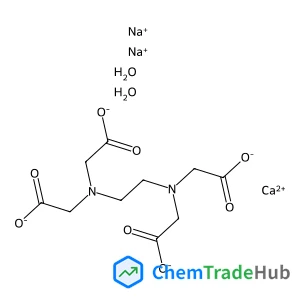
EthylenediaminetetraaceticacidcalciumDisodiumsalthydrate
CAS Number:
23411-34-9
Molecular Formula:
C10H16CaN2Na2O10
Recommended Suppliers




Disclaimer
This page provides academic journal information for reference and research purposes only. We are not affiliated with any journal publishers and do not handle publication submissions. For publication-related inquiries, please contact the respective journal publishers directly.
If you notice any inaccuracies in the information displayed, please contact us at support@chemtradehub.com. We will promptly review and address your concerns.