












Gold-supported two-dimensional cobalt oxyhydroxide (CoOOH) and multilayer cobalt oxide islands
Literature Information
Publication Date
2016-12-21
DOI
10.1039/C6CP07901F
Impact Factor
3.676
Authors
Jakob Fester, Alex Walton, Zheshen Li, Jeppe V. Lauritsen
View Original
Abstract
In the present study, we investigate the facile conversion of Co–O bilayer islands on a Au(111) surface into preferentially O–Co–O trilayers in an oxygen atmosphere and O–Co–O–Co–O multilayers at elevated temperature. We characterize and compare the island morphologies with scanning tunneling microscopy, X-ray photoemission spectroscopy (XPS) and valence band spectroscopy, and show that the cobalt oxidation state changes from Co2+ in bilayers to purely Co3+ in trilayers and a mixture of Co2+ and Co3+ in the multilayer morphology. In contrast to bilayers and multilayers, the trilayer structure appears to grow pseudomorphic with the Au(111) substrate, and in addition we reveal the presence of a hydroxyl overlayer on this island type as evidenced by the appearance of a superstructure in STM correlated with the fingerprints of OH species in XPS and valence band spectroscopy. The obtained layered morphology consisting of hydroxylated trilayer islands is identical to an exfoliated sheet of the β-CoOOH which is proposed to be the active phase of the cobalt oxide oxygen evolution reaction catalyst present in the electrochemical environment, and we note that this synthesized structure thus could serve as a valuable model catalyst.
Related Literature
Structure and Li+ ion transport in a mixed carbonate/LiPF6 electrolyte near graphite electrode surfaces: a molecular dynamics study
Mathew J. Boyer, Linas Vilčiauskas, Gyeong S. Hwang
2016-09-22
Paper
DOI: 10.1039/C6CP05140E
17O MAS NMR studies of oxo-based olefin metathesis catalysts: a critical assessment of signal enhancement methods
D. Grekov, Y. Bouhoute, I. Del Rosal, L. Maron, M. Taoufik, R. M. Gauvin, L. Delevoye
2016-09-09
Paper
DOI: 10.1039/C6CP04667C
Incorporating QM and solvation into docking for applications to GPCR targets
Minsup Kim, Art E. Cho
2016-09-16
Paper
DOI: 10.1039/C6CP04742D
Half-metallic YN2 monolayer: dual spin filtering, dual spin diode and spin Seebeck effects
Jie Li, Guoying Gao, Yi Min, Kailun Yao
2016-09-16
Paper
DOI: 10.1039/C6CP05626A
Gd(iii) and Mn(ii) complexes for dynamic nuclear polarization: small molecular chelate polarizing agents and applications with site-directed spin labeling of proteins
Thach V. Can, Marc A. Caporini, Albert A. Smith, Robert G. Griffin
2016-08-12
Paper
DOI: 10.1039/C6CP04623A
Theoretical study of the binding profile of an allosteric modulator NS-1738 with a chimera structure of the α7 nicotinic acetylcholine receptor
Guanglin Kuang, Xu Wang, Christer Halldin, Agneta Nordberg, Bengt Långström, Hans Ågren, Yaoquan Tu
2016-09-12
Paper
DOI: 10.1039/C6CP02278B
Reaction mechanisms of carbon dioxide, ethylene oxide and amines catalyzed by ionic liquids BmimBr and BmimOAc: a DFT study
Zhoujie Luo, Binsen Wang, Yuan Liu, Guohua Gao
2016-09-13
Paper
DOI: 10.1039/C6CP05291F
Calculations of the light absorption spectra of porphyrinoid chromophores for dye-sensitized solar cells
Dage Sundholm
2016-09-28
Paper
DOI: 10.1039/C6CP04627D
Resonant multiphoton ionisation probe of the photodissociation dynamics of ammonia
Adam D. Smith, Hannah M. Watts, Edward Jager, Daniel A. Horke, Emma Springate, Oliver Alexander, Cephise Cacho, Richard T. Chapman, Russell S. Minns
2016-09-16
Paper
DOI: 10.1039/C6CP05279G
Computational investigation into the gas-phase ozonolysis of the conjugated monoterpene α-phellandrene
F. A. Mackenzie-Rae, A. Karton, S. M. Saunders
2016-09-26
Paper
DOI: 10.1039/C6CP04695A
You might also like
Compound Q&A
Is 2-(2-chloroacetamido)-3-phenylpropanoic acid (CAS: 7765-11-9) safe?
2-(2-Chloroacetamido)-3-phenylpropanoic acid (CAS: 7765-11-9) is generally consi...
7765-11-92-(2-chloroacetamido...
Compound Q&A
Is 2-(Benzyloxy)-5-bromobenzoic acid (CAS: 62176-31-2) safe?
2-(Benzyloxy)-5-bromobenzoic acid can be handled safely if appropriate precautio...
62176-31-22-(Benzyloxy)-5-brom...
Compound Q&A
What is (4-Methyl-1,2,5-oxadiazol-3-yl)methanamine hydrochloride (CAS: 1159825-48-5)?
(4-Methyl-1,2,5-oxadiazol-3-yl)methanamine hydrochloride is a chemical compound ...
1159825-48-5(4-Methyl-1,2,5-oxad...
Compound Q&A
What is 2-(5-Hexylthiophen-2-yl)-4,4,5,5-tetramethyl-1,3,2-dioxaborolane (CAS: 917985-54-7)?
2-(5-Hexylthiophen-2-yl)-4,4,5,5-tetramethyl-1,3,2-dioxaborolane (CAS: 917985-54...
917985-54-72-(5-Hexylthiophen-2...
Compound Q&A
Are there alternatives to 4-(8-Methyl-9H-1,3-dioxolo[4,5-h][2,3]benzodiazepin-5-yl)benzenamine (CAS: 102771-26-6) in synthesis?
While 4-(8-Methyl-9H-1,3-dioxolo[4,5-h][2,3]benzodiazepin-5-yl)benzenamine (CAS:...
102771-26-64-(8-Methyl-9H-1,3-d...
Compound Q&A
What is the market or research trend for tert-butyl 3-hydroxy-4,5,7,8-tetrahydro-2H-pyrazolo[3,4-d]azepine-6-carboxylate (CAS: 851376-80-2)?
The market for tert-butyl 3-hydroxy-4,5,7,8-tetrahydro-2H-pyrazolo[3,4-d]azepine...
851376-80-2tert-butyl 3-hydroxy...
Compound Q&A
How should waste containing 3,5-Diamino-1H-pyrazole-4-carbonitrile (CAS: 6844-58-2) be handled?
Waste containing 3,5-Diamino-1H-pyrazole-4-carbonitrile (CAS: 6844-58-2) should ...
6844-58-23,5-Diamino-1H-pyraz...
Compound Q&A
How is (6-Fluoro-3-pyridinyl)boronic acid (CAS: 351019-18-6) typically synthesized?
(6-Fluoro-3-pyridinyl)boronic acid can be synthesized through the reaction of 6-...
351019-18-6(6-Fluoro-3-pyridiny...
Compound Q&A
What industries use Dibenzyl carbonimidoylbiscarbamate (CAS: 10065-79-9)?
Dibenzyl carbonimidoylbiscarbamate (CAS: 10065-79-9) finds applications in vario...
10065-79-9Dibenzyl carbonimido...
Compound Q&A
What is the market or research trend for (beta,beta,2,3,4,5,6-~2~H_7_)Phenylalanine (CAS: 74228-83-4)?
The market for (beta,beta,2,3,4,5,6-~2~H_7_)Phenylalanine (CAS: 74228-83-4) is g...
74228-83-4(beta,beta,2,3,4,5,6...
Source Journal
Physical Chemistry Chemical Physics

CiteScore:
5.5
Self-citation Rate:
10.3%
Articles per Year:
3036
Physical Chemistry Chemical Physics (PCCP) is an international journal co-owned by 19 physical chemistry and physics societies from around the world. This journal publishes original, cutting-edge research in physical chemistry, chemical physics and biophysical chemistry. To be suitable for publication in PCCP, articles must include significant innovation and/or insight into physical chemistry; this is the most important criterion that reviewers and Editors will judge against when evaluating submissions. The journal has a broad scope and welcomes contributions spanning experiment, theory, computation and data science. Topical coverage includes spectroscopy, dynamics, kinetics, statistical mechanics, thermodynamics, electrochemistry, catalysis, surface science, quantum mechanics, quantum computing and machine learning. Interdisciplinary research areas such as polymers and soft matter, materials, nanoscience, energy, surfaces/interfaces, and biophysical chemistry are welcomed if they demonstrate significant innovation and/or insight into physical chemistry. Joined experimental/theoretical studies are particularly appreciated when complementary and based on up-to-date approaches.
Recommended Compounds
![Ethyl ({[(2-methyl-2-propanyl)oxy]carbonyl}amino)(2-pyridinyl)acetate structure](https://static.chemtradehub.com/structs/313/313490-90-3-dd15.webp "Ethyl ({[(2-methyl-2-propanyl)oxy]carbonyl}amino)(2-pyridinyl)acetate structure")
Ethyl ({[(2-methyl-2-propanyl)oxy]carbonyl}amino)(2-pyridinyl)acetate
CAS Number:
313490-90-3
Molecular Formula:
C14H20N2O4
![Heptadecanoic Acid 3-[2-[4-(6-Fluoro-1,2-benzisoxazol-3-yl)-1-piperidinyl]ethyl]-6,7,8,9-tetrahydro-2-methyl-4-oxo-4H-pyrido[1,2-a]pyrimidin-9-yl Ester structure](https://static.chemtradehub.com/structs/140/1404053-62-8-9da4.webp "Heptadecanoic Acid 3-[2-[4-(6-Fluoro-1,2-benzisoxazol-3-yl)-1-piperidinyl]ethyl]-6,7,8,9-tetrahydro-2-methyl-4-oxo-4H-pyrido[1,2-a]pyrimidin-9-yl Ester structure")
Heptadecanoic Acid 3-[2-[4-(6-Fluoro-1,2-benzisoxazol-3-yl)-1-piperidinyl]ethyl]-6,7,8,9-tetrahydro-2-methyl-4-oxo-4H-pyrido[1,2-a]pyrimidin-9-yl Ester
CAS Number:
1404053-62-8
Molecular Formula:
C40H59FN4O4
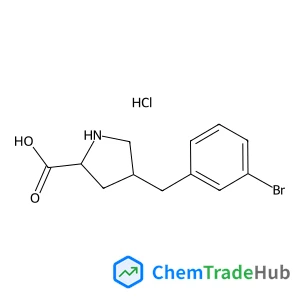
(2S,4R)-4-(3-Bromobenzyl)pyrrolidine-2-carboxylic acid hydrochloride
CAS Number:
1049734-10-2
Molecular Formula:
C12H15BrClNO2
![3-[4-(difluoromethoxy)phenyl]-2-({[(9H-fluoren-9-yl)methoxy]carbonyl}amino)propanoic acid structure](https://static.chemtradehub.com/structs/149/1496564-27-2-952e.webp "3-[4-(difluoromethoxy)phenyl]-2-({[(9H-fluoren-9-yl)methoxy]carbonyl}amino)propanoic acid structure")
3-[4-(difluoromethoxy)phenyl]-2-({[(9H-fluoren-9-yl)methoxy]carbonyl}amino)propanoic acid
CAS Number:
1496564-27-2
Molecular Formula:
C25H21F2NO5
Recommended Suppliers





Disclaimer
This page provides academic journal information for reference and research purposes only. We are not affiliated with any journal publishers and do not handle publication submissions. For publication-related inquiries, please contact the respective journal publishers directly.
If you notice any inaccuracies in the information displayed, please contact us at support@chemtradehub.com. We will promptly review and address your concerns.