


Reaction mechanisms of carbon dioxide, ethylene oxide and amines catalyzed by ionic liquids BmimBr and BmimOAc: a DFT study
Literature Information
Publication Date
2016-09-13
DOI
10.1039/C6CP05291F
Impact Factor
3.676
Authors
Zhoujie Luo, Binsen Wang, Yuan Liu, Guohua Gao
View Original
Abstract
The mechanisms of the one-pot conversion of carbon dioxide, ethylene oxide, and aniline to 3-phenyl-2-oxazolidionone catalyzed by the binary ionic liquids of BmimBr and BmimOAc were explored using the DFT methods. The complex reaction above comprises of two parallel reactions and a subsequent cascade reaction. DFT calculations on reaction pathways and energy profiles reveal that the electrostatic and hydrogen-bond effects of BmimBr play a crucial role in the parallel reactions for the generation of ethylene carbonate and 2-phenylamino-ethanol. Further, the subsequent cascade reaction to generate 3-phenyl-2-oxazolidinone catalyzed by BmimOAc follows a stepwise mechanism, which is more favorable than the concerted mechanism governed by BmimBr. In addition, BmimBr can accelerate the side reaction of aniline and ethylene oxide to yield a mixture of oligomers, which accords with the experimental observation. This theoretical work provides a deep insight into the catalytic roles of binary ionic liquids and also inspires us to design high efficient catalysts for the conversion of carbon dioxide further.
Recommended Journals

Journal of Natural Medicines

Current Opinion in Colloid & Interface Science

Russian Journal of Bioorganic Chemistry

Saudi Pharmaceutical Journal

Crystallography Reports

Journal of Saudi Chemical Society

Chemical Communications

Russian Journal of Coordination Chemistry

Russian Chemical Bulletin

Russian Journal of Organic Chemistry
Related Literature
Left or right cholesterics? A matter of helix handedness and curliness
Elisa Frezza, Alberta Ferrarini, Hima Bindu Kolli, Achille Giacometti, Giorgio Cinacchi
2014-06-16
Paper
DOI: 10.1039/C4CP01816H
Protonation induced shifting of electron-accepting centers in intramolecular charge transfer chromophores: a theoretical study
Tao Tang, Hong Chi, Tingting Lin
2014-08-05
Paper
DOI: 10.1039/C4CP02410A
Tunability of hybridized plasmonic waveguide mediated by surface plasmon polaritons
Ming-Ming Jiang, Chong-Xin Shan, De-Zhen Shen
2014-05-20
Paper
DOI: 10.1039/C4CP01437E
Electrodynamics of soft multilayered particles dispersions: dielectric permittivity and dynamic mobility
2014-06-09
Paper
DOI: 10.1039/C4CP01674B
Physicochemical characterization of nanoparticles and their behavior in the biological environment
K. A. Eslahian, D. Docter, T. Lang, R. Zellner, K. Nienhaus, R. H. Stauber, M. Maskos
2014-05-30
Perspective
DOI: 10.1039/C4CP00058G
A double-QM/MM method for investigating donor–acceptor electron-transfer reactions in solution
Jaroslav V. Burda
2014-08-08
Paper
DOI: 10.1039/C4CP02307B
Near-band-edge exciton polarization change in ZnO nanowires
Zaiping Zeng, Alexia Petoni, Christos S. Garoufalis, Sotirios Baskoutas, Gabriel Bester
2014-11-12
Paper
DOI: 10.1039/C4CP04551C
Solvent induced conformer specific photochemistry of guaiacol
Simon E. Greenough, Michael D. Horbury, James O. F. Thompson, Gareth M. Roberts, Tolga N. V. Karsili, Barbara Marchetti, Dave Townsend, Vasilios G. Stavros
2014-06-18
Paper
DOI: 10.1039/C4CP02424A
Molecular dynamics investigations of liquid–vapor interaction and adsorption of formaldehyde, oxocarbons, and water in graphitic slit pores
Pei-Hsing Huang, Shang-Chao Hung, Ming-Yueh Huang
2014-06-10
Paper
DOI: 10.1039/C4CP01922A
Is the contribution of cis and trans protonated 5-methylcytosine-SO3− isomers equal in the conversion to thymine-SO3− under bisulfite conditions? A theoretical perspective
Lu Wang, Caiying Zhang, Wenliang Wang, Suotian Min, Daodao Hu
2014-05-08
Paper
DOI: 10.1039/C4CP00387J
You might also like
Compound Q&A
Is 2-(2-chloroacetamido)-3-phenylpropanoic acid (CAS: 7765-11-9) safe?
2-(2-Chloroacetamido)-3-phenylpropanoic acid (CAS: 7765-11-9) is generally consi...
7765-11-92-(2-chloroacetamido...
Compound Q&A
Is 2-(Benzyloxy)-5-bromobenzoic acid (CAS: 62176-31-2) safe?
2-(Benzyloxy)-5-bromobenzoic acid can be handled safely if appropriate precautio...
62176-31-22-(Benzyloxy)-5-brom...
Compound Q&A
What is (4-Methyl-1,2,5-oxadiazol-3-yl)methanamine hydrochloride (CAS: 1159825-48-5)?
(4-Methyl-1,2,5-oxadiazol-3-yl)methanamine hydrochloride is a chemical compound ...
1159825-48-5(4-Methyl-1,2,5-oxad...
Compound Q&A
What is 2-(5-Hexylthiophen-2-yl)-4,4,5,5-tetramethyl-1,3,2-dioxaborolane (CAS: 917985-54-7)?
2-(5-Hexylthiophen-2-yl)-4,4,5,5-tetramethyl-1,3,2-dioxaborolane (CAS: 917985-54...
917985-54-72-(5-Hexylthiophen-2...
Compound Q&A
Are there alternatives to 4-(8-Methyl-9H-1,3-dioxolo[4,5-h][2,3]benzodiazepin-5-yl)benzenamine (CAS: 102771-26-6) in synthesis?
While 4-(8-Methyl-9H-1,3-dioxolo[4,5-h][2,3]benzodiazepin-5-yl)benzenamine (CAS:...
102771-26-64-(8-Methyl-9H-1,3-d...
Compound Q&A
What is the market or research trend for tert-butyl 3-hydroxy-4,5,7,8-tetrahydro-2H-pyrazolo[3,4-d]azepine-6-carboxylate (CAS: 851376-80-2)?
The market for tert-butyl 3-hydroxy-4,5,7,8-tetrahydro-2H-pyrazolo[3,4-d]azepine...
851376-80-2tert-butyl 3-hydroxy...
Compound Q&A
How should waste containing 3,5-Diamino-1H-pyrazole-4-carbonitrile (CAS: 6844-58-2) be handled?
Waste containing 3,5-Diamino-1H-pyrazole-4-carbonitrile (CAS: 6844-58-2) should ...
6844-58-23,5-Diamino-1H-pyraz...
Compound Q&A
How is (6-Fluoro-3-pyridinyl)boronic acid (CAS: 351019-18-6) typically synthesized?
(6-Fluoro-3-pyridinyl)boronic acid can be synthesized through the reaction of 6-...
351019-18-6(6-Fluoro-3-pyridiny...
Compound Q&A
What industries use Dibenzyl carbonimidoylbiscarbamate (CAS: 10065-79-9)?
Dibenzyl carbonimidoylbiscarbamate (CAS: 10065-79-9) finds applications in vario...
10065-79-9Dibenzyl carbonimido...
Compound Q&A
What is the market or research trend for (beta,beta,2,3,4,5,6-~2~H_7_)Phenylalanine (CAS: 74228-83-4)?
The market for (beta,beta,2,3,4,5,6-~2~H_7_)Phenylalanine (CAS: 74228-83-4) is g...
74228-83-4(beta,beta,2,3,4,5,6...
Source Journal
Physical Chemistry Chemical Physics

CiteScore:
5.5
Self-citation Rate:
10.3%
Articles per Year:
3036
Physical Chemistry Chemical Physics (PCCP) is an international journal co-owned by 19 physical chemistry and physics societies from around the world. This journal publishes original, cutting-edge research in physical chemistry, chemical physics and biophysical chemistry. To be suitable for publication in PCCP, articles must include significant innovation and/or insight into physical chemistry; this is the most important criterion that reviewers and Editors will judge against when evaluating submissions. The journal has a broad scope and welcomes contributions spanning experiment, theory, computation and data science. Topical coverage includes spectroscopy, dynamics, kinetics, statistical mechanics, thermodynamics, electrochemistry, catalysis, surface science, quantum mechanics, quantum computing and machine learning. Interdisciplinary research areas such as polymers and soft matter, materials, nanoscience, energy, surfaces/interfaces, and biophysical chemistry are welcomed if they demonstrate significant innovation and/or insight into physical chemistry. Joined experimental/theoretical studies are particularly appreciated when complementary and based on up-to-date approaches.
Recommended Compounds
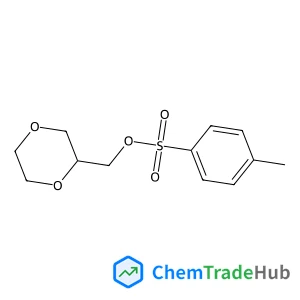
(S)-(1,4-Dioxan-2-yl)methyl 4-methylbenzenesulfonate
CAS Number:
917882-64-5
Molecular Formula:
C12H16O5S

![Ethyl ({[(2-methyl-2-propanyl)oxy]carbonyl}amino)(2-pyridinyl)acetate structure](https://static.chemtradehub.com/structs/313/313490-90-3-dd15.webp "Ethyl ({[(2-methyl-2-propanyl)oxy]carbonyl}amino)(2-pyridinyl)acetate structure")
Ethyl ({[(2-methyl-2-propanyl)oxy]carbonyl}amino)(2-pyridinyl)acetate
CAS Number:
313490-90-3
Molecular Formula:
C14H20N2O4
Recommended Suppliers




Disclaimer
This page provides academic journal information for reference and research purposes only. We are not affiliated with any journal publishers and do not handle publication submissions. For publication-related inquiries, please contact the respective journal publishers directly.
If you notice any inaccuracies in the information displayed, please contact us at support@chemtradehub.com. We will promptly review and address your concerns.