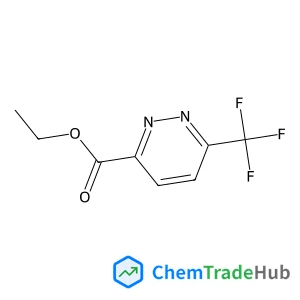
Ethyl 6-(trifluoromethyl)pyridazine-3-carboxylate
CAS Number:
1192155-06-8
Molecular Formula:
C8H7F3N2O2
Cancer immunotherapy, an approach of targeting immune cells to attack tumor cells, has been suggested to be a promising way for cancer treatment recently. However, the successful application of this approach warrants a deeper understanding of the intricate interplay between cancer cells and the immune system. Especially, the mechanisms of immunotherapy remain elusive. In this work, we constructed a cancer–immunity interplay network by incorporating interactions among cancer cells and some representative immune cells, and uncovered the potential landscape of the cancer–immunity network. Three attractors emerge on the landscape, representing the cancer state, the immune state, and the hybrid state, which can correspond to escape, elimination, and equilibrium phases in the immunoediting theory, respectively. We quantified the transition processes between the cancer state and the immune state by calculating transition actions and identifying the corresponding minimum action paths (MAPs) between these two attractors. The transition actions, directly calculated from the high dimensional system, are correlated with the barrier heights from the landscape, but provide a more precise description of the dynamics of a system. By optimizing the transition actions from the cancer state to the immune state, we identified some optimal combinations of anticancer targets. Our combined approach of the landscape and optimization of transition actions offers a framework to study the stochastic dynamics and identify the optimal combination of targets for the cancer–immunity interplay, and can be applied to other cell communication networks or gene regulatory networks.
Patigul Imin, Fuyong Cheng, Alex Adronov
DOI: 10.1039/C0PY00286K
Maria Kavallaris, Volga Bulmus
DOI: 10.1039/C0PY00256A
Sharon K. Hamilton, Artez L. Sims, Jenna Donavan, Eva Harth
DOI: 10.1039/C0PY00342E
Graeme Moad, Ming Chen, Matthias Häussler, Almar Postma, Ezio Rizzardo, San H. Thang
DOI: 10.1039/C0PY00179A
Jan Merna
DOI: 10.1039/C0PY00072H
Miaojun Ding, Hongyuan Hu
DOI: 10.1039/C0PY00170H
M. Baklar, S. Barard, D. Sparrowe, R. M. Wilson, T. Kreouzis
DOI: 10.1039/C0PY00056F
Mathias Glassner, Jana Falkenhagen, Christopher Barner-Kowollik
DOI: 10.1039/B9PY00273A
6-(3-Fluorophenyl)picolinic acid is generally considered safe for laboratory use...
(3R)-3-Pyrrolidinol is used in the pharmaceutical industry as a precursor for dr...
When handling (4R,5R)-4,5-Diethoxycarbonyl-2,2-dimethyldioxolane (CAS: 59779-75-...
1-(6-Chloroimidazo[1,2-b]pyridazin-3-yl)ethanone is often synthesized via a mult...
The market for N-Ethyl-3,4-dimethylbenzylamine (CAS: 39180-83-1) remains steady,...
Tert-butyl 3-(pyrrolidin-1-yl)azetidine-1-carboxylate is a chemical compound wit...
1-Bromo-3-chloro-2,4-dimethoxybenzene (CAS: 1228956-93-1) falls under the classi...
The safety of 8-Bromo-2-methyl-3,4-dihydroisoquinolin-1(2H)-one (CAS: 1368622-07...
Benzyl [(3S)-2,6-dioxo-3-piperidinyl]carbamate is generally safe when handled wi...
1-{[4-(4,4,5,5-Tetramethyl-1,3,2-dioxaborolan-2-yl)phenyl]sulfonyl}pyrrolidine s...

Physical Chemistry Chemical Physics (PCCP) is an international journal co-owned by 19 physical chemistry and physics societies from around the world. This journal publishes original, cutting-edge research in physical chemistry, chemical physics and biophysical chemistry. To be suitable for publication in PCCP, articles must include significant innovation and/or insight into physical chemistry; this is the most important criterion that reviewers and Editors will judge against when evaluating submissions. The journal has a broad scope and welcomes contributions spanning experiment, theory, computation and data science. Topical coverage includes spectroscopy, dynamics, kinetics, statistical mechanics, thermodynamics, electrochemistry, catalysis, surface science, quantum mechanics, quantum computing and machine learning. Interdisciplinary research areas such as polymers and soft matter, materials, nanoscience, energy, surfaces/interfaces, and biophysical chemistry are welcomed if they demonstrate significant innovation and/or insight into physical chemistry. Joined experimental/theoretical studies are particularly appreciated when complementary and based on up-to-date approaches.
![2-Methyl-2-propanyl [(2S)-1-hydroxy-3-(4-hydroxyphenyl)-2-propanyl]carbamate structure](https://static.chemtradehub.com/structs/833/83345-46-4-eec2.webp "2-Methyl-2-propanyl [(2S)-1-hydroxy-3-(4-hydroxyphenyl)-2-propanyl]carbamate structure")
![2-[({[(2-Methyl-2-propanyl)oxy]carbonyl}amino)methyl]isonicotinic acid structure](https://static.chemtradehub.com/structs/473/473924-63-9-973b.webp "2-[({[(2-Methyl-2-propanyl)oxy]carbonyl}amino)methyl]isonicotinic acid structure")