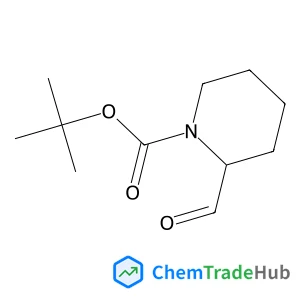
2-Methyl-2-propanyl (2R)-2-formyl-1-piperidinecarboxylate
CAS Number:
134526-69-5
Molecular Formula:
C11H19NO3
Patigul Imin, Fuyong Cheng, Alex Adronov
We have synthesized a series of conjugated polymers, including poly[(2,7-(9,9-dioctylfluorene)-alt-2,7-(9,9-didodecylfluorene)] (PF), poly[(2,7-(9,9-dioctylfluorene)-alt-2,5-(3-dodecylthiophene)] (PFT), and poly(3-dodecylthiophene) (PT). Non-covalent functionalization of single walled carbon nanotubes (SWNTs) with these polymers can impart good solubility to nanotubes in a number of organic solvents, including THF, dichlorobenzene, chloroform, and toluene. Solution and solid-state characterization of the resulting polymer–SWNT composites are described, including UV-Vis absorption and Raman spectroscopy. It was found that the UV-Vis absorption maximum of the polymers was red-shifted in their corresponding composites due to the planarization of the polymer backbone following adsorption upon the SWNT surface. Polymer–SWNT complexes also exhibited good solution stability at elevated temperature in THF and dichlorobenzene, with no significant SWNT sedimentation observed at elevated temperatures. Both UV-Vis absorption and Raman spectroscopy results indicated that the interaction of PT with the nanotubes was different from those of PF and PFT, suggesting that the choice of aromatic ring in the polymer structures plays an important role in the supramolecular complex formation with carbon nanotubes.
Sílvia Illa-Tuset, David C. Malaspina, Jordi Faraudo
DOI: 10.1039/C8CP04505D
Ranganathan Krishnan, Shiuan-Yau Wu, Hsin-Tsung Chen
DOI: 10.1039/C8CP04745F
Evgeny A. Bondarenko, Eugene A. Streltsov, Alexander V. Mazanik, Anatoly I. Kulak, Vytautas Grivickas, Patrik Ščajev, Ekaterina V. Skorb
DOI: 10.1039/C8CP03225D
Tao Jing, Dongmei Liang, Jinxin Hao, Mingsen Deng, Shaohong Cai
DOI: 10.1039/C9CP00028C
Lemos P. S., Silva G. S., Roca R. A., Assis M., Torres-Mendieta R., Beltrán-Mir H., Mínguez-Vega G., Cordoncillo E., Andrés J., Longo E.
DOI: 10.1039/C8CP07263A
Jonas Warneke, Szymon Z. Konieczka, Gao-Lei Hou, Edoardo Aprà, Christoph Kerpen, Fabian Keppner, Thomas C. Schäfer, Michael Deckert, Zheng Yang, Eric J. Bylaska, Grant E. Johnson, Julia Laskin, Xue-Bin Wang, Maik Finze
DOI: 10.1039/C8CP05313H
Stefan Permien, Tobias Neumann, Sylvio Indris, Gero Neubüser, Lorenz Kienle, Andy Fiedler, Anna-Lena Hansen, Diego Gianolio, Thomas Bredow, Wolfgang Bensch
DOI: 10.1039/C8CP02919A
Amreen Bano, Jyoti Krishna, Devendra K. Pandey, N. K. Gaur
DOI: 10.1039/C8CP07038E
Xiaoguang Li, Jinlong Yang
DOI: 10.1039/C8CP07091A
Stella Gypser, Peter Leinweber, Dirk Freese
DOI: 10.1039/C8CP07168C
6-(3-Fluorophenyl)picolinic acid is generally considered safe for laboratory use...
(3R)-3-Pyrrolidinol is used in the pharmaceutical industry as a precursor for dr...
When handling (4R,5R)-4,5-Diethoxycarbonyl-2,2-dimethyldioxolane (CAS: 59779-75-...
1-(6-Chloroimidazo[1,2-b]pyridazin-3-yl)ethanone is often synthesized via a mult...
The market for N-Ethyl-3,4-dimethylbenzylamine (CAS: 39180-83-1) remains steady,...
Tert-butyl 3-(pyrrolidin-1-yl)azetidine-1-carboxylate is a chemical compound wit...
1-Bromo-3-chloro-2,4-dimethoxybenzene (CAS: 1228956-93-1) falls under the classi...
The safety of 8-Bromo-2-methyl-3,4-dihydroisoquinolin-1(2H)-one (CAS: 1368622-07...
Benzyl [(3S)-2,6-dioxo-3-piperidinyl]carbamate is generally safe when handled wi...
1-{[4-(4,4,5,5-Tetramethyl-1,3,2-dioxaborolan-2-yl)phenyl]sulfonyl}pyrrolidine s...

Polymer Chemistry welcomes submissions in all areas of polymer science that have a strong focus on macromolecular chemistry. Manuscripts may cover a broad range of fields, yet no direct application focus is required.