













Toward accurately modeling N-methylated cyclic peptides
Literature Information
Publication Date
2017-02-03
DOI
10.1039/C6CP07700E
Impact Factor
3.676
Authors
Diana P. Slough, Hongtao Yu, Sean M. McHugh, Yu-Shan Lin
View Original
Abstract
Cyclic peptides have unique properties and can target protein surfaces specifically and potently. N-Methylation provides a promising way to further optimize the pharmacokinetic and structural profiles of cyclic peptides. The capability to accurately model structures adopted by N-methylated cyclic peptides would facilitate rational design of this interesting and useful class of molecules. We apply molecular dynamics simulations with advanced enhanced sampling methods to efficiently characterize the structural ensembles of N-methylated cyclic peptides, while simultaneously evaluating the overall performance of several simulation force fields. We find that one of the residue-specific force fields, RSFF2, is able to recapitulate experimental structures of the N-methylated cyclic peptide benchmarks tested here when the correct amide isomers are used as initial configurations and enforced during the simulations. Thus, using our simulation approach, it is possible to accurately and efficiently predict the structures of N-methylated cyclic peptides if sufficient information is available to determine the correct amide cis/trans configuration. Moreover, our results suggest that, upon further optimization of RSFF2 to more reliably predict cis/trans isomers, molecular dynamics simulations will be able to de novo predict N-methylated cyclic peptides in the near future, strongly motivating such continued optimization.
Recommended Journals
Related Literature
Achiral benzophenoneligand–rhodium complex with chiral diamine activator for high enantiocontrol in asymmetric transfer hydrogenation
Koichi Mikami, Kazuki Wakabayashi, Yukinori Yusa, Kohsuke Aikawa
2006-05-03
Communication
DOI: 10.1039/B517585B
Low pressure Pd-catalyzed carbonylation in an ionic liquid using a multiphase microflow system
Md. Taifur Rahman, Takahide Fukuyama, Naoya Kamata, Masaaki Sato, Ilhyong Ryu
2006-04-28
Communication
DOI: 10.1039/B600970K
Assembled bright green fluorescent zinc coordination polymer
Ruibiao Fu, Shengchang Xiang, Shengmin Hu, Longsheng Wang, Yaming Li, Xihe Huang, Xintao Wu
2005-09-22
Communication
DOI: 10.1039/B509695B
Organolithium-mediated conversion of β-functionalised aziridines into alkynyl amino alcohols and diamines
Jianhui Huang, Peter O'Brien
2005-10-20
Communication
DOI: 10.1039/B510920E
Fabrication of bismuth subcarbonate nanotube arrays from bismuth citrate
Rong Chen, Man Ho So, Jun Yang, Feng Deng, Chi-Ming Che, Hongzhe Sun
2006-04-25
Communication
DOI: 10.1039/B601764A
Carbohydrate triazoles and isoxazoles as inhibitors of galectins-1 and -3
Denis Giguère, Ramesh Patnam, Marc-André Bellefleur, Christian St-Pierre, Sachiko Sato, René Roy
2006-03-16
Communication
DOI: 10.1039/B517529A
Facile and reproducible syntheses of bis(dialkylselenophosphenyl)-selenides and -diselenides: X-ray structures of (iPr2PSe)2Se, (iPr2PSe)2Se2 and (Ph2PSe)2Se
Chinh Q. Nguyen, Adekunle Adeogun, Mohammad Afzaal, Mohammad A. Malik, Paul O'Brien
2006-04-21
Communication
DOI: 10.1039/B603197H
Anion-templated assembly of interpenetrated and interlocked structures
Paul D. Beer, Mark R. Sambrook, David Curiel
2006-03-08
Feature Article
DOI: 10.1039/B516435B
Two novel non-viral gene delivery vectors: low molecular weight polyethylenimine cross-linked by (2-hydroxypropyl)-β-cyclodextrin or (2-hydroxypropyl)-γ-cyclodextrin
Hongliang Huang, Guping Tang, Qingqing Wang, Da Li, Fenping Shen, Jun Zhou, Hai Yu
2006-03-22
Communication
DOI: 10.1039/B601130F
You might also like
Compound Q&A
What are the main uses of 1H-Indazole-6-carbonitrile (CAS: 141290-59-7)?
1H-Indazole-6-carbonitrile finds applications in pharmaceuticals, where it serve...
141290-59-71H-Indazole-6-carbon...
Compound Q&A
How should waste containing Dioctyl (2E)-2-butenedioate (CAS: 2997-85-5) be handled?
Waste containing Dioctyl (2E)-2-butenedioate (CAS: 2997-85-5) should be collecte...
2997-85-5Dioctyl (2E)-2-buten...
Compound Q&A
What industries use Sodium [(1,2-benzoxazol-3-ylmethyl)sulfonyl]azanide (CAS: 68291-98-5)?
Sodium [(1,2-benzoxazol-3-ylmethyl)sulfonyl]azanide is primarily used in pharmac...
68291-98-5Sodium [(1,2-benzoxa...
Compound Q&A
Are there alternatives to Dimethyl 4-(4,4,5,5-tetramethyl-1,3,2-dioxaborolan-2-yl)-2,6-pyridinedicarboxylate (CAS: 741709-66-0) in synthesis?
Dimethyl 4-(4,4,5,5-tetramethyl-1,3,2-dioxaborolan-2-yl)-2,6-pyridinedicarboxyla...
741709-66-0Dimethyl 4-(4,4,5,5-...
Compound Q&A
How should waste containing 2-Fluoro-6-hydrazinopyridine (CAS: 80714-39-2) be handled?
Waste containing 2-Fluoro-6-hydrazinopyridine (CAS: 80714-39-2) should be manage...
80714-39-22-Fluoro-6-hydrazino...
Compound Q&A
What is 6-Formyl-2-pyridinecarboxylic acid (CAS: 499214-11-8)?
6-Formyl-2-pyridinecarboxylic acid is an organic compound with the molecular for...
499214-11-86-Formyl-2-pyridinec...
Compound Q&A
What is the market or research trend for 3-(3,4-dimethoxyphenyl)-2,5-dimethyl-N-(2-morpholin-4-ylethyl)pyrazolo[1,5-a]pyrimidin-7-amine (CAS: 900874-91-1)?
Research trends for this compound indicate a focus on its potential applications...
900874-91-13-(3,4-dimethoxyphen...
Compound Q&A
How is 9H-Tribenzo[b,d,f]azepine (CAS: 29875-73-8) typically synthesized?
9H-Tribenzo[b,d,f]azepine is typically synthesized via a multi-step process invo...
29875-73-89H-Tribenzo[b,d,f]az...
Compound Q&A
How is 1-Cyclopropyl-7-ethoxy-6-fluoro-8-methoxy-4-oxo-1,4-dihydro-3-quinolinecarboxylic acid (CAS: 1797982-51-4) typically synthesized?
1-Cyclopropyl-7-ethoxy-6-fluoro-8-methoxy-4-oxo-1,4-dihydro-3-quinolinecarboxyli...
1797982-51-41-Cyclopropyl-7-etho...
Compound Q&A
How should waste containing Methyl 3-oxo-1,2,3,4-tetrahydro-6-quinoxalinecarboxylate (CAS: 671820-52-3) be handled?
Waste containing Methyl 3-oxo-1,2,3,4-tetrahydro-6-quinoxalinecarboxylate (CAS: ...
671820-52-3Methyl 3-oxo-1,2,3,4...
Source Journal
Physical Chemistry Chemical Physics

CiteScore:
5.5
Self-citation Rate:
10.3%
Articles per Year:
3036
Physical Chemistry Chemical Physics (PCCP) is an international journal co-owned by 19 physical chemistry and physics societies from around the world. This journal publishes original, cutting-edge research in physical chemistry, chemical physics and biophysical chemistry. To be suitable for publication in PCCP, articles must include significant innovation and/or insight into physical chemistry; this is the most important criterion that reviewers and Editors will judge against when evaluating submissions. The journal has a broad scope and welcomes contributions spanning experiment, theory, computation and data science. Topical coverage includes spectroscopy, dynamics, kinetics, statistical mechanics, thermodynamics, electrochemistry, catalysis, surface science, quantum mechanics, quantum computing and machine learning. Interdisciplinary research areas such as polymers and soft matter, materials, nanoscience, energy, surfaces/interfaces, and biophysical chemistry are welcomed if they demonstrate significant innovation and/or insight into physical chemistry. Joined experimental/theoretical studies are particularly appreciated when complementary and based on up-to-date approaches.
Recommended Compounds



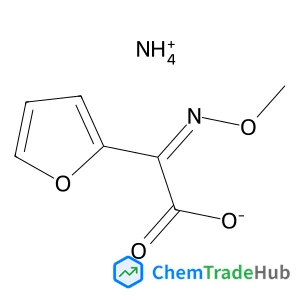
Ammonium (Z)-2-(furan-2-yl)-2-(methoxyimino)acetate
CAS Number:
97148-39-5
Molecular Formula:
C7H10N2O4
Recommended Suppliers







Disclaimer
This page provides academic journal information for reference and research purposes only. We are not affiliated with any journal publishers and do not handle publication submissions. For publication-related inquiries, please contact the respective journal publishers directly.
If you notice any inaccuracies in the information displayed, please contact us at support@chemtradehub.com. We will promptly review and address your concerns.