












Energetics and structural characterization of the “DFG-flip” conformational transition of B-RAF kinase: a SITS molecular dynamics study
Literature Information
Publication Date
2016-12-02
DOI
10.1039/C6CP06624K
Impact Factor
3.676
Authors
Qiang Shao, Zhijian Xu, Jinan Wang, Jiye Shi, Weiliang Zhu
View Original
Abstract
B-RAF protein kinase is a promising target to treat malignant melanoma. The kinase activity of B-RAF is regulated by a “DFG-flip” conformational transition between functional DFG-in and DFG-out states. The difficulty in resolving the activation loop in crystal structures and the even greater difficulty in experimentally capturing high-energy-level transient structures render elusive the molecular mechanism of the B-RAF functional conformational transition. Here, a homology modeling technique and an enhanced sampling molecular dynamics simulation were used to identify and energetically characterize the conformational transition pathway of B-RAF on a multi-dimensional free-energy landscape. The results reveal that the conformational transition is a two-state transition, with the evaluated free-energy barrier comparable to those of other kinds of kinases as reported in the previous literature. Hydrophobic interactions between activation loop and neighboring segments are suggested to dominate the conformational transition and determine the free-energy barrier. The detailed analysis of hydrophobic interactions involved in the conformational transition may show a suitable pathway for the development of the B-RAF inhibitor.
Recommended Journals
Related Literature
Alkali metal cation binding affinities of cytosine in the gas phase: revisited
Bo Yang, M. T. Rodgers
2014-06-13
Paper
DOI: 10.1039/C4CP01128G
On the ring-opening of substituted cyclobutene to benzocyclobutene: analysis of π delocalization, hyperconjugation, and ring strain‡
Paola Nava, Yannick Carissan
2014-06-20
Paper
DOI: 10.1039/C4CP01695E
Structural and silver/vanadium ratio effects on silver vanadium phosphorous oxide solution formation kinetics: Impact on battery electrochemistry
David C. Bock
2014-12-02
Paper
DOI: 10.1039/C4CP04819A
Intermolecular interactions between a Ru complex and organic dyes in cosensitized solar cells: a computational study
Hitoshi Kusama, Takashi Funaki, Nagatoshi Koumura, Kazuhiro Sayama
2014-06-16
Paper
DOI: 10.1039/C4CP01880J
Photoelectrocatalytic degradation of rhodamine B on TiO2 photonic crystals
Xiuzhen Zheng, Danzhen Li, Xiaofang Li, Linhui Yu, Peng Wang, Xiaoyun Zhang, Jialin Fang, Yu Shao, Yi Zheng
2014-06-09
Paper
DOI: 10.1039/C4CP01888E
Microsolvation of 2-azetidinone: a model for the peptide group–water interactions
Juan C. López, Raquel Sánchez, Susana Blanco, José L. Alonso
2014-12-05
Paper
DOI: 10.1039/C4CP04577G
Near-band-edge exciton polarization change in ZnO nanowires
Zaiping Zeng, Alexia Petoni, Christos S. Garoufalis, Sotirios Baskoutas, Gabriel Bester
2014-11-12
Paper
DOI: 10.1039/C4CP04551C
Michaelis–Menten kinetics under non-isothermal conditions
Anders Lervik, Hong Qian
2014-11-18
Paper
DOI: 10.1039/C4CP04334K
Impedance analysis of secondary phases in a Co-implanted ZnO single crystal
L. L. Zou, M. Nadeem, S. C. Su, Z. L. Wang, W. Anwand, A. Wagner, J. H. Hao, C. W. Leung, R. Lortz, F. C. C. Ling
2014-06-25
Paper
DOI: 10.1039/C4CP00951G
Evidence of anti-parallel dimer formation of 4-cyano-4′-alkyl biphenyls in isotropic cyclohexane solution
Shunzo Takabatake
2014-11-26
Paper
DOI: 10.1039/C4CP04933K
You might also like
Compound Q&A
Is 2-(2-chloroacetamido)-3-phenylpropanoic acid (CAS: 7765-11-9) safe?
2-(2-Chloroacetamido)-3-phenylpropanoic acid (CAS: 7765-11-9) is generally consi...
7765-11-92-(2-chloroacetamido...
Compound Q&A
Is 2-(Benzyloxy)-5-bromobenzoic acid (CAS: 62176-31-2) safe?
2-(Benzyloxy)-5-bromobenzoic acid can be handled safely if appropriate precautio...
62176-31-22-(Benzyloxy)-5-brom...
Compound Q&A
What is (4-Methyl-1,2,5-oxadiazol-3-yl)methanamine hydrochloride (CAS: 1159825-48-5)?
(4-Methyl-1,2,5-oxadiazol-3-yl)methanamine hydrochloride is a chemical compound ...
1159825-48-5(4-Methyl-1,2,5-oxad...
Compound Q&A
What is 2-(5-Hexylthiophen-2-yl)-4,4,5,5-tetramethyl-1,3,2-dioxaborolane (CAS: 917985-54-7)?
2-(5-Hexylthiophen-2-yl)-4,4,5,5-tetramethyl-1,3,2-dioxaborolane (CAS: 917985-54...
917985-54-72-(5-Hexylthiophen-2...
Compound Q&A
Are there alternatives to 4-(8-Methyl-9H-1,3-dioxolo[4,5-h][2,3]benzodiazepin-5-yl)benzenamine (CAS: 102771-26-6) in synthesis?
While 4-(8-Methyl-9H-1,3-dioxolo[4,5-h][2,3]benzodiazepin-5-yl)benzenamine (CAS:...
102771-26-64-(8-Methyl-9H-1,3-d...
Compound Q&A
What is the market or research trend for tert-butyl 3-hydroxy-4,5,7,8-tetrahydro-2H-pyrazolo[3,4-d]azepine-6-carboxylate (CAS: 851376-80-2)?
The market for tert-butyl 3-hydroxy-4,5,7,8-tetrahydro-2H-pyrazolo[3,4-d]azepine...
851376-80-2tert-butyl 3-hydroxy...
Compound Q&A
How should waste containing 3,5-Diamino-1H-pyrazole-4-carbonitrile (CAS: 6844-58-2) be handled?
Waste containing 3,5-Diamino-1H-pyrazole-4-carbonitrile (CAS: 6844-58-2) should ...
6844-58-23,5-Diamino-1H-pyraz...
Compound Q&A
How is (6-Fluoro-3-pyridinyl)boronic acid (CAS: 351019-18-6) typically synthesized?
(6-Fluoro-3-pyridinyl)boronic acid can be synthesized through the reaction of 6-...
351019-18-6(6-Fluoro-3-pyridiny...
Compound Q&A
What industries use Dibenzyl carbonimidoylbiscarbamate (CAS: 10065-79-9)?
Dibenzyl carbonimidoylbiscarbamate (CAS: 10065-79-9) finds applications in vario...
10065-79-9Dibenzyl carbonimido...
Compound Q&A
What is the market or research trend for (beta,beta,2,3,4,5,6-~2~H_7_)Phenylalanine (CAS: 74228-83-4)?
The market for (beta,beta,2,3,4,5,6-~2~H_7_)Phenylalanine (CAS: 74228-83-4) is g...
74228-83-4(beta,beta,2,3,4,5,6...
Source Journal
Physical Chemistry Chemical Physics

CiteScore:
5.5
Self-citation Rate:
10.3%
Articles per Year:
3036
Physical Chemistry Chemical Physics (PCCP) is an international journal co-owned by 19 physical chemistry and physics societies from around the world. This journal publishes original, cutting-edge research in physical chemistry, chemical physics and biophysical chemistry. To be suitable for publication in PCCP, articles must include significant innovation and/or insight into physical chemistry; this is the most important criterion that reviewers and Editors will judge against when evaluating submissions. The journal has a broad scope and welcomes contributions spanning experiment, theory, computation and data science. Topical coverage includes spectroscopy, dynamics, kinetics, statistical mechanics, thermodynamics, electrochemistry, catalysis, surface science, quantum mechanics, quantum computing and machine learning. Interdisciplinary research areas such as polymers and soft matter, materials, nanoscience, energy, surfaces/interfaces, and biophysical chemistry are welcomed if they demonstrate significant innovation and/or insight into physical chemistry. Joined experimental/theoretical studies are particularly appreciated when complementary and based on up-to-date approaches.
Recommended Compounds
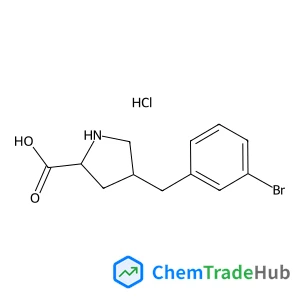
(2S,4R)-4-(3-Bromobenzyl)pyrrolidine-2-carboxylic acid hydrochloride
CAS Number:
1049734-10-2
Molecular Formula:
C12H15BrClNO2
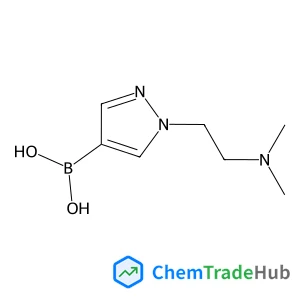
(1-(2-(Dimethylamino)ethyl)-1H-pyrazol-4-yl)boronic acid
CAS Number:
1086063-73-1
Molecular Formula:
C7H14BN3O2
Recommended Suppliers




Disclaimer
This page provides academic journal information for reference and research purposes only. We are not affiliated with any journal publishers and do not handle publication submissions. For publication-related inquiries, please contact the respective journal publishers directly.
If you notice any inaccuracies in the information displayed, please contact us at support@chemtradehub.com. We will promptly review and address your concerns.