












Evidence of anti-parallel dimer formation of 4-cyano-4′-alkyl biphenyls in isotropic cyclohexane solution
Literature Information
Publication Date
2014-11-26
DOI
10.1039/C4CP04933K
Impact Factor
3.676
Authors
Shunzo Takabatake
View Original
Abstract
The formation of anti-parallel dimers of two liquid crystal forming 4-cyano-4′-alkyl biphenyls (nCB, n = 5 (pentyl) and n = 8 (octyl)) was confirmed in an isotropic cyclohexane solution (nCB–cH). In addition to high frequency dielectric relaxation (DR) measurements up to 50 GHz, fluorescence emission (FE) experiments in the wavelength range from 280 to 500 nm were carried out to investigate the molecular dynamics of the nCB molecules. The DR spectra of solutions at intermediate to high concentrations were comprised of two dynamic modes. A fast mode with a relaxation time of ca. 90 ps was assigned to the free rotations of monomeric nCB molecules. The slow mode with a relaxation time of ca. 400 ps was attributed to the dissociation process of the anti-parallel dimers ((nCB)2). The Kirkwood factor (gK), a measure of the orientational correlation between the dipole moments of the cyano groups, was markedly less than unity for the slow mode, which demonstrated the formation of anti-parallel dimers, (nCB)2. The equilibrium constant for anti-parallel dimer formation in an isotropic solution, i.e., for the reaction, 2nCB ↔ (nCB)2, which was determined via the DR data increased with an increase in the concentration of nCB. Under extremely dilute conditions, a sharp fluorescence emission signal attributed to the nCB monomer was observed at 325 nm in FE spectrum measurements. However, at the moderate to high concentrations used in the DR measurements where the slow mode was clearly observed, a broad FE signal at 390 nm was observed, which was assigned to excimer emission (including emission from the excited ground state dimers). The relative intensity of the excimer emission to the monomer emission significantly increased with an increase in the concentration. Moreover, the equilibrium constant for the excimer formation reasonably agreed with that for the anti-parallel dimer formation evaluated by the DR data. Consequently, the results of the FE measurements evidently revealed that excimers of nCB and the (nCB)2 dimers formed in isotropic solution are identical chemical species.
Related Literature
Real time evolution of unprotected protonated galactosamine probed by IRMPD spectroscopy
C. Fraschetti, L. Guarcini, C. Zazza, L. Mannina, S. Circi, S. Piccirillo, B. Chiavarino, A. Filippi
2018-02-21
Paper
DOI: 10.1039/C7CP07642H
Quantification of biomolecules responsible for biomarkers in the surface-enhanced Raman spectra of bacteria using liquid chromatography-mass spectrometry
Ho-Wen Cheng, Zhi-Xin Chen, Huai-Hsien Wang, Ming-Yu Lai
2018-02-19
Paper
DOI: 10.1039/C7CP07103E
Electronic and optical properties of hydrogenated group-IV multilayer materials
Renato Borges Pontes, Rosana Rabelo Mançano, Rafael da Silva, Luiz Fernando Cótica, Roberto Hiroki Miwa, José Eduardo Padilha
2018-02-19
Paper
DOI: 10.1039/C7CP08471D
Photochemistry of glyoxylate embedded in sodium chloride clusters, a laboratory model for tropospheric sea-salt aerosols
Nina K. Bersenkowitsch, Milan Ončák, Christian van der Linde, Andreas Herburger, Martin K. Beyer
2018-02-28
Paper
DOI: 10.1039/C8CP00399H
Influence of crystallographic environment on scandium K-edge X-ray absorption near-edge structure spectra
Mathieu Chassé, Amélie Juhin, Delphine Cabaret, Steven Delhommaye, Delphine Vantelon, Georges Calas
2018-09-07
Paper
DOI: 10.1039/C8CP04413A
Formation patterns of water clusters in CMK-3 and CMK-5 mesoporous carbons: a computational recognition study
Xuan Peng, Surendra Kumar Jain, Jayant Kumar Singh, Qibing Jin
2018-05-30
Paper
DOI: 10.1039/C8CP01887A
Role of the (H2O)n (n = 1–3) cluster in the HO2 + HO → 3O2 + H2O reaction: mechanistic and kinetic studies
Tianlei Zhang, Xinguang Lan, Zhangyu Qiao, Rui Wang, Xiaohu Yu, Qiong Xu, Zhiyin Wang, Linxia Jin, ZhuQing Wang
2018-02-23
Paper
DOI: 10.1039/C8CP00020D
Pseudorotaxanes in the gas phase: structure and energetics of protonated dibenzylamine–crown ether complexes
Motoki Kida, Daisuke Shimoyama, Toshiaki Ikeda, Ryo Sekiya, Takeharu Haino, Takayuki Ebata, Christophe Jouvet, Yoshiya Inokuchi
2018-06-22
Paper
DOI: 10.1039/C8CP02707B
You might also like
Compound Q&A
Is 2-(2-chloroacetamido)-3-phenylpropanoic acid (CAS: 7765-11-9) safe?
2-(2-Chloroacetamido)-3-phenylpropanoic acid (CAS: 7765-11-9) is generally consi...
7765-11-92-(2-chloroacetamido...
Compound Q&A
Is 2-(Benzyloxy)-5-bromobenzoic acid (CAS: 62176-31-2) safe?
2-(Benzyloxy)-5-bromobenzoic acid can be handled safely if appropriate precautio...
62176-31-22-(Benzyloxy)-5-brom...
Compound Q&A
What is (4-Methyl-1,2,5-oxadiazol-3-yl)methanamine hydrochloride (CAS: 1159825-48-5)?
(4-Methyl-1,2,5-oxadiazol-3-yl)methanamine hydrochloride is a chemical compound ...
1159825-48-5(4-Methyl-1,2,5-oxad...
Compound Q&A
What is 2-(5-Hexylthiophen-2-yl)-4,4,5,5-tetramethyl-1,3,2-dioxaborolane (CAS: 917985-54-7)?
2-(5-Hexylthiophen-2-yl)-4,4,5,5-tetramethyl-1,3,2-dioxaborolane (CAS: 917985-54...
917985-54-72-(5-Hexylthiophen-2...
Compound Q&A
Are there alternatives to 4-(8-Methyl-9H-1,3-dioxolo[4,5-h][2,3]benzodiazepin-5-yl)benzenamine (CAS: 102771-26-6) in synthesis?
While 4-(8-Methyl-9H-1,3-dioxolo[4,5-h][2,3]benzodiazepin-5-yl)benzenamine (CAS:...
102771-26-64-(8-Methyl-9H-1,3-d...
Compound Q&A
What is the market or research trend for tert-butyl 3-hydroxy-4,5,7,8-tetrahydro-2H-pyrazolo[3,4-d]azepine-6-carboxylate (CAS: 851376-80-2)?
The market for tert-butyl 3-hydroxy-4,5,7,8-tetrahydro-2H-pyrazolo[3,4-d]azepine...
851376-80-2tert-butyl 3-hydroxy...
Compound Q&A
How should waste containing 3,5-Diamino-1H-pyrazole-4-carbonitrile (CAS: 6844-58-2) be handled?
Waste containing 3,5-Diamino-1H-pyrazole-4-carbonitrile (CAS: 6844-58-2) should ...
6844-58-23,5-Diamino-1H-pyraz...
Compound Q&A
How is (6-Fluoro-3-pyridinyl)boronic acid (CAS: 351019-18-6) typically synthesized?
(6-Fluoro-3-pyridinyl)boronic acid can be synthesized through the reaction of 6-...
351019-18-6(6-Fluoro-3-pyridiny...
Compound Q&A
What industries use Dibenzyl carbonimidoylbiscarbamate (CAS: 10065-79-9)?
Dibenzyl carbonimidoylbiscarbamate (CAS: 10065-79-9) finds applications in vario...
10065-79-9Dibenzyl carbonimido...
Compound Q&A
What is the market or research trend for (beta,beta,2,3,4,5,6-~2~H_7_)Phenylalanine (CAS: 74228-83-4)?
The market for (beta,beta,2,3,4,5,6-~2~H_7_)Phenylalanine (CAS: 74228-83-4) is g...
74228-83-4(beta,beta,2,3,4,5,6...
Source Journal
Physical Chemistry Chemical Physics

CiteScore:
5.5
Self-citation Rate:
10.3%
Articles per Year:
3036
Physical Chemistry Chemical Physics (PCCP) is an international journal co-owned by 19 physical chemistry and physics societies from around the world. This journal publishes original, cutting-edge research in physical chemistry, chemical physics and biophysical chemistry. To be suitable for publication in PCCP, articles must include significant innovation and/or insight into physical chemistry; this is the most important criterion that reviewers and Editors will judge against when evaluating submissions. The journal has a broad scope and welcomes contributions spanning experiment, theory, computation and data science. Topical coverage includes spectroscopy, dynamics, kinetics, statistical mechanics, thermodynamics, electrochemistry, catalysis, surface science, quantum mechanics, quantum computing and machine learning. Interdisciplinary research areas such as polymers and soft matter, materials, nanoscience, energy, surfaces/interfaces, and biophysical chemistry are welcomed if they demonstrate significant innovation and/or insight into physical chemistry. Joined experimental/theoretical studies are particularly appreciated when complementary and based on up-to-date approaches.
Recommended Compounds
![2-[(E)-(2-Methoxyphenyl)diazenyl]-3-oxo-N-(2-oxo-2,3-dihydro-1H-benzimidazol-5-yl)butanamide structure](https://static.chemtradehub.com/structs/821/82199-12-0-f1d0.webp "2-[(E)-(2-Methoxyphenyl)diazenyl]-3-oxo-N-(2-oxo-2,3-dihydro-1H-benzimidazol-5-yl)butanamide structure")
2-[(E)-(2-Methoxyphenyl)diazenyl]-3-oxo-N-(2-oxo-2,3-dihydro-1H-benzimidazol-5-yl)butanamide
CAS Number:
82199-12-0
Molecular Formula:
C18H17N5O4
![{3-[Bis(4-hydroxyphenyl)methyl]-1-[2-(dimethylamino)ethyl]-1H-indol-2-yl}[4-(2-chlorophenyl)-1-piperazinyl]methanone structure](https://static.chemtradehub.com/structs/170/170365-25-0-e4d7.webp "{3-[Bis(4-hydroxyphenyl)methyl]-1-[2-(dimethylamino)ethyl]-1H-indol-2-yl}[4-(2-chlorophenyl)-1-piperazinyl]methanone structure")
{3-[Bis(4-hydroxyphenyl)methyl]-1-[2-(dimethylamino)ethyl]-1H-indol-2-yl}[4-(2-chlorophenyl)-1-piperazinyl]methanone
CAS Number:
170365-25-0
Molecular Formula:
C36H37ClN4O3
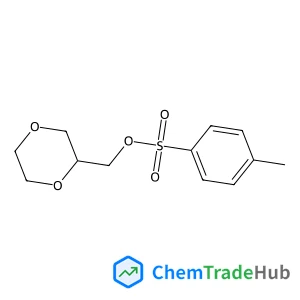
(S)-(1,4-Dioxan-2-yl)methyl 4-methylbenzenesulfonate
CAS Number:
917882-64-5
Molecular Formula:
C12H16O5S
Recommended Suppliers






Disclaimer
This page provides academic journal information for reference and research purposes only. We are not affiliated with any journal publishers and do not handle publication submissions. For publication-related inquiries, please contact the respective journal publishers directly.
If you notice any inaccuracies in the information displayed, please contact us at support@chemtradehub.com. We will promptly review and address your concerns.