![2-[(E)-(2-Methoxyphenyl)diazenyl]-3-oxo-N-(2-oxo-2,3-dihydro-1H-benzimidazol-5-yl)butanamide structure](https://static.chemtradehub.com/structs/821/82199-12-0-f1d0.webp "2-[(E)-(2-Methoxyphenyl)diazenyl]-3-oxo-N-(2-oxo-2,3-dihydro-1H-benzimidazol-5-yl)butanamide structure")
2-[(E)-(2-Methoxyphenyl)diazenyl]-3-oxo-N-(2-oxo-2,3-dihydro-1H-benzimidazol-5-yl)butanamide
CAS Number:
82199-12-0
Molecular Formula:
C18H17N5O4
Yinlong Du, Ningning Dong, Menghan Zhang, Kai Zhu, Ruiqi Na, Shuling Zhang, Ningwei Sun, Guibin Wang, Jun Wang
Porphyrin–graphene composites have attracted increasing attention due to a number of intriguing functions, and their photoelectrical and catalytic performances are expected to be modulated through different approaches. In the present study, a designed polymer based on phenyl sulfone, (p-amino)phenylhydroquinone, and a symmetrical dinaphthylporphyrin were covalently attached to a graphene oxide (GO) sheet. The formation of the nanohybrid was characterized by Fourier transform infrared (FTIR), X-ray diffraction (XRD), thermogravimetric analysis (TGA), X-ray photoelectron spectroscopy (XPS), and Raman, ultraviolet-visible (UV-vis) absorption, steady and transient fluorescence spectroscopy techniques. The nonlinear optical and optical limiting performances of the hybrid were investigated using Z-scan measurements at 532 nm and 1064 nm. For comparison, a porphyrin functionalized GO hybrid was synthesized as a reference. At the same linear transmittance, the polymer functionalized GO exhibited a stronger optical limiting response and a larger nonlinear extinction coefficient than the individual GO, porphyrinated polymer, and porphyrin functionalized GO hybrid analogue, and its intrinsic photophysical mechanism was discussed in detail. More importantly, further improvement of its nonlinear optical properties can be achieved by the chemical reduction of the hybrid. The enhanced nonlinear optical performance originated from the effective combination of nonlinear scattering, reverse saturable absorption, and a possible photo-induced electron/energy transfer mechanism from donor porphyrin moieties in the polymer backbone to acceptor graphene. Our result might provide a new avenue for the development of graphene–porphyrin materials in the field of photocatalysis, nonlinear optics, and optoelectronic devices.
Dage Sundholm
DOI: 10.1039/C6CP04627D
Daniel Pliquett, Peter S. Schulz, Frank W. Heinemann, Angela Bause, Peter Wasserscheid
DOI: 10.1039/C6CP05653A
Avishek Banik, Mohammad Shaad Ansari, Tushar Kanta Sahu, Mohammad Qureshi
DOI: 10.1039/C6CP05544C
Piotr Piatkowski, Boiko Cohen, Samrana Kazim, Shahzada Ahmad, Abderrazzak Douhal
DOI: 10.1039/C6CP02682F
Lixin Chen, Zhanhu Guo, Tingli Ma
DOI: 10.1039/C6CP04553G
Manuel Salado, Laura Calio, Rüdiger Berger, Samrana Kazim, Shahzada Ahmad
DOI: 10.1039/C6CP03851D
Yipeng An, Mengjun Zhang, Dapeng Wu, Tianxing Wang, Zhaoyong Jiao, Congxin Xia, Kun Wang
DOI: 10.1039/C6CP05912K
Chun-Hung Chang, Kaito Takahashi
DOI: 10.1039/C6CP05171E
Hsuan-Hsiao Yao, Hsu-Hsiang Cheng, Chao-Han Cheng, Cheng-Kai Lin, Jye-Shane Yang, I-Chia Chen
DOI: 10.1039/C6CP05514A
Roopali Prajapati, Arpan Bhattacharya, Tushar Kanti Mukherjee
DOI: 10.1039/C6CP05451J
2-(2-Chloroacetamido)-3-phenylpropanoic acid (CAS: 7765-11-9) is generally consi...
2-(Benzyloxy)-5-bromobenzoic acid can be handled safely if appropriate precautio...
(4-Methyl-1,2,5-oxadiazol-3-yl)methanamine hydrochloride is a chemical compound ...
2-(5-Hexylthiophen-2-yl)-4,4,5,5-tetramethyl-1,3,2-dioxaborolane (CAS: 917985-54...
While 4-(8-Methyl-9H-1,3-dioxolo[4,5-h][2,3]benzodiazepin-5-yl)benzenamine (CAS:...
The market for tert-butyl 3-hydroxy-4,5,7,8-tetrahydro-2H-pyrazolo[3,4-d]azepine...
Waste containing 3,5-Diamino-1H-pyrazole-4-carbonitrile (CAS: 6844-58-2) should ...
(6-Fluoro-3-pyridinyl)boronic acid can be synthesized through the reaction of 6-...
Dibenzyl carbonimidoylbiscarbamate (CAS: 10065-79-9) finds applications in vario...
The market for (beta,beta,2,3,4,5,6-~2~H_7_)Phenylalanine (CAS: 74228-83-4) is g...

Physical Chemistry Chemical Physics (PCCP) is an international journal co-owned by 19 physical chemistry and physics societies from around the world. This journal publishes original, cutting-edge research in physical chemistry, chemical physics and biophysical chemistry. To be suitable for publication in PCCP, articles must include significant innovation and/or insight into physical chemistry; this is the most important criterion that reviewers and Editors will judge against when evaluating submissions. The journal has a broad scope and welcomes contributions spanning experiment, theory, computation and data science. Topical coverage includes spectroscopy, dynamics, kinetics, statistical mechanics, thermodynamics, electrochemistry, catalysis, surface science, quantum mechanics, quantum computing and machine learning. Interdisciplinary research areas such as polymers and soft matter, materials, nanoscience, energy, surfaces/interfaces, and biophysical chemistry are welcomed if they demonstrate significant innovation and/or insight into physical chemistry. Joined experimental/theoretical studies are particularly appreciated when complementary and based on up-to-date approaches.
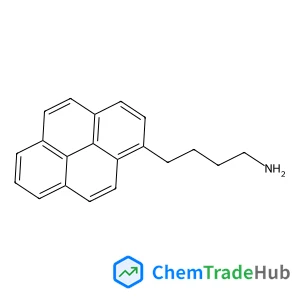
![Ethyl thieno[3,2-f]quinoline-2-carboxylate structure](https://static.chemtradehub.com/structs/299/29948-26-3-f62b.webp "Ethyl thieno[3,2-f]quinoline-2-carboxylate structure")