


Liquid silver tris(perfluoroethyl)trifluorophosphate salts as new media for propene/propane separation
Literature Information
Publication Date
2016-09-26
DOI
10.1039/C6CP05653A
Impact Factor
3.676
Authors
Daniel Pliquett, Peter S. Schulz, Frank W. Heinemann, Angela Bause, Peter Wasserscheid
View Original
Abstract
A series of silver tris(perfluoroethyl)trifluorophosphate (Ag[FAP]) complexes with various ligands (acetonitrile ACN, chloroacetonitrile Cl-ACN, acrylonitrile acryl-CN, pyridine py, ethylenediamine en and propene C3H6) have been synthesized starting from Ag[NO3] and K[FAP] using three different routes. Physicochemical properties as well as crystal structures ([Ag(ACN)2/4][FAP], [Ag(py)2][FAP]) were determined and the suitability of such Ag salts for propene/propane separation processes was investigated. The investigated silver complexes exhibit either low melting points or form liquid complexes when contacted with gaseous propene at 30 °C. This makes them promising separation materials for both liquid membranes and absorber fluids due to their high silver content and significant propene capacity. Single (iGSC) and mixed (NMR) gas solubilities as well as diffusion coefficients (PFG-NMR) of propene and propane were determined to predict the theoretical selectivity of solubility, membrane selectivity, capacity and transport properties of the silver salts according to the solution diffusion model. A strong influence of the number and type of ligands on chemical complexation, physicochemical properties and separation performance has been observed.
Recommended Journals

Crystallography Reports

Journal of Natural Medicines

Saudi Pharmaceutical Journal

Russian Journal of Bioorganic Chemistry

Drug Discovery Today

Organic Process Research & Development

New Journal of Chemistry

Journal of Saudi Chemical Society

Journal of Peptide Science

Chemistry Education Research and Practice
Related Literature
Steric self-assembly of laterally confined organic semiconductor molecule analogues
Björn Arnold, Matt Bumstead, Ayse Turak
2014-08-07
Paper
DOI: 10.1039/C4CP02331E
Flexible and stretchable thin-film transistors based on molybdenum disulphide
Jiang Pu, Lain-Jong Li
2014-02-27
Perspective
DOI: 10.1039/C3CP55270E
The acidity/basicity of metal-containing ionic liquids: insights from surface analysis and the Fukui function
Weihong Wu, Yunxiang Lu, Hairong Ding, Changjun Peng, Honglai Liu
2014-11-12
Paper
DOI: 10.1039/C4CP04603J
Reaction mechanisms of aqueous monoethanolamine with carbon dioxide: a combined quantum chemical and molecular dynamics study
Haley M. Stowe, Eunsu Paek, Dhivya Manogaran
2014-11-04
Paper
DOI: 10.1039/C4CP04518A
Thermotropic cubic and tetragonal phases made of rod-like molecules
M. Vogrin, M. M. Wojcik, J. Mieczkowski, K. Madrak, D. Pociecha, E. Gorecka
2014-06-06
Paper
DOI: 10.1039/C4CP01641F
The Crystal-T algorithm: a new approach to calculate the SLE of lipidic mixtures presenting solid solutions
Guilherme J. Maximo, Mariana C. Costa, Antonio J. A. Meirelles
2014-06-18
Paper
DOI: 10.1039/C4CP01529K
The relationship between interfacial bonding and radiation damage in adsorbed DNA
R. A. Rosenberg, J. M. Symonds, K. Vijayalakshmi, Debabrata Mishra, T. M. Orlando, R. Naaman
2014-06-18
Paper
DOI: 10.1039/C4CP01649A
Enhanced performance of polymer solar cells by employing a ternary cascade energy structure
Qiaoshi An, Fujun Zhang, Lingliang Li, Zuliang Zhuo, Jian Zhang, Weihua Tang, Feng Teng
2014-05-15
Paper
DOI: 10.1039/C4CP01411A
Electrodynamics of soft multilayered particles dispersions: dielectric permittivity and dynamic mobility
2014-06-09
Paper
DOI: 10.1039/C4CP01674B
You might also like
Compound Q&A
Is 2-(2-chloroacetamido)-3-phenylpropanoic acid (CAS: 7765-11-9) safe?
2-(2-Chloroacetamido)-3-phenylpropanoic acid (CAS: 7765-11-9) is generally consi...
7765-11-92-(2-chloroacetamido...
Compound Q&A
Is 2-(Benzyloxy)-5-bromobenzoic acid (CAS: 62176-31-2) safe?
2-(Benzyloxy)-5-bromobenzoic acid can be handled safely if appropriate precautio...
62176-31-22-(Benzyloxy)-5-brom...
Compound Q&A
What is (4-Methyl-1,2,5-oxadiazol-3-yl)methanamine hydrochloride (CAS: 1159825-48-5)?
(4-Methyl-1,2,5-oxadiazol-3-yl)methanamine hydrochloride is a chemical compound ...
1159825-48-5(4-Methyl-1,2,5-oxad...
Compound Q&A
What is 2-(5-Hexylthiophen-2-yl)-4,4,5,5-tetramethyl-1,3,2-dioxaborolane (CAS: 917985-54-7)?
2-(5-Hexylthiophen-2-yl)-4,4,5,5-tetramethyl-1,3,2-dioxaborolane (CAS: 917985-54...
917985-54-72-(5-Hexylthiophen-2...
Compound Q&A
Are there alternatives to 4-(8-Methyl-9H-1,3-dioxolo[4,5-h][2,3]benzodiazepin-5-yl)benzenamine (CAS: 102771-26-6) in synthesis?
While 4-(8-Methyl-9H-1,3-dioxolo[4,5-h][2,3]benzodiazepin-5-yl)benzenamine (CAS:...
102771-26-64-(8-Methyl-9H-1,3-d...
Compound Q&A
What is the market or research trend for tert-butyl 3-hydroxy-4,5,7,8-tetrahydro-2H-pyrazolo[3,4-d]azepine-6-carboxylate (CAS: 851376-80-2)?
The market for tert-butyl 3-hydroxy-4,5,7,8-tetrahydro-2H-pyrazolo[3,4-d]azepine...
851376-80-2tert-butyl 3-hydroxy...
Compound Q&A
How should waste containing 3,5-Diamino-1H-pyrazole-4-carbonitrile (CAS: 6844-58-2) be handled?
Waste containing 3,5-Diamino-1H-pyrazole-4-carbonitrile (CAS: 6844-58-2) should ...
6844-58-23,5-Diamino-1H-pyraz...
Compound Q&A
How is (6-Fluoro-3-pyridinyl)boronic acid (CAS: 351019-18-6) typically synthesized?
(6-Fluoro-3-pyridinyl)boronic acid can be synthesized through the reaction of 6-...
351019-18-6(6-Fluoro-3-pyridiny...
Compound Q&A
What industries use Dibenzyl carbonimidoylbiscarbamate (CAS: 10065-79-9)?
Dibenzyl carbonimidoylbiscarbamate (CAS: 10065-79-9) finds applications in vario...
10065-79-9Dibenzyl carbonimido...
Compound Q&A
What is the market or research trend for (beta,beta,2,3,4,5,6-~2~H_7_)Phenylalanine (CAS: 74228-83-4)?
The market for (beta,beta,2,3,4,5,6-~2~H_7_)Phenylalanine (CAS: 74228-83-4) is g...
74228-83-4(beta,beta,2,3,4,5,6...
Source Journal
Physical Chemistry Chemical Physics

CiteScore:
5.5
Self-citation Rate:
10.3%
Articles per Year:
3036
Physical Chemistry Chemical Physics (PCCP) is an international journal co-owned by 19 physical chemistry and physics societies from around the world. This journal publishes original, cutting-edge research in physical chemistry, chemical physics and biophysical chemistry. To be suitable for publication in PCCP, articles must include significant innovation and/or insight into physical chemistry; this is the most important criterion that reviewers and Editors will judge against when evaluating submissions. The journal has a broad scope and welcomes contributions spanning experiment, theory, computation and data science. Topical coverage includes spectroscopy, dynamics, kinetics, statistical mechanics, thermodynamics, electrochemistry, catalysis, surface science, quantum mechanics, quantum computing and machine learning. Interdisciplinary research areas such as polymers and soft matter, materials, nanoscience, energy, surfaces/interfaces, and biophysical chemistry are welcomed if they demonstrate significant innovation and/or insight into physical chemistry. Joined experimental/theoretical studies are particularly appreciated when complementary and based on up-to-date approaches.
Recommended Compounds
![{3-[Bis(4-hydroxyphenyl)methyl]-1-[2-(dimethylamino)ethyl]-1H-indol-2-yl}[4-(2-chlorophenyl)-1-piperazinyl]methanone structure](https://static.chemtradehub.com/structs/170/170365-25-0-e4d7.webp "{3-[Bis(4-hydroxyphenyl)methyl]-1-[2-(dimethylamino)ethyl]-1H-indol-2-yl}[4-(2-chlorophenyl)-1-piperazinyl]methanone structure")
{3-[Bis(4-hydroxyphenyl)methyl]-1-[2-(dimethylamino)ethyl]-1H-indol-2-yl}[4-(2-chlorophenyl)-1-piperazinyl]methanone
CAS Number:
170365-25-0
Molecular Formula:
C36H37ClN4O3
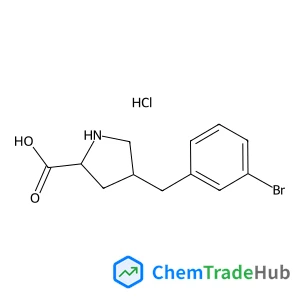
(2S,4R)-4-(3-Bromobenzyl)pyrrolidine-2-carboxylic acid hydrochloride
CAS Number:
1049734-10-2
Molecular Formula:
C12H15BrClNO2
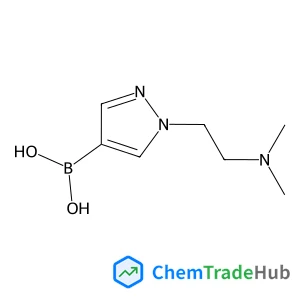
(1-(2-(Dimethylamino)ethyl)-1H-pyrazol-4-yl)boronic acid
CAS Number:
1086063-73-1
Molecular Formula:
C7H14BN3O2
Recommended Suppliers






Disclaimer
This page provides academic journal information for reference and research purposes only. We are not affiliated with any journal publishers and do not handle publication submissions. For publication-related inquiries, please contact the respective journal publishers directly.
If you notice any inaccuracies in the information displayed, please contact us at support@chemtradehub.com. We will promptly review and address your concerns.