












Al solubility in (Ti1−cAlc)NiSn half-Heusler alloy
Literature Information
Publication Date
2019-03-15
DOI
10.1039/C9CP00764D
Impact Factor
3.676
Authors
David Fuks, Yaniv Gelbstein
View Original
Abstract
Half-Heusler, HH, alloys are widely used n-type materials in thermoelectric applications. Today, there is a shortage in p-type HH based materials, which may have an inherent compatibility with the HH n-type pair. Al is a good candidate as an acceptor doping element for this purpose, and the results on alloying of TiNiSn-based HH with Al are reported in details. Combination of CALPHAD and ab initio DFT calculations with an experimental validation was carried out. It is demonstrated that low level Al doping leads to p-type conductivity of the material. The solubility of Al was predicted by calculations and experimentally confirmed. The stable phases with compositions above the solubility limit of Al were determined, including an assessment of the maximal Al solubility in the HH (Ti1−cAlc)NiSn phase up to 1400 K. In addition, a Scheil solidification simulation with the known TiNiSn CALPHAD database was used, in order to further understand the as-cast phase structure. It is shown that beyond the solubility limit the stable phases at room temperature are TiNiSn(HH), Sn(BCT) and NiAl(B2). The maximal solubility of Al in the HH phase is estimated as ∼1 at% at 1400 K. These results give the basic route for designing of (Ti1−cAlc)NiSn as a p-type thermoelectric element.
Recommended Journals
Related Literature
Controlled synthesis of luminescent polymers using a bis-dithiobenzoate RAFT agent
Ming Chen, Kenneth P. Ghiggino, Ezio Rizzardo, San H. Thang, Gerard J. Wilson
2008-01-03
Communication
DOI: 10.1039/B716471H
Balancing framework densification with charged, halogen-bonded-π-conjugated linkages: [PPh4]2{[E-TTF–I2][Re6Se8(CN)6]} versus [PPh4]2[EDT-TTF–I]2{[EDT-TTF–I][Re6Se8(CN)6]}
Anupama Ranganathan, Abdelkrim El-Ghayoury, Cécile Mézière, Etienne Harté, Rodolphe Clérac, Patrick Batail
2006-06-08
Communication
DOI: 10.1039/B600159A
High capacity carbon-coated Si70Sn30 nanoalloys for lithium battery anode material
YooJeong Kwon, Jaephil Cho
2008-01-02
Communication
DOI: 10.1039/B716694J
Inhibition of C(2)-H/D exchange of a bis(imidazolium) dication upon complexation with cucubit[7]uril
Ruibing Wang, Lina Yuan, Donal H. Macartney
2006-06-02
Communication
DOI: 10.1039/B605919H
A novel chiral porous metal–organic framework: asymmetric ring opening reaction of epoxide with amine in the chiral open space
Koichi Tanaka, Shinji Oda, Motoo Shiro
2007-12-17
Communication
DOI: 10.1039/B714083E
An alignable fluorene thienothiophene copolymer with deep-blue electroluminescent emission at 410 nm
Malte C. Gather, Martin Heeney, Weimin Zhang, Katherine S. Whitehead, Donal D. C. Bradley, Iain McCulloch, Alasdair J. Campbell
2008-01-07
Communication
DOI: 10.1039/B716510B
A mild and convenient synthesis of N-carbobenzyloxy ketimines
Jun-ichi Matsuo, Yumi Tanaki, Aimi Kido, Hiroyuki Ishibashi
2006-06-01
Communication
DOI: 10.1039/B605882E
Unprecedented twofold intramolecular hydroamination in diam(m)ine-dicarboxylatodichloridoplatinum(iv) complexes – ethane-1,2-diaminevs.ammine ligands
Michael R. Reithofer, Mathea S. Galanski, Vladimir B. Arion, Bernhard K. Keppler
2008-01-09
Communication
DOI: 10.1039/B715680D
Hybrid ceramic nanosieves: stabilizing nanopores with organic links
Ashima Sah, Robert Kreiter, Dave H. A. Blank, Jaap F. Vente, Johan E. ten Elshof
2008-02-01
Communication
DOI: 10.1039/B718082A
You might also like
Compound Q&A
Are there alternatives to 1-(4-Chlorophenyl)-N-hydroxymethanimine (CAS: 3848-36-0) in synthesis?
When considering alternatives to 1-(4-Chlorophenyl)-N-hydroxymethanimine (CAS: 3...
3848-36-01-(4-Chlorophenyl)-N...
Compound Q&A
How should (1R,9S,10S,12S,14E,16S,19R,20R,21S,22R)-3,9,21-Trihydroxy-5,10,12,14,16,20,22-heptamethyl-23,24-dioxatetracyclo[17.3.1.1~6,9~.0~2,7~]tetracosa-2,5,7,14-tetraen-4-one (CAS: 183202-73-5) be stored?
This compound should be stored in a cool, dry place away from direct sunlight. I...
183202-73-5(1R,9S,10S,12S,14E,1...
Compound Q&A
How is 3-(4-Bromophenyl)-5-(2-fluorophenyl)-1,2,4-oxadiazole (CAS: 419553-16-5) typically synthesized?
3-(4-Bromophenyl)-5-(2-fluorophenyl)-1,2,4-oxadiazole is synthesized through a m...
419553-16-53-(4-Bromophenyl)-5-...
Compound Q&A
How is 5-Chloro-2-(4-chlorophenyl)-4-methyl-6-[3-(1-piperidinyl)propoxy]pyrimidine (CAS: 1639220-19-1) typically synthesized?
5-Chloro-2-(4-chlorophenyl)-4-methyl-6-[3-(1-piperidinyl)propoxy]pyrimidine (CAS...
1639220-19-15-Chloro-2-(4-chloro...
Compound Q&A
What industries use 2-Chloro-4-(difluoromethoxy)pyridine (CAS: 1206978-15-5)?
2-Chloro-4-(difluoromethoxy)pyridine is used in the pharmaceutical industry for ...
1206978-15-52-Chloro-4-(difluoro...
Compound Q&A
What regulatory guidelines apply to 3-Chloro-6-methylpyridazine (CAS: 1121-79-5)?
3-Chloro-6-methylpyridazine (CAS: 1121-79-5) is classified under the Globally Ha...
1121-79-53-Chloro-6-methylpyr...
Compound Q&A
Are there alternatives to Methyl 4,5-dimethyl-2-nitrobenzoate in synthesis?
Several alternatives can be used in the synthesis of Methyl 4,5-dimethyl-2-nitro...
90922-74-0Methyl 4,5-dimethyl-...
Compound Q&A
Are there alternatives to (2E,2'E)-3,3'-(1,4-Phenylene)bisacrylaldehyde in synthesis?
Alternatives to (2E,2'E)-3,3'-(1,4-Phenylene)bisacrylaldehyde include other acry...
63405-68-5(2E,2'E)-3,3'-(1,4-P...
Compound Q&A
What is 3-Amino-5-chloropyridin-2-ol hydrochloride (CAS: 1261906-29-9)?
3-Amino-5-chloropyridin-2-ol hydrochloride is an organic compound with the CAS n...
1261906-29-93-Amino-5-chloropyri...
Compound Q&A
What precautions should be taken when handling 6,7-Difluoro-2,3-dihydro-4H-chromen-4-one (CAS: 1092349-93-3)?
When handling 6,7-Difluoro-2,3-dihydro-4H-chromen-4-one, it is essential to wear...
1092349-93-36,7-Difluoro-2,3-dih...
Source Journal
Physical Chemistry Chemical Physics

CiteScore:
5.5
Self-citation Rate:
10.3%
Articles per Year:
3036
Physical Chemistry Chemical Physics (PCCP) is an international journal co-owned by 19 physical chemistry and physics societies from around the world. This journal publishes original, cutting-edge research in physical chemistry, chemical physics and biophysical chemistry. To be suitable for publication in PCCP, articles must include significant innovation and/or insight into physical chemistry; this is the most important criterion that reviewers and Editors will judge against when evaluating submissions. The journal has a broad scope and welcomes contributions spanning experiment, theory, computation and data science. Topical coverage includes spectroscopy, dynamics, kinetics, statistical mechanics, thermodynamics, electrochemistry, catalysis, surface science, quantum mechanics, quantum computing and machine learning. Interdisciplinary research areas such as polymers and soft matter, materials, nanoscience, energy, surfaces/interfaces, and biophysical chemistry are welcomed if they demonstrate significant innovation and/or insight into physical chemistry. Joined experimental/theoretical studies are particularly appreciated when complementary and based on up-to-date approaches.
Recommended Compounds
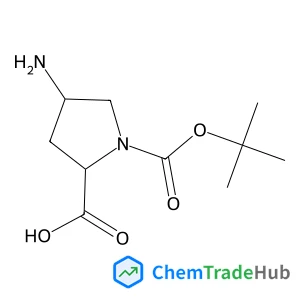
(2R,4R)-1-Boc-4-Aminopyrrolidine-2-carboxylic acid
CAS Number:
132622-98-1
Molecular Formula:
C10H18N2O4
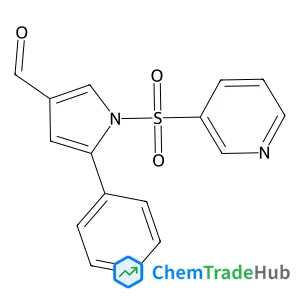
5-Phenyl-1-(pyridin-3-ylsulfonyl)-1H-pyrrole-3-carbaldehyde
CAS Number:
881676-90-0
Molecular Formula:
C16H12N2O3S
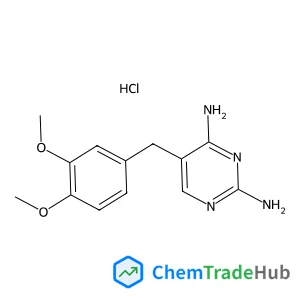
5-(3,4-Dimethoxybenzyl)-2,4-pyrimidinediamine hydrochloride (1:1)
CAS Number:
2507-23-5
Molecular Formula:
C13H17ClN4O2
Recommended Suppliers





Disclaimer
This page provides academic journal information for reference and research purposes only. We are not affiliated with any journal publishers and do not handle publication submissions. For publication-related inquiries, please contact the respective journal publishers directly.
If you notice any inaccuracies in the information displayed, please contact us at support@chemtradehub.com. We will promptly review and address your concerns.