


Water bridges anchored by a C–H⋯O hydrogen bond: the role of weak interactions in molecular solvation
Literature Information
Publication Date
2016-09-20
DOI
10.1039/C6CP05469B
Impact Factor
3.676
Authors
Aditi Bhattacherjee, Sanjay Wategaonkar
View Original
Abstract
The imidazole group, characterized by an activated C(2)–H bond sandwiched between two N atoms, occurs in several biomolecules including alkaloids, amino acids, and nucleobases. The speculated role of this potential hydrogen bond donor in shaping the solvation shell around the neutral imidazole moiety, however, remains unidentified. In contrast, hydrogen bonding and electrostatic interactions are commonly observed in the imidazolium cation where the acidity of the C(2)–H bond is markedly enhanced. Here, we show direct evidence of the weakly activated C(2)–H bond in shaping the solvation shell of neutral imidazole, via spectroscopic characterization of the water clusters (Wn, n = 2–4) of two model compounds, benzimidazole (BIM) and N-methylbenzimidazole (MBIM). Infrared spectra in the OH, NH, and CH stretching regions allow unambiguous detection of a N–WW–C(2)H binding motif in the doubly hydrated cluster of both molecules. Remarkably, H-bonded water bridges between the N atom and N–H bond in BIM–W3,4 clusters are switched to the C(2)–H bond in MBIM–W3,4 with comparable binding strength, indicating that the weakly activated C(2)–H bond in the neutral imidazole moiety can serve as a potent H-bond donor.
Recommended Journals

Drug Discovery Today

Current Opinion in Solid State & Materials Science

Russian Journal of Bioorganic Chemistry

Chemistry Education Research and Practice

Nature Medicine

Russian Journal of Coordination Chemistry

Russian Journal of Applied Chemistry

Organic Process Research & Development

Acta Materialia

Chemical Communications
Related Literature
Surface-enhanced Raman scattering on a hierarchical structural Ag nano-crown array in different detection ways
Yi Wang, Yuyang Wang, Hailong Wang, Ming Cong, Weiqing Xu, Shuping Xu
2014-11-07
Paper
DOI: 10.1039/C4CP04387A
Tilt boundary induced heteroepitaxy in chemically grown dendritic silver nanostructures on germanium and their optical properties
Tanmay Ghosh, Pabitra Das, Tapas Kumar Chini, Tapas Ghosh, Biswarup Satpati
2014-06-02
Paper
DOI: 10.1039/C4CP01711K
On the ring-opening of substituted cyclobutene to benzocyclobutene: analysis of π delocalization, hyperconjugation, and ring strain‡
Paola Nava, Yannick Carissan
2014-06-20
Paper
DOI: 10.1039/C4CP01695E
Constraints to the flat band potential of hematite photo-electrodes
A. Hankin, J. C. Alexander, G. H. Kelsall
2014-06-26
Paper
DOI: 10.1039/C4CP00096J
Plasmonic gold–poly(N-isopropylacrylamide) core–shell colloids with homogeneous density profiles: a small angle scattering study
Martin Dulle, Sarah Jaber, Sabine Rosenfeldt, Aurel Radulescu, Stephan Förster, Paul Mulvaney, Matthias Karg
2014-11-19
Paper
DOI: 10.1039/C4CP04816D
Experimental and theoretical study of enol–keto prototropic tautomerism and photophysics of azomethine–BODIPY dyads
Zhong-Hua Pan, Jing-Wei Zhou, Geng-Geng Luo
2014-06-18
Paper
DOI: 10.1039/C4CP02151G
Impedance analysis of secondary phases in a Co-implanted ZnO single crystal
L. L. Zou, M. Nadeem, S. C. Su, Z. L. Wang, W. Anwand, A. Wagner, J. H. Hao, C. W. Leung, R. Lortz, F. C. C. Ling
2014-06-25
Paper
DOI: 10.1039/C4CP00951G
Charge transfer to solvent dynamics in iodide aqueous solution studied at ionization threshold
Alexander Kothe, Martin Wilke, Alexandre Moguilevski, Nicholas Engel, Bernd Winter, Igor Yu. Kiyan
2014-11-27
Paper
DOI: 10.1039/C4CP02482F
Silicon-pyrene/perylene hybrids as molecular rectifiers
Kavita Garg, Chiranjib Majumder, Sandip K. Nayak, Dinesh K. Aswal, Shiv K. Gupta, Subrata Chattopadhyay
2014-11-26
Paper
DOI: 10.1039/C4CP04044A
Enhanced performance of polymer solar cells by employing a ternary cascade energy structure
Qiaoshi An, Fujun Zhang, Lingliang Li, Zuliang Zhuo, Jian Zhang, Weihua Tang, Feng Teng
2014-05-15
Paper
DOI: 10.1039/C4CP01411A
You might also like
Compound Q&A
Is 2-(2-chloroacetamido)-3-phenylpropanoic acid (CAS: 7765-11-9) safe?
2-(2-Chloroacetamido)-3-phenylpropanoic acid (CAS: 7765-11-9) is generally consi...
7765-11-92-(2-chloroacetamido...
Compound Q&A
Is 2-(Benzyloxy)-5-bromobenzoic acid (CAS: 62176-31-2) safe?
2-(Benzyloxy)-5-bromobenzoic acid can be handled safely if appropriate precautio...
62176-31-22-(Benzyloxy)-5-brom...
Compound Q&A
What is (4-Methyl-1,2,5-oxadiazol-3-yl)methanamine hydrochloride (CAS: 1159825-48-5)?
(4-Methyl-1,2,5-oxadiazol-3-yl)methanamine hydrochloride is a chemical compound ...
1159825-48-5(4-Methyl-1,2,5-oxad...
Compound Q&A
What is 2-(5-Hexylthiophen-2-yl)-4,4,5,5-tetramethyl-1,3,2-dioxaborolane (CAS: 917985-54-7)?
2-(5-Hexylthiophen-2-yl)-4,4,5,5-tetramethyl-1,3,2-dioxaborolane (CAS: 917985-54...
917985-54-72-(5-Hexylthiophen-2...
Compound Q&A
Are there alternatives to 4-(8-Methyl-9H-1,3-dioxolo[4,5-h][2,3]benzodiazepin-5-yl)benzenamine (CAS: 102771-26-6) in synthesis?
While 4-(8-Methyl-9H-1,3-dioxolo[4,5-h][2,3]benzodiazepin-5-yl)benzenamine (CAS:...
102771-26-64-(8-Methyl-9H-1,3-d...
Compound Q&A
What is the market or research trend for tert-butyl 3-hydroxy-4,5,7,8-tetrahydro-2H-pyrazolo[3,4-d]azepine-6-carboxylate (CAS: 851376-80-2)?
The market for tert-butyl 3-hydroxy-4,5,7,8-tetrahydro-2H-pyrazolo[3,4-d]azepine...
851376-80-2tert-butyl 3-hydroxy...
Compound Q&A
How should waste containing 3,5-Diamino-1H-pyrazole-4-carbonitrile (CAS: 6844-58-2) be handled?
Waste containing 3,5-Diamino-1H-pyrazole-4-carbonitrile (CAS: 6844-58-2) should ...
6844-58-23,5-Diamino-1H-pyraz...
Compound Q&A
How is (6-Fluoro-3-pyridinyl)boronic acid (CAS: 351019-18-6) typically synthesized?
(6-Fluoro-3-pyridinyl)boronic acid can be synthesized through the reaction of 6-...
351019-18-6(6-Fluoro-3-pyridiny...
Compound Q&A
What industries use Dibenzyl carbonimidoylbiscarbamate (CAS: 10065-79-9)?
Dibenzyl carbonimidoylbiscarbamate (CAS: 10065-79-9) finds applications in vario...
10065-79-9Dibenzyl carbonimido...
Compound Q&A
What is the market or research trend for (beta,beta,2,3,4,5,6-~2~H_7_)Phenylalanine (CAS: 74228-83-4)?
The market for (beta,beta,2,3,4,5,6-~2~H_7_)Phenylalanine (CAS: 74228-83-4) is g...
74228-83-4(beta,beta,2,3,4,5,6...
Source Journal
Physical Chemistry Chemical Physics

CiteScore:
5.5
Self-citation Rate:
10.3%
Articles per Year:
3036
Physical Chemistry Chemical Physics (PCCP) is an international journal co-owned by 19 physical chemistry and physics societies from around the world. This journal publishes original, cutting-edge research in physical chemistry, chemical physics and biophysical chemistry. To be suitable for publication in PCCP, articles must include significant innovation and/or insight into physical chemistry; this is the most important criterion that reviewers and Editors will judge against when evaluating submissions. The journal has a broad scope and welcomes contributions spanning experiment, theory, computation and data science. Topical coverage includes spectroscopy, dynamics, kinetics, statistical mechanics, thermodynamics, electrochemistry, catalysis, surface science, quantum mechanics, quantum computing and machine learning. Interdisciplinary research areas such as polymers and soft matter, materials, nanoscience, energy, surfaces/interfaces, and biophysical chemistry are welcomed if they demonstrate significant innovation and/or insight into physical chemistry. Joined experimental/theoretical studies are particularly appreciated when complementary and based on up-to-date approaches.
Recommended Compounds
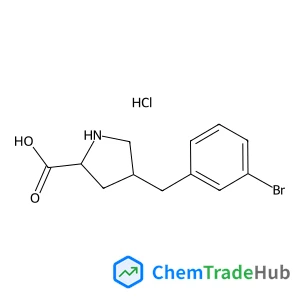
(2S,4R)-4-(3-Bromobenzyl)pyrrolidine-2-carboxylic acid hydrochloride
CAS Number:
1049734-10-2
Molecular Formula:
C12H15BrClNO2
![{3-[Bis(4-hydroxyphenyl)methyl]-1-[2-(dimethylamino)ethyl]-1H-indol-2-yl}[4-(2-chlorophenyl)-1-piperazinyl]methanone structure](https://static.chemtradehub.com/structs/170/170365-25-0-e4d7.webp "{3-[Bis(4-hydroxyphenyl)methyl]-1-[2-(dimethylamino)ethyl]-1H-indol-2-yl}[4-(2-chlorophenyl)-1-piperazinyl]methanone structure")
{3-[Bis(4-hydroxyphenyl)methyl]-1-[2-(dimethylamino)ethyl]-1H-indol-2-yl}[4-(2-chlorophenyl)-1-piperazinyl]methanone
CAS Number:
170365-25-0
Molecular Formula:
C36H37ClN4O3
![Ethyl ({[(2-methyl-2-propanyl)oxy]carbonyl}amino)(2-pyridinyl)acetate structure](https://static.chemtradehub.com/structs/313/313490-90-3-dd15.webp "Ethyl ({[(2-methyl-2-propanyl)oxy]carbonyl}amino)(2-pyridinyl)acetate structure")
Ethyl ({[(2-methyl-2-propanyl)oxy]carbonyl}amino)(2-pyridinyl)acetate
CAS Number:
313490-90-3
Molecular Formula:
C14H20N2O4
Recommended Suppliers





Disclaimer
This page provides academic journal information for reference and research purposes only. We are not affiliated with any journal publishers and do not handle publication submissions. For publication-related inquiries, please contact the respective journal publishers directly.
If you notice any inaccuracies in the information displayed, please contact us at support@chemtradehub.com. We will promptly review and address your concerns.