












Experimental and theoretical study of enol–keto prototropic tautomerism and photophysics of azomethine–BODIPY dyads
Literature Information
Publication Date
2014-06-18
DOI
10.1039/C4CP02151G
Impact Factor
3.676
Authors
Zhong-Hua Pan, Jing-Wei Zhou, Geng-Geng Luo
View Original
Abstract
In this study we report about two novel azomethine–BODIPY dyads 1 and 2. The two dyads have been, respectively, synthesized by covalent tethering of tautomeric ortho-hydroxy aromatic azomethine moieties including N-salicylideneaniline (SA) and N-naphthlideneaniline (NA) to a BODIPY fluorophore. Both of the two dyads 1 and 2 show enol-imine (OH) structures dominating in the crystalline state. Dyad 1 in the enol state is the most stable form at room temperature in most media, while enol–keto prototropic tautomerism of the NA moiety in solution is preserved in dyad 2, which can be reversibly converted between enol and keto forms in the environment's polarity. Visible illumination of dyad 2 in the enol state excites selectively the BODIPY fragment and then deactivates radiatively by emitting green light in the form of fluorescence, while the emission intensity of 2 in the keto state is quenched on the basis of the proton-coupled photoinduced electron transfer (PCPET) mechanism. This allows large fluorescence modulation between the two states of dyad 2 and generates a novel tautomerisable fluorescent switch. Theoretical calculations including calculated energies, potential energy surfaces (PESs) and intrinsic reaction coordinate (IRC) analysis further support that the single proton transfer reaction from an enol form to a transition state (TS) and from the TS to a keto form for 2 is easier to occur than that for 1, which accounts for the fluorescence quenching of 2 in methanol. The agreement of the experimental results and theoretical calculations clearly suggests that fluorescent and tautomeric components can be paired within the same molecular skeleton and the proton tautomerization of the latter can be designed to regulate the emission of the former. In addition, preliminary experiments revealed that 1 can be potentially used as a simple on/off fluorescent chemosensor which exhibited higher selectivity for Cu2+ over other common cations.
Related Literature
Reply to the ‘Comment on “Revisiting the definition of local hardness and hardness kernel”’ by C. Morell, F. Guégan, W. Lamine, and H. Chermette, Phys. Chem. Chem. Phys., 2018, 20, DOI: 10.1039/C7CP04100D
Marco Franco-Pérez, Carlos A. Polanco-Ramírez, José L. Gázquez, Paul W. Ayers
2018-02-22
Comment
DOI: 10.1039/C7CP07974E
Molecular dynamics simulations of ammonium/phosphonium-based protic ionic liquids: influence of alkyl to aryl group
Anirban Mondal, Anurag Prakash Sunda
2018-06-28
Paper
DOI: 10.1039/C8CP03004A
Strong electron–phonon interaction retarding phonon transport in superconducting hydrogen sulfide at high pressures
Ming Hu
2018-08-30
Paper
DOI: 10.1039/C8CP03982H
Dehydrocoupling of dimethylamine borane by titanocene: elucidation of ten years of inconsistency between theoretical and experimental descriptions
Jingwen Zhu, Emilie-Laure Zins, Mohammad Esmail Alikhani
2018-05-17
Paper
DOI: 10.1039/C8CP01970C
Non-covalent interactions in electrochemical reactions and implications in clean energy applications
Yi-Chun Lu, Gang Chen
2018-05-08
Paper
DOI: 10.1039/C8CP02512F
Comment on “Revisiting the definition of local hardness and hardness kernel” by C. A. Polanco-Ramirez, M. Franco-Pérez, J. Carmona-Espíndola, J. L. Gázquez and P. W. Ayers, Phys. Chem. Chem. Phys., 2017, 19, 12355
F. Guégan, W. Lamine, H. Chermette, C. Morell
2018-02-27
Comment
DOI: 10.1039/C7CP04100D
A critical assessment of force field accuracy against NMR data for cyclic peptides containing β-amino acids
C. Paissoni, F. Nardelli, S. Zanella, F. Curnis, L. Belvisi, G. Musco, M. Ghitti
2018-05-09
Paper
DOI: 10.1039/C8CP00234G
Spin coupling interactions in CC or B–B-cored porphyrin-mimetic graphene patch nitroxide diradicals
Meiyu Song, Xinyu Song
2018-02-20
Paper
DOI: 10.1039/C8CP00105G
You might also like
Compound Q&A
Is 2-(2-chloroacetamido)-3-phenylpropanoic acid (CAS: 7765-11-9) safe?
2-(2-Chloroacetamido)-3-phenylpropanoic acid (CAS: 7765-11-9) is generally consi...
7765-11-92-(2-chloroacetamido...
Compound Q&A
Is 2-(Benzyloxy)-5-bromobenzoic acid (CAS: 62176-31-2) safe?
2-(Benzyloxy)-5-bromobenzoic acid can be handled safely if appropriate precautio...
62176-31-22-(Benzyloxy)-5-brom...
Compound Q&A
What is (4-Methyl-1,2,5-oxadiazol-3-yl)methanamine hydrochloride (CAS: 1159825-48-5)?
(4-Methyl-1,2,5-oxadiazol-3-yl)methanamine hydrochloride is a chemical compound ...
1159825-48-5(4-Methyl-1,2,5-oxad...
Compound Q&A
What is 2-(5-Hexylthiophen-2-yl)-4,4,5,5-tetramethyl-1,3,2-dioxaborolane (CAS: 917985-54-7)?
2-(5-Hexylthiophen-2-yl)-4,4,5,5-tetramethyl-1,3,2-dioxaborolane (CAS: 917985-54...
917985-54-72-(5-Hexylthiophen-2...
Compound Q&A
Are there alternatives to 4-(8-Methyl-9H-1,3-dioxolo[4,5-h][2,3]benzodiazepin-5-yl)benzenamine (CAS: 102771-26-6) in synthesis?
While 4-(8-Methyl-9H-1,3-dioxolo[4,5-h][2,3]benzodiazepin-5-yl)benzenamine (CAS:...
102771-26-64-(8-Methyl-9H-1,3-d...
Compound Q&A
What is the market or research trend for tert-butyl 3-hydroxy-4,5,7,8-tetrahydro-2H-pyrazolo[3,4-d]azepine-6-carboxylate (CAS: 851376-80-2)?
The market for tert-butyl 3-hydroxy-4,5,7,8-tetrahydro-2H-pyrazolo[3,4-d]azepine...
851376-80-2tert-butyl 3-hydroxy...
Compound Q&A
How should waste containing 3,5-Diamino-1H-pyrazole-4-carbonitrile (CAS: 6844-58-2) be handled?
Waste containing 3,5-Diamino-1H-pyrazole-4-carbonitrile (CAS: 6844-58-2) should ...
6844-58-23,5-Diamino-1H-pyraz...
Compound Q&A
How is (6-Fluoro-3-pyridinyl)boronic acid (CAS: 351019-18-6) typically synthesized?
(6-Fluoro-3-pyridinyl)boronic acid can be synthesized through the reaction of 6-...
351019-18-6(6-Fluoro-3-pyridiny...
Compound Q&A
What industries use Dibenzyl carbonimidoylbiscarbamate (CAS: 10065-79-9)?
Dibenzyl carbonimidoylbiscarbamate (CAS: 10065-79-9) finds applications in vario...
10065-79-9Dibenzyl carbonimido...
Compound Q&A
What is the market or research trend for (beta,beta,2,3,4,5,6-~2~H_7_)Phenylalanine (CAS: 74228-83-4)?
The market for (beta,beta,2,3,4,5,6-~2~H_7_)Phenylalanine (CAS: 74228-83-4) is g...
74228-83-4(beta,beta,2,3,4,5,6...
Source Journal
Physical Chemistry Chemical Physics

CiteScore:
5.5
Self-citation Rate:
10.3%
Articles per Year:
3036
Physical Chemistry Chemical Physics (PCCP) is an international journal co-owned by 19 physical chemistry and physics societies from around the world. This journal publishes original, cutting-edge research in physical chemistry, chemical physics and biophysical chemistry. To be suitable for publication in PCCP, articles must include significant innovation and/or insight into physical chemistry; this is the most important criterion that reviewers and Editors will judge against when evaluating submissions. The journal has a broad scope and welcomes contributions spanning experiment, theory, computation and data science. Topical coverage includes spectroscopy, dynamics, kinetics, statistical mechanics, thermodynamics, electrochemistry, catalysis, surface science, quantum mechanics, quantum computing and machine learning. Interdisciplinary research areas such as polymers and soft matter, materials, nanoscience, energy, surfaces/interfaces, and biophysical chemistry are welcomed if they demonstrate significant innovation and/or insight into physical chemistry. Joined experimental/theoretical studies are particularly appreciated when complementary and based on up-to-date approaches.
Recommended Compounds
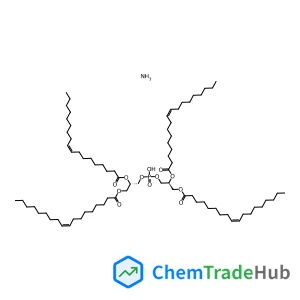
![3-[4-(difluoromethoxy)phenyl]-2-({[(9H-fluoren-9-yl)methoxy]carbonyl}amino)propanoic acid structure](https://static.chemtradehub.com/structs/149/1496564-27-2-952e.webp "3-[4-(difluoromethoxy)phenyl]-2-({[(9H-fluoren-9-yl)methoxy]carbonyl}amino)propanoic acid structure")
3-[4-(difluoromethoxy)phenyl]-2-({[(9H-fluoren-9-yl)methoxy]carbonyl}amino)propanoic acid
CAS Number:
1496564-27-2
Molecular Formula:
C25H21F2NO5
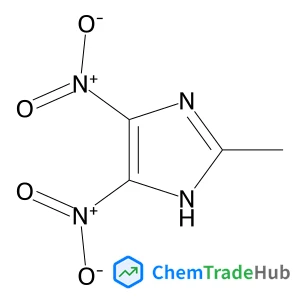
![Ethyl thieno[3,2-f]quinoline-2-carboxylate structure](https://static.chemtradehub.com/structs/299/29948-26-3-f62b.webp "Ethyl thieno[3,2-f]quinoline-2-carboxylate structure")
Recommended Suppliers






Disclaimer
This page provides academic journal information for reference and research purposes only. We are not affiliated with any journal publishers and do not handle publication submissions. For publication-related inquiries, please contact the respective journal publishers directly.
If you notice any inaccuracies in the information displayed, please contact us at support@chemtradehub.com. We will promptly review and address your concerns.