












Imaging inelastic scattering of CO with argon: polarization dependent differential cross sections
Literature Information
Publication Date
2019-04-05
DOI
10.1039/C9CP00876D
Impact Factor
3.676
Authors
Zhong-Fa Sun, Chandan K. Bishwakarma, Lei Song, Ad van der Avoird, Marc C. van Hemert, Arthur G. Suits, George C. McBane, David H. Parker
View Original
Abstract
Rotationally inelastic scattering of carbon monoxide (CO) with Argon at a collision energy of 700 cm−1 has been investigated by measuring polarization dependent differential scattering cross sections (PDDCSs) for rotationally excited CO molecules using a crossed molecular beam apparatus coupled with velocity-map ion imaging. A simple and robust (1 + 1′ + 1′′) VUV (Vacuum Ultra-Violet) REMPI (Resonance Enhanced Multi Photon Ionization) scheme is used and images are obtained by setting the VUV light polarization direction parallel or perpendicular to the scattering plane. Clear differences between the images for the two polarizations are observed, indicating strong collision induced alignment of the rotational angular momentum of scattered CO. A direct image analysis procedure as described in our previously published paper (A. G. Suits et al., J. Phys. Chem. A., 2015, 119, 5925), is employed to extract the fully quantum state resolved alignment-free differential cross sections (DCSs) and the state-to-state angle-dependent alignment moments for each final rotational state. The experimental results are compared with advanced theory, in particular with the predictions of CC QM (Close-Coupling Quantum Mechanical) and QCT (Quasi-Classical Trajectory) calculations. The agreement between experiment and theory is generally found to be quite good throughout the entire scattering angle range for all the final states probed, showing the reliability of the experiment and use of the direct extraction method, as well as the accuracy of the potential surface over the studied collision energy range. A classical kinematic apse (hard shell) model was found to be useful in interpreting the measured collision induced alignment moments.
Related Literature
A universal nonfullerene electron acceptor matching with different band-gap polymer donors for high-performance polymer solar cells
Zhenghui Luo, Guanghao Li, Wei Gao, Kailong Wu, Zhi-Guo Zhang, Beibei Qiu, Haijun Bin, Lingwei Xue, Feng Liu, Yongfang Li, Chuluo Yang
2018-03-20
Paper
DOI: 10.1039/C7TA11339K
Ferrocene-based metal–organic framework nanosheets loaded with palladium as a super-high active hydrogenation catalyst
Zheng Deng, Haojie Yu, Li Wang, Jiyang Liu, Kenneth J. Shea
2019-05-30
Paper
DOI: 10.1039/C9TA03403J
Thermal annealing reduces geminate recombination in TQ1:N2200 all-polymer solar cells
Safakath Karuthedath, Armantas Melianas, Zhipeng Kan, Vytenis Pranculis, Markus Wohlfahrt, Jafar I. Khan, Julien Gorenflot, Yuxin Xia, Olle Inganäs, Vidmantas Gulbinas, Martijn Kemerink, Frédéric Laquai
2018-03-27
Paper
DOI: 10.1039/C8TA01692E
A homogeneous digital biosensor for circulating tumor DNA by the enumeration of a dual-color quantum dot complex
Xiaojun Liu, Zhangjian Wu, Xinyi Lin, Wei Bu, Lei Qin, Hongwei Gai
2021-03-18
Paper
DOI: 10.1039/D1AN00299F
Smartphone-based optical analysis systems
Sarah Di Nonno, Roland Ulber
2021-03-31
Critical Review
DOI: 10.1039/D1AN00025J
Lipid-soluble arsenic species identified in the brain of the marine fish skipjack tuna (Katsuwonus pelamis) using a sequential extraction and HPLC/mass spectrometry
Michael Stiboller, Fabiana P. Freitas, Kevin A. Francesconi, Tanja Schwerdtle, António J. A. Nogueira, Georg Raber
2019-10-29
Paper
DOI: 10.1039/C9JA00249A
Spatial separation of dual-cocatalysts on one-dimensional semiconductors for photocatalytic hydrogen production
Xiaoping Tao, Na Ta, Jianming Li, Xu Jin, Rengui Li, Can Li
2019-06-19
Communication
DOI: 10.1039/C9TA03090E
A flexible rechargeable zinc-ion wire-shaped battery with shape memory function
Zifeng Wang, Zhaoheng Ruan, Zhuoxin Liu, Yukun Wang, Zijie Tang, Hongfei Li, Minshen Zhu, Tak Fuk Hung, Jun Liu, Zicong Shi, Chunyi Zhi
2018-04-05
Paper
DOI: 10.1039/C8TA01172A
Cavity-containing, backbone-rigidified foldamers and macrocycles
Kazuhiro Yamato, Mark Kline, Bing Gong
2012-10-05
Feature Article
DOI: 10.1039/C2CC36391G
You might also like
Compound Q&A
How is Ethyl 4-chlorothieno[2,3-b]pyridine-5-carboxylate (CAS: 59713-58-5) typically synthesized?
Ethyl 4-chlorothieno[2,3-b]pyridine-5-carboxylate (CAS: 59713-58-5) can be synth...
59713-58-5Ethyl 4-chlorothieno...
Compound Q&A
What regulatory guidelines apply to 5-Methyl-1H-indole-3-carbaldehyde (CAS: 52562-50-2)?
5-Methyl-1H-indole-3-carbaldehyde (CAS: 52562-50-2) is subject to various regula...
52562-50-25-Methyl-1H-indole-3...
Compound Q&A
What are the physical and chemical properties of (1,3-Dimethyl-2,4-dioxo-1,2,3,4-tetrahydro-5-pyrimidinyl)boronic acid (CAS: 223418-73-3)?
(1,3-Dimethyl-2,4-dioxo-1,2,3,4-tetrahydro-5-pyrimidinyl)boronic acid is a white...
223418-73-3(1,3-Dimethyl-2,4-di...
Compound Q&A
How should waste containing Sulfocostunolide A (CAS: 1016983-51-9) be handled?
Waste containing Sulfocostunolide A (CAS: 1016983-51-9) should be handled with c...
1016983-51-9Sulfocostunolide A
Compound Q&A
What precautions should be taken when handling Murraxocin (CAS: 88478-44-8)?
When handling Murraxocin (CAS: 88478-44-8), ensure proper personal protective eq...
88478-44-8Murraxocin
Compound Q&A
What are the physical and chemical properties of Formvar (CAS: 63148-64-1)?
Formvar (CAS: 63148-64-1) is an alkyd resin characterized by a high molecular we...
63148-64-1Formvar(R)
Compound Q&A
Is (S)-4-benzyl-2-((benzyloxy)methyl)morpholine (CAS: 205242-66-6) safe?
(S)-4-benzyl-2-((benzyloxy)methyl)morpholine is generally safe when handled with...
205242-66-6(S)-4-benzyl-2-((ben...
Compound Q&A
What industries use Methyl 1-(5-bromo-2-pyrimidinyl)cyclopropanecarboxylate (CAS: 1447607-69-3)?
Methyl 1-(5-bromo-2-pyrimidinyl)cyclopropanecarboxylate (CAS: 1447607-69-3) is p...
1447607-69-3Methyl 1-(5-bromo-2-...
Compound Q&A
Is 2-Methyl-1-phenyl-1-propanamine hydrochloride (CAS: 24290-47-9) safe?
2-Methyl-1-phenyl-1-propanamine hydrochloride (CAS: 24290-47-9) is generally con...
24290-47-92-Methyl-1-phenyl-1-...
Compound Q&A
How is 3-(4-Bromophenyl)-2-methylpropanoic acid (CAS: 66735-01-1) typically synthesized?
3-(4-Bromophenyl)-2-methylpropanoic acid is synthesized through a multi-step pro...
66735-01-13-(4-Bromophenyl)-2-...
Source Journal
Physical Chemistry Chemical Physics

CiteScore:
5.5
Self-citation Rate:
10.3%
Articles per Year:
3036
Physical Chemistry Chemical Physics (PCCP) is an international journal co-owned by 19 physical chemistry and physics societies from around the world. This journal publishes original, cutting-edge research in physical chemistry, chemical physics and biophysical chemistry. To be suitable for publication in PCCP, articles must include significant innovation and/or insight into physical chemistry; this is the most important criterion that reviewers and Editors will judge against when evaluating submissions. The journal has a broad scope and welcomes contributions spanning experiment, theory, computation and data science. Topical coverage includes spectroscopy, dynamics, kinetics, statistical mechanics, thermodynamics, electrochemistry, catalysis, surface science, quantum mechanics, quantum computing and machine learning. Interdisciplinary research areas such as polymers and soft matter, materials, nanoscience, energy, surfaces/interfaces, and biophysical chemistry are welcomed if they demonstrate significant innovation and/or insight into physical chemistry. Joined experimental/theoretical studies are particularly appreciated when complementary and based on up-to-date approaches.
Recommended Compounds
![2-Methyl-2-propanyl 1,6-diazaspiro[3.4]octane-6-carboxylate structure](https://static.chemtradehub.com/structs/115/1158749-79-1-81ee.webp "2-Methyl-2-propanyl 1,6-diazaspiro[3.4]octane-6-carboxylate structure")
2-Methyl-2-propanyl 1,6-diazaspiro[3.4]octane-6-carboxylate
CAS Number:
1158749-79-1
Molecular Formula:
C11H20N2O2
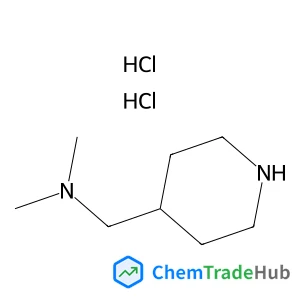
N,N-dimethyl(piperidin-4-yl)methanamine hydrochloride
CAS Number:
172281-72-0
Molecular Formula:
C8H20Cl2N2
Recommended Suppliers




Disclaimer
This page provides academic journal information for reference and research purposes only. We are not affiliated with any journal publishers and do not handle publication submissions. For publication-related inquiries, please contact the respective journal publishers directly.
If you notice any inaccuracies in the information displayed, please contact us at support@chemtradehub.com. We will promptly review and address your concerns.