![[2-(Benzyloxy)-3-bromo-5-methylphenyl]boronic acid structure](https://static.chemtradehub.com/structs/870/870777-20-1-24ac.webp "[2-(Benzyloxy)-3-bromo-5-methylphenyl]boronic acid structure")
[2-(Benzyloxy)-3-bromo-5-methylphenyl]boronic acid
CAS Number:
870777-20-1
Molecular Formula:
C14H14BBrO3
Parthasarathi, P. Senthil Kumar, R. P. Sharma
The natural abundance of aluminum is far better than those of noble metals like silver and gold. Its plasmonic properties have not been explored in detail, as they generally lie in the ultraviolet region of the electromagnetic (EM) spectrum. Nevertheless, recent advanced research work in the literature predicts aluminum to be the next and best plasmonic material suitable for exciting cost-effective applications. Inspired by this, we have analyzed the optical properties of aluminum metal nanoshells using semi-analytical and numerical finite difference time domain models. In the semi-analytical model, we have discussed an electrostatic approach for nanoshell geometry and derived the exact Frolich condition and corresponding plasmon resonance peak position. These plasmonic peaks and their tunability in different regimes of the electromagnetic spectrum via the shell thickness are the main thrust of this work. For proof of concept, we have compared simulated and modeled results in different parameter domains and observed that both sets of results are in agreement with each other. We have also visualized the distribution of the electric field intensity near the aluminum nanoshell surface under SPR conditions, which covers a broad range of applications.
Emily R. Groper, Jack A. Barnes, Rory McEwen, Younès Messaddeq, Richard D. Oleschuk
DOI: 10.1039/D1AN00264C
Yannan Li, Li Yang, Mengqi Du, Guanjun Chang
DOI: 10.1039/C8AN01155A
Éva Széles, Zsolt Varga, Zsolt Stefánka
DOI: 10.1039/B926332B
Lakshmi Narashimhan Ramana, Santosh S. Mathapati, Nitin Salvi, M. V. Khadilkar, Anita Malhotra, Tarun Kumar Sharma
DOI: 10.1039/D1AN01698A
Mika Matsunaga, Toshitaka Ishizaki, Takamasa Nonaka
DOI: 10.1039/C2CE06119H
Keiichi Katoh, Brian K. Breedlove, Masahiro Yamashita
DOI: 10.1039/C5SC04669F
Pengfei Zhou, Xiaolan Liu, Junying Weng, Li Wang, Xiaozhong Wu, Zhichao Miao, Jinping Zhao, Jin Zhou, Shuping Zhuo
DOI: 10.1039/C8TA07842D
Zhujun Li, Feng Xiao
DOI: 10.1039/C7CC09377B
Ya Wang, Mengyao Li, Yuzhong Zhang
DOI: 10.1039/D1AN00029B
Chaoying Xu, Xiandeng Hou, Jing-Juan Xu, Hong-Yuan Chen
DOI: 10.1039/C5SC01497B
Ethyl 4-chlorothieno[2,3-b]pyridine-5-carboxylate (CAS: 59713-58-5) can be synth...
5-Methyl-1H-indole-3-carbaldehyde (CAS: 52562-50-2) is subject to various regula...
(1,3-Dimethyl-2,4-dioxo-1,2,3,4-tetrahydro-5-pyrimidinyl)boronic acid is a white...
Waste containing Sulfocostunolide A (CAS: 1016983-51-9) should be handled with c...
When handling Murraxocin (CAS: 88478-44-8), ensure proper personal protective eq...
Formvar (CAS: 63148-64-1) is an alkyd resin characterized by a high molecular we...
(S)-4-benzyl-2-((benzyloxy)methyl)morpholine is generally safe when handled with...
Methyl 1-(5-bromo-2-pyrimidinyl)cyclopropanecarboxylate (CAS: 1447607-69-3) is p...
2-Methyl-1-phenyl-1-propanamine hydrochloride (CAS: 24290-47-9) is generally con...
3-(4-Bromophenyl)-2-methylpropanoic acid is synthesized through a multi-step pro...

Physical Chemistry Chemical Physics (PCCP) is an international journal co-owned by 19 physical chemistry and physics societies from around the world. This journal publishes original, cutting-edge research in physical chemistry, chemical physics and biophysical chemistry. To be suitable for publication in PCCP, articles must include significant innovation and/or insight into physical chemistry; this is the most important criterion that reviewers and Editors will judge against when evaluating submissions. The journal has a broad scope and welcomes contributions spanning experiment, theory, computation and data science. Topical coverage includes spectroscopy, dynamics, kinetics, statistical mechanics, thermodynamics, electrochemistry, catalysis, surface science, quantum mechanics, quantum computing and machine learning. Interdisciplinary research areas such as polymers and soft matter, materials, nanoscience, energy, surfaces/interfaces, and biophysical chemistry are welcomed if they demonstrate significant innovation and/or insight into physical chemistry. Joined experimental/theoretical studies are particularly appreciated when complementary and based on up-to-date approaches.
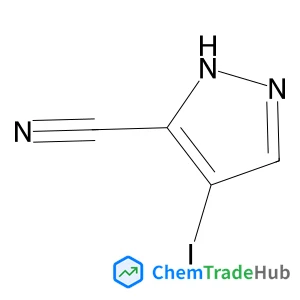
![2-Methyl-2-propanyl 1,6-diazaspiro[3.4]octane-6-carboxylate structure](https://static.chemtradehub.com/structs/115/1158749-79-1-81ee.webp "2-Methyl-2-propanyl 1,6-diazaspiro[3.4]octane-6-carboxylate structure")