












Theoretical study of C-arylations with aryl halides to determine the reaction mechanism, the effect of substituents and heteroatoms
Literature Information
Publication Date
2019-04-29
DOI
10.1039/C8CP07752E
Impact Factor
3.676
Authors
Rocío Durán, Barbara Herrera
View Original
Abstract
Carbon arylations are very important in the pharmaceutical industry. New synthesis routes are often studied with the objective of trying to insert new bonds and substituents into an organic framework. Ullman reactions have been very useful in this context. In light of this, a wB97XD/6-311g set of Ullman-like reactions among substituted amide arylations with iodoaniline were theoretically studied in order to understand their intrinsic reactivity and their reaction mechanisms. The studied systems included unsubstituted (C), sulphur (S), synthesized by the authors in a previous experimental work. In this study, amino (NH) and butyloxycarbonyl (NBoc) amides were added. IRC calculations on catalyzed species showed that the catalyst lowers the reaction barrier, and changes the reactivity in order to lower the nitrogen charge. The reaction mechanism proceeds by binding the CuI catalyst and N,N-dimethylethylenediamine (DMEN) to the N lactam, in a barrierless reaction, thereby activating the nitrogen to bond with the aryl iodine through a nucleophilic substitution, and thus recovering the catalyst.
Related Literature
Constant-temperature atomiser-computer controlled échelle spectrometer system for graphite furnace atomic emission spectrometry
Paper
DOI: 10.1039/JA9860100105
Symmetry of octa-coordination environment has a substantial influence on dinuclear TbIII triple-decker single-molecule magnets
Keiichi Katoh, Brian K. Breedlove, Masahiro Yamashita
2016-03-29
Edge Article
DOI: 10.1039/C5SC04669F
Smartphone-based optical analysis systems
Sarah Di Nonno, Roland Ulber
2021-03-31
Critical Review
DOI: 10.1039/D1AN00025J
In situ real time monitoring of emulsification and homogenization processes for vaccine adjuvants
Nicole M. Ralbovsky, Randal J. Soukup, Justin P. Lomont, Mackenzie L. Lauro, Amanda Gulasarian, Anumita Saha-Shah, Michael A. Winters, Douglas D. Richardson, Sheng-Ching Wang, Ian Mangion, Joseph P. Smith
2021-12-15
Paper
DOI: 10.1039/D1AN01797G
Facile growth of silver crystals with greatly varied morphologies by PEO-PPO-PEO tri-block copolymers
Jing-Cyuan Yang, Chun-Hua Chen, Ren-Jye Wu
2012-02-13
Paper
DOI: 10.1039/C2CE06385A
Fabrication and characterization of laser-heated, multiplexed electrospray emitter
Emily R. Groper, Jack A. Barnes, Rory McEwen, Younès Messaddeq, Richard D. Oleschuk
2021-03-12
Paper
DOI: 10.1039/D1AN00264C
Exploring the charge reactions in a Li–O2 system with lithium oxide cathodes and nonaqueous electrolytes
Rachid Amine, Xuanxuan Bi, Yan Qin, Matthew Li, Said Al-Hallaj, Fengwei Huo, Jun Lu, Khalil Amine
2019-06-19
Communication
DOI: 10.1039/C9TA03763B
Photoresponsive smart template for reversible cell micropatterning
Yu-Hui Gong, Juan Yang, Feng-Yi Cao, Jing Zhang, Han Cheng, Ren-Xi Zhuo, Xian-Zheng Zhang
2013-02-26
Communication
DOI: 10.1039/C3TB20073F
Microwave-assisted ionic liquid solvothermal rapid synthesis of hollow microspheres of alkaline earth metal fluorides (MF2, M = Mg, Ca, Sr)
Jing-San Xu, Ying-Jie Zhu
2012-02-16
Communication
DOI: 10.1039/C2CE06619J
You might also like
Compound Q&A
How is Ethyl 4-chlorothieno[2,3-b]pyridine-5-carboxylate (CAS: 59713-58-5) typically synthesized?
Ethyl 4-chlorothieno[2,3-b]pyridine-5-carboxylate (CAS: 59713-58-5) can be synth...
59713-58-5Ethyl 4-chlorothieno...
Compound Q&A
What regulatory guidelines apply to 5-Methyl-1H-indole-3-carbaldehyde (CAS: 52562-50-2)?
5-Methyl-1H-indole-3-carbaldehyde (CAS: 52562-50-2) is subject to various regula...
52562-50-25-Methyl-1H-indole-3...
Compound Q&A
What are the physical and chemical properties of (1,3-Dimethyl-2,4-dioxo-1,2,3,4-tetrahydro-5-pyrimidinyl)boronic acid (CAS: 223418-73-3)?
(1,3-Dimethyl-2,4-dioxo-1,2,3,4-tetrahydro-5-pyrimidinyl)boronic acid is a white...
223418-73-3(1,3-Dimethyl-2,4-di...
Compound Q&A
How should waste containing Sulfocostunolide A (CAS: 1016983-51-9) be handled?
Waste containing Sulfocostunolide A (CAS: 1016983-51-9) should be handled with c...
1016983-51-9Sulfocostunolide A
Compound Q&A
What precautions should be taken when handling Murraxocin (CAS: 88478-44-8)?
When handling Murraxocin (CAS: 88478-44-8), ensure proper personal protective eq...
88478-44-8Murraxocin
Compound Q&A
What are the physical and chemical properties of Formvar (CAS: 63148-64-1)?
Formvar (CAS: 63148-64-1) is an alkyd resin characterized by a high molecular we...
63148-64-1Formvar(R)
Compound Q&A
Is (S)-4-benzyl-2-((benzyloxy)methyl)morpholine (CAS: 205242-66-6) safe?
(S)-4-benzyl-2-((benzyloxy)methyl)morpholine is generally safe when handled with...
205242-66-6(S)-4-benzyl-2-((ben...
Compound Q&A
What industries use Methyl 1-(5-bromo-2-pyrimidinyl)cyclopropanecarboxylate (CAS: 1447607-69-3)?
Methyl 1-(5-bromo-2-pyrimidinyl)cyclopropanecarboxylate (CAS: 1447607-69-3) is p...
1447607-69-3Methyl 1-(5-bromo-2-...
Compound Q&A
Is 2-Methyl-1-phenyl-1-propanamine hydrochloride (CAS: 24290-47-9) safe?
2-Methyl-1-phenyl-1-propanamine hydrochloride (CAS: 24290-47-9) is generally con...
24290-47-92-Methyl-1-phenyl-1-...
Compound Q&A
How is 3-(4-Bromophenyl)-2-methylpropanoic acid (CAS: 66735-01-1) typically synthesized?
3-(4-Bromophenyl)-2-methylpropanoic acid is synthesized through a multi-step pro...
66735-01-13-(4-Bromophenyl)-2-...
Source Journal
Physical Chemistry Chemical Physics

CiteScore:
5.5
Self-citation Rate:
10.3%
Articles per Year:
3036
Physical Chemistry Chemical Physics (PCCP) is an international journal co-owned by 19 physical chemistry and physics societies from around the world. This journal publishes original, cutting-edge research in physical chemistry, chemical physics and biophysical chemistry. To be suitable for publication in PCCP, articles must include significant innovation and/or insight into physical chemistry; this is the most important criterion that reviewers and Editors will judge against when evaluating submissions. The journal has a broad scope and welcomes contributions spanning experiment, theory, computation and data science. Topical coverage includes spectroscopy, dynamics, kinetics, statistical mechanics, thermodynamics, electrochemistry, catalysis, surface science, quantum mechanics, quantum computing and machine learning. Interdisciplinary research areas such as polymers and soft matter, materials, nanoscience, energy, surfaces/interfaces, and biophysical chemistry are welcomed if they demonstrate significant innovation and/or insight into physical chemistry. Joined experimental/theoretical studies are particularly appreciated when complementary and based on up-to-date approaches.
Recommended Compounds
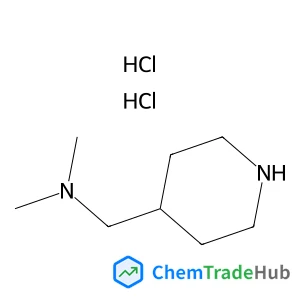
N,N-dimethyl(piperidin-4-yl)methanamine hydrochloride
CAS Number:
172281-72-0
Molecular Formula:
C8H20Cl2N2
![4-[(1-Methyl-1H-pyrrol-2-yl)methylene]-1,3(2H,4H)-isoquinolinedione structure](https://static.chemtradehub.com/structs/110/1104546-89-5-a600.webp "4-[(1-Methyl-1H-pyrrol-2-yl)methylene]-1,3(2H,4H)-isoquinolinedione structure")
4-[(1-Methyl-1H-pyrrol-2-yl)methylene]-1,3(2H,4H)-isoquinolinedione
CAS Number:
1104546-89-5
Molecular Formula:
C15H12N2O2
Recommended Suppliers






Disclaimer
This page provides academic journal information for reference and research purposes only. We are not affiliated with any journal publishers and do not handle publication submissions. For publication-related inquiries, please contact the respective journal publishers directly.
If you notice any inaccuracies in the information displayed, please contact us at support@chemtradehub.com. We will promptly review and address your concerns.