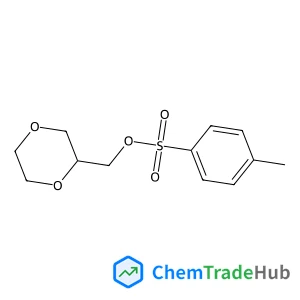
(S)-(1,4-Dioxan-2-yl)methyl 4-methylbenzenesulfonate
CAS Number:
917882-64-5
Molecular Formula:
C12H16O5S
Zhenghua Li, Dapeng Dong, Dedi Liu, Jia Liu, Dongping Liu, Xiang Li
Directly observing the magnetic domain behavior in patterned nanostructures is crucial to the investigation into advanced spin-based devices. Herein, we show that the magnetic vortex behavior can be deterministically observed and controlled in highly spin polarized La0.7Sr0.3MnO3 (LSMO) triangular dots by successive in-field magnetic force microscopy (MFM). Imaging the magnetic domains with MFM shows that most of the LSMO dots exhibit magnetic vortex states with a clockwise or anticlockwise “pinwheel” structure for decreasing the demagnetization energy. Probing the vortex chirality using in-field MFM indicates that the selective spin circulation of the triangular dots depends on the magnetic orientation of the bias nanomagnet with specially designed geometries. Comparison between measurement and simulation reveals that the vortex behavior should be governed by an interface involved pinning strength at the boundaries, as well as a geometrically induced shape anisotropy of the triangular dot, both of which result in shape-dominated magnetic domain reversals.
Chuan Fei Guo, Jianming Zhang
DOI: 10.1039/C4CP04520C
Pei-Hsing Huang, Shang-Chao Hung, Ming-Yueh Huang
DOI: 10.1039/C4CP01922A
Hazim F. EL-Sharif, Daniel M. Hawkins, Derek Stevenson, Subrayal M. Reddy
DOI: 10.1039/C4CP01798F
Simon E. Greenough, Michael D. Horbury, James O. F. Thompson, Gareth M. Roberts, Tolga N. V. Karsili, Barbara Marchetti, Dave Townsend, Vasilios G. Stavros
DOI: 10.1039/C4CP02424A
Corey A. MacDonald, James W. Gauld, Russell J. Boyd
DOI: 10.1039/C4CP01984A
Subarna Khanal, Nabraj Bhattarai, David McMaster, Daniel Bahena, J. Jesus Velazquez-Salazar, Miguel Jose-Yacaman
DOI: 10.1039/C4CP02208D
M. Vogrin, M. M. Wojcik, J. Mieczkowski, K. Madrak, D. Pociecha, E. Gorecka
DOI: 10.1039/C4CP01641F
Martin Dulle, Sarah Jaber, Sabine Rosenfeldt, Aurel Radulescu, Stephan Förster, Paul Mulvaney, Matthias Karg
DOI: 10.1039/C4CP04816D
Elisa Frezza, Alberta Ferrarini, Hima Bindu Kolli, Achille Giacometti, Giorgio Cinacchi
DOI: 10.1039/C4CP01816H
L. F. Loguercio, C. C. Alves, A. Thesing, J. Ferreira
DOI: 10.1039/C4CP04262J
2-(2-Chloroacetamido)-3-phenylpropanoic acid (CAS: 7765-11-9) is generally consi...
2-(Benzyloxy)-5-bromobenzoic acid can be handled safely if appropriate precautio...
(4-Methyl-1,2,5-oxadiazol-3-yl)methanamine hydrochloride is a chemical compound ...
2-(5-Hexylthiophen-2-yl)-4,4,5,5-tetramethyl-1,3,2-dioxaborolane (CAS: 917985-54...
While 4-(8-Methyl-9H-1,3-dioxolo[4,5-h][2,3]benzodiazepin-5-yl)benzenamine (CAS:...
The market for tert-butyl 3-hydroxy-4,5,7,8-tetrahydro-2H-pyrazolo[3,4-d]azepine...
Waste containing 3,5-Diamino-1H-pyrazole-4-carbonitrile (CAS: 6844-58-2) should ...
(6-Fluoro-3-pyridinyl)boronic acid can be synthesized through the reaction of 6-...
Dibenzyl carbonimidoylbiscarbamate (CAS: 10065-79-9) finds applications in vario...
The market for (beta,beta,2,3,4,5,6-~2~H_7_)Phenylalanine (CAS: 74228-83-4) is g...

Physical Chemistry Chemical Physics (PCCP) is an international journal co-owned by 19 physical chemistry and physics societies from around the world. This journal publishes original, cutting-edge research in physical chemistry, chemical physics and biophysical chemistry. To be suitable for publication in PCCP, articles must include significant innovation and/or insight into physical chemistry; this is the most important criterion that reviewers and Editors will judge against when evaluating submissions. The journal has a broad scope and welcomes contributions spanning experiment, theory, computation and data science. Topical coverage includes spectroscopy, dynamics, kinetics, statistical mechanics, thermodynamics, electrochemistry, catalysis, surface science, quantum mechanics, quantum computing and machine learning. Interdisciplinary research areas such as polymers and soft matter, materials, nanoscience, energy, surfaces/interfaces, and biophysical chemistry are welcomed if they demonstrate significant innovation and/or insight into physical chemistry. Joined experimental/theoretical studies are particularly appreciated when complementary and based on up-to-date approaches.
![Ethyl thieno[3,2-f]quinoline-2-carboxylate structure](https://static.chemtradehub.com/structs/299/29948-26-3-f62b.webp "Ethyl thieno[3,2-f]quinoline-2-carboxylate structure")
![Ethyl ({[(2-methyl-2-propanyl)oxy]carbonyl}amino)(2-pyridinyl)acetate structure](https://static.chemtradehub.com/structs/313/313490-90-3-dd15.webp "Ethyl ({[(2-methyl-2-propanyl)oxy]carbonyl}amino)(2-pyridinyl)acetate structure")