












Raman excess spectroscopy vs. principal component analysis: probing the intermolecular interactions between chiral molecules and imidazolium-based ionic liquids
Literature Information
Publication Date
2016-09-20
DOI
10.1039/C6CP04372K
Impact Factor
3.676
Authors
H. Koch, K. Noack, S. Will
View Original
Abstract
Raman spectroscopy is a very sensitive and specific measurement tool for probing intermolecular interaction structures. As imidazolium-based ionic liquids can favorably be used for enantioseparation, in this work two approaches for Raman signal analysis, namely by means of excess spectra and principal component analysis (PCA), are compared to extract detailed information about the interaction structure of the enantiomers D- and L-glucose in an aqueous solution of the ionic liquid [EMIM][EtSO4]. In contrast to the excess calculations, the loadings obtained from PCA lead to significant results since the interactions are weighted by their strength and significance. Moreover, the analysis of the weighted vibrations in the loadings indicate that hydrogen bonds are particularly formed between the ethyl sulphate anion of [EMIM][EtSO4] and the hydrogen atom of the OH-group at the C6-atom of glucose.
Recommended Journals
Related Literature
Reply to the ‘Comment on “Revisiting the definition of local hardness and hardness kernel”’ by C. Morell, F. Guégan, W. Lamine, and H. Chermette, Phys. Chem. Chem. Phys., 2018, 20, DOI: 10.1039/C7CP04100D
Marco Franco-Pérez, Carlos A. Polanco-Ramírez, José L. Gázquez, Paul W. Ayers
2018-02-22
Comment
DOI: 10.1039/C7CP07974E
Systematic exploitation of thermotropic bicontinuous cubic phase families from 1,2-bis(aryloyl)hydrazine-based molecules
Shoichi Kutsumizu, Yutaro Yamada, Tadashi Sugimoto, Nina Yamada, Taro Udagawa, Yohei Miwa
2018-02-02
Paper
DOI: 10.1039/C7CP08345A
Intrinsic charge-mobility in benzothieno[3,2-b][1]benzothiophene (BTBT) organic semiconductors is enhanced with long alkyl side-chains
M. Alkan, I. Yavuz
2018-05-19
Paper
DOI: 10.1039/C8CP01640B
Valence shell threshold photoelectron spectroscopy of C3Hx (x = 0–3)
Gustavo A. Garcia, Bérenger Gans, Julia Krüger, Anja Röder, Allan Lopes, Christa Fittschen, Christian Alcaraz, Jean-Christophe Loison
2018-02-23
Paper
DOI: 10.1039/C8CP00510A
Photochemistry of glyoxylate embedded in sodium chloride clusters, a laboratory model for tropospheric sea-salt aerosols
Nina K. Bersenkowitsch, Milan Ončák, Christian van der Linde, Andreas Herburger, Martin K. Beyer
2018-02-28
Paper
DOI: 10.1039/C8CP00399H
Q-model of electrode reactions: altering force constants of intramolecular vibrations
Dmitry V. Matyushov, Marshall D. Newton
2018-08-31
Paper
DOI: 10.1039/C8CP03759K
The effects of implicit modeling of nonpolar solvation on protein folding simulations
Qiang Shao, Weiliang Zhu
2018-06-14
Paper
DOI: 10.1039/C8CP03156H
Mechanistic insights into two-photon-driven photocatalysis in organic synthesis
Marianna Marchini, Andrea Gualandi, Luca Mengozzi, Paola Franchi, Marco Lucarini, Pier Giorgio Cozzi, Vincenzo Balzani, Paola Ceroni
2018-03-08
Paper
DOI: 10.1039/C7CP08011E
Cyanide–isocyanide isomerization: stability and bonding in noble gas inserted metal cyanides (metal = Cu, Ag, Au)
Gourhari Jana, Sudip Pan, Edison Osorio, Lili Zhao, Gabriel Merino, Pratim K. Chattaraj
2018-06-07
Paper
DOI: 10.1039/C8CP02837K
Mesostructure and physical properties of aqueous mixtures of the ionic liquid 1-ethyl-3-methyl imidazolium octyl sulfate doped with divalent sulfate salts in the liquid and the mesomorphic states
Oscar Cabeza, Luisa Segade, Montserrat Domínguez-Pérez, Esther Rilo, David Ausín, Anna Martinelli, Negin Yaghini, Bernhard Gollas, Manfred Kriechbaum, Olga Russina, Alessandro Triolo, Elena López-Lago, Luis M. Varela
2018-03-03
Paper
DOI: 10.1039/C7CP07999K
You might also like
Compound Q&A
Is 2-(2-chloroacetamido)-3-phenylpropanoic acid (CAS: 7765-11-9) safe?
2-(2-Chloroacetamido)-3-phenylpropanoic acid (CAS: 7765-11-9) is generally consi...
7765-11-92-(2-chloroacetamido...
Compound Q&A
Is 2-(Benzyloxy)-5-bromobenzoic acid (CAS: 62176-31-2) safe?
2-(Benzyloxy)-5-bromobenzoic acid can be handled safely if appropriate precautio...
62176-31-22-(Benzyloxy)-5-brom...
Compound Q&A
What is (4-Methyl-1,2,5-oxadiazol-3-yl)methanamine hydrochloride (CAS: 1159825-48-5)?
(4-Methyl-1,2,5-oxadiazol-3-yl)methanamine hydrochloride is a chemical compound ...
1159825-48-5(4-Methyl-1,2,5-oxad...
Compound Q&A
What is 2-(5-Hexylthiophen-2-yl)-4,4,5,5-tetramethyl-1,3,2-dioxaborolane (CAS: 917985-54-7)?
2-(5-Hexylthiophen-2-yl)-4,4,5,5-tetramethyl-1,3,2-dioxaborolane (CAS: 917985-54...
917985-54-72-(5-Hexylthiophen-2...
Compound Q&A
Are there alternatives to 4-(8-Methyl-9H-1,3-dioxolo[4,5-h][2,3]benzodiazepin-5-yl)benzenamine (CAS: 102771-26-6) in synthesis?
While 4-(8-Methyl-9H-1,3-dioxolo[4,5-h][2,3]benzodiazepin-5-yl)benzenamine (CAS:...
102771-26-64-(8-Methyl-9H-1,3-d...
Compound Q&A
What is the market or research trend for tert-butyl 3-hydroxy-4,5,7,8-tetrahydro-2H-pyrazolo[3,4-d]azepine-6-carboxylate (CAS: 851376-80-2)?
The market for tert-butyl 3-hydroxy-4,5,7,8-tetrahydro-2H-pyrazolo[3,4-d]azepine...
851376-80-2tert-butyl 3-hydroxy...
Compound Q&A
How should waste containing 3,5-Diamino-1H-pyrazole-4-carbonitrile (CAS: 6844-58-2) be handled?
Waste containing 3,5-Diamino-1H-pyrazole-4-carbonitrile (CAS: 6844-58-2) should ...
6844-58-23,5-Diamino-1H-pyraz...
Compound Q&A
How is (6-Fluoro-3-pyridinyl)boronic acid (CAS: 351019-18-6) typically synthesized?
(6-Fluoro-3-pyridinyl)boronic acid can be synthesized through the reaction of 6-...
351019-18-6(6-Fluoro-3-pyridiny...
Compound Q&A
What industries use Dibenzyl carbonimidoylbiscarbamate (CAS: 10065-79-9)?
Dibenzyl carbonimidoylbiscarbamate (CAS: 10065-79-9) finds applications in vario...
10065-79-9Dibenzyl carbonimido...
Compound Q&A
What is the market or research trend for (beta,beta,2,3,4,5,6-~2~H_7_)Phenylalanine (CAS: 74228-83-4)?
The market for (beta,beta,2,3,4,5,6-~2~H_7_)Phenylalanine (CAS: 74228-83-4) is g...
74228-83-4(beta,beta,2,3,4,5,6...
Source Journal
Physical Chemistry Chemical Physics

CiteScore:
5.5
Self-citation Rate:
10.3%
Articles per Year:
3036
Physical Chemistry Chemical Physics (PCCP) is an international journal co-owned by 19 physical chemistry and physics societies from around the world. This journal publishes original, cutting-edge research in physical chemistry, chemical physics and biophysical chemistry. To be suitable for publication in PCCP, articles must include significant innovation and/or insight into physical chemistry; this is the most important criterion that reviewers and Editors will judge against when evaluating submissions. The journal has a broad scope and welcomes contributions spanning experiment, theory, computation and data science. Topical coverage includes spectroscopy, dynamics, kinetics, statistical mechanics, thermodynamics, electrochemistry, catalysis, surface science, quantum mechanics, quantum computing and machine learning. Interdisciplinary research areas such as polymers and soft matter, materials, nanoscience, energy, surfaces/interfaces, and biophysical chemistry are welcomed if they demonstrate significant innovation and/or insight into physical chemistry. Joined experimental/theoretical studies are particularly appreciated when complementary and based on up-to-date approaches.
Recommended Compounds
![(1S)-1,5-Anhydro-2-O-alpha-L-arabinopyranosyl-1-[5-hydroxy-7-({6-O-[3-(4-hydroxy-3-methoxyphenyl)propanoyl]-beta-D-glucopyranosyl}oxy)-2-(4-hydroxyphenyl)-4-oxo-4H-chromen-6-yl]-D-glucitol structure](https://static.chemtradehub.com/structs/225/2252345-81-4-bcff.webp "(1S)-1,5-Anhydro-2-O-alpha-L-arabinopyranosyl-1-[5-hydroxy-7-({6-O-[3-(4-hydroxy-3-methoxyphenyl)propanoyl]-beta-D-glucopyranosyl}oxy)-2-(4-hydroxyphenyl)-4-oxo-4H-chromen-6-yl]-D-glucitol structure")
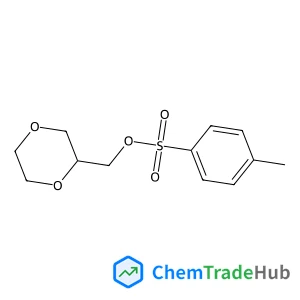
(S)-(1,4-Dioxan-2-yl)methyl 4-methylbenzenesulfonate
CAS Number:
917882-64-5
Molecular Formula:
C12H16O5S
Recommended Suppliers







Disclaimer
This page provides academic journal information for reference and research purposes only. We are not affiliated with any journal publishers and do not handle publication submissions. For publication-related inquiries, please contact the respective journal publishers directly.
If you notice any inaccuracies in the information displayed, please contact us at support@chemtradehub.com. We will promptly review and address your concerns.