











Systematic exploitation of thermotropic bicontinuous cubic phase families from 1,2-bis(aryloyl)hydrazine-based molecules
Literature Information
Publication Date
2018-02-02
DOI
10.1039/C7CP08345A
Impact Factor
3.676
Authors
Shoichi Kutsumizu, Yutaro Yamada, Tadashi Sugimoto, Nina Yamada, Taro Udagawa, Yohei Miwa
View Original
Abstract
Rational design of molecules that exhibit a thermotropic bicontinuous cubic (Cub) phase has been earnestly desired. In this work, we describe the suitable selection of a molecular motif that has enabled the systematic exploitation of eight new series of Cub-phase molecules with symmetric molecular cores, N-n (1), PB-n (2), S-n (3), and PEB-n (4), and unsymmetric cores, B-N-n (5), B-PB-n (6), B-S-n (7), and B-PEB-n (8). These eight series all originate from achiral chain-core-chain type rod-like molecules that exhibit two types of Cub phases, an achiral Ia3d phase, and a chiral phase. All the Ia3d phases formed were found to be isomorphous structures, with their cell dimensions being proportional to the core size, and the same was true for the latter chiral phase. We demonstrated that the formation is mainly governed by the segregation between core and alkyl moieties of the molecules, and thus, by the weight fraction of the core portion fcore. This work also demonstrates that the central dicarbonylhydrazine linkage bearing intermolecular hydrogen bonding ability exhibits a pinning effect that prevents slippage of π-stacks of molecules, which is critical for the formation of the two Cub phases that are composed of chiral networks with twisted molecular arrangements. In each series, the emergence of spontaneous chirality formation that occurred in the chiral phase was limited to between 0.36 and 0.50 in the range of fcore. An interesting insight was that the introduced unsymmetry of the molecular core strongly influenced the phase behavior, which lowered the temperature range of Cub phases to around that of the smallest core series B-n, while the high temperature limit (Tc) was roughly proportional to the core size, as determined by the strength of intermolecular π–π interactions.
Related Literature
Electrochemical synthesis of 7-membered carbocycles through cascade 5-exo-trig/7-endo-trig radical cyclization
Hao Long, Jinshuai Song, Hai-Chao Xu
2018-09-26
Research Article
DOI: 10.1039/C8QO00803E
Conductive fullerene surfactants via anion doping as cathode interlayers for efficient organic and perovskite solar cells
Kangrong Yan, Zhi-Xi Liu, Xue Li, Jiehuan Chen, Hongzheng Chen, Chang-Zhi Li
2018-08-24
Research Article
DOI: 10.1039/C8QO00788H
Cu-catalyzed sp3 C–H bond oxidative functionalization of alkylazaarenes and substituted ethanones: an efficient approach to isoxazoline derivatives
Gang-Wei Wang, Shi-Xia Li, Quan-Xiang Wu
2015-03-27
Research Article
DOI: 10.1039/C5QO00053J
Solvent-free N-iodosuccinimide-promoted synthesis of spiroimidazolines from alkenes and amidines under ball-milling conditions
Hui Xu, Kuan Chen, Hong-Wei Liu
2018-09-03
Research Article
DOI: 10.1039/C8QO00723C
Alkylation–peroxidation of α-carbonyl imines or ketones catalyzed by a copper salt via radical-mediated Csp3–H functionalization
Meng Lei, Yanjun Li, Shi Cao, Xinyi Hou, Lei Gong
2018-09-18
Research Article
DOI: 10.1039/C8QO00797G
A NaSO2CF3/NaBrO3-mediated bromotrifluoromethylation of enyne via free-radical cascade processes
Xiao-Jie Shang, Dong Liu, Zhong-Quan Liu
2018-08-30
Research Article
DOI: 10.1039/C8QO00847G
Secopaxilline A, an indole-diterpenoid derivative from an aciduric Penicillium fungus, its identification and semisynthesis
Yaqin Fan, Yi Wang, Arthit Chairoungdua, Pawinee Piyachaturawat
2018-08-24
Research Article
DOI: 10.1039/C8QO00756J
You might also like
Compound Q&A
Is 2-(2-chloroacetamido)-3-phenylpropanoic acid (CAS: 7765-11-9) safe?
2-(2-Chloroacetamido)-3-phenylpropanoic acid (CAS: 7765-11-9) is generally consi...
7765-11-92-(2-chloroacetamido...
Compound Q&A
Is 2-(Benzyloxy)-5-bromobenzoic acid (CAS: 62176-31-2) safe?
2-(Benzyloxy)-5-bromobenzoic acid can be handled safely if appropriate precautio...
62176-31-22-(Benzyloxy)-5-brom...
Compound Q&A
What is (4-Methyl-1,2,5-oxadiazol-3-yl)methanamine hydrochloride (CAS: 1159825-48-5)?
(4-Methyl-1,2,5-oxadiazol-3-yl)methanamine hydrochloride is a chemical compound ...
1159825-48-5(4-Methyl-1,2,5-oxad...
Compound Q&A
What is 2-(5-Hexylthiophen-2-yl)-4,4,5,5-tetramethyl-1,3,2-dioxaborolane (CAS: 917985-54-7)?
2-(5-Hexylthiophen-2-yl)-4,4,5,5-tetramethyl-1,3,2-dioxaborolane (CAS: 917985-54...
917985-54-72-(5-Hexylthiophen-2...
Compound Q&A
Are there alternatives to 4-(8-Methyl-9H-1,3-dioxolo[4,5-h][2,3]benzodiazepin-5-yl)benzenamine (CAS: 102771-26-6) in synthesis?
While 4-(8-Methyl-9H-1,3-dioxolo[4,5-h][2,3]benzodiazepin-5-yl)benzenamine (CAS:...
102771-26-64-(8-Methyl-9H-1,3-d...
Compound Q&A
What is the market or research trend for tert-butyl 3-hydroxy-4,5,7,8-tetrahydro-2H-pyrazolo[3,4-d]azepine-6-carboxylate (CAS: 851376-80-2)?
The market for tert-butyl 3-hydroxy-4,5,7,8-tetrahydro-2H-pyrazolo[3,4-d]azepine...
851376-80-2tert-butyl 3-hydroxy...
Compound Q&A
How should waste containing 3,5-Diamino-1H-pyrazole-4-carbonitrile (CAS: 6844-58-2) be handled?
Waste containing 3,5-Diamino-1H-pyrazole-4-carbonitrile (CAS: 6844-58-2) should ...
6844-58-23,5-Diamino-1H-pyraz...
Compound Q&A
How is (6-Fluoro-3-pyridinyl)boronic acid (CAS: 351019-18-6) typically synthesized?
(6-Fluoro-3-pyridinyl)boronic acid can be synthesized through the reaction of 6-...
351019-18-6(6-Fluoro-3-pyridiny...
Compound Q&A
What industries use Dibenzyl carbonimidoylbiscarbamate (CAS: 10065-79-9)?
Dibenzyl carbonimidoylbiscarbamate (CAS: 10065-79-9) finds applications in vario...
10065-79-9Dibenzyl carbonimido...
Compound Q&A
What is the market or research trend for (beta,beta,2,3,4,5,6-~2~H_7_)Phenylalanine (CAS: 74228-83-4)?
The market for (beta,beta,2,3,4,5,6-~2~H_7_)Phenylalanine (CAS: 74228-83-4) is g...
74228-83-4(beta,beta,2,3,4,5,6...
Source Journal
Physical Chemistry Chemical Physics

CiteScore:
5.5
Self-citation Rate:
10.3%
Articles per Year:
3036
Physical Chemistry Chemical Physics (PCCP) is an international journal co-owned by 19 physical chemistry and physics societies from around the world. This journal publishes original, cutting-edge research in physical chemistry, chemical physics and biophysical chemistry. To be suitable for publication in PCCP, articles must include significant innovation and/or insight into physical chemistry; this is the most important criterion that reviewers and Editors will judge against when evaluating submissions. The journal has a broad scope and welcomes contributions spanning experiment, theory, computation and data science. Topical coverage includes spectroscopy, dynamics, kinetics, statistical mechanics, thermodynamics, electrochemistry, catalysis, surface science, quantum mechanics, quantum computing and machine learning. Interdisciplinary research areas such as polymers and soft matter, materials, nanoscience, energy, surfaces/interfaces, and biophysical chemistry are welcomed if they demonstrate significant innovation and/or insight into physical chemistry. Joined experimental/theoretical studies are particularly appreciated when complementary and based on up-to-date approaches.
Recommended Compounds
![Ethyl thieno[3,2-f]quinoline-2-carboxylate structure](https://static.chemtradehub.com/structs/299/29948-26-3-f62b.webp "Ethyl thieno[3,2-f]quinoline-2-carboxylate structure")
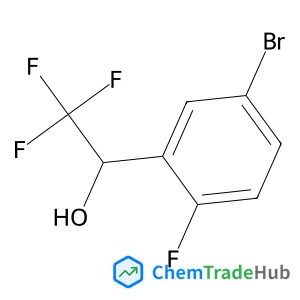
1-(5-Bromo-2-fluorophenyl)-2,2,2-trifluoroethanol
CAS Number:
1039827-16-1
Molecular Formula:
C8H5BrF4O
Recommended Suppliers




Disclaimer
This page provides academic journal information for reference and research purposes only. We are not affiliated with any journal publishers and do not handle publication submissions. For publication-related inquiries, please contact the respective journal publishers directly.
If you notice any inaccuracies in the information displayed, please contact us at support@chemtradehub.com. We will promptly review and address your concerns.