


How to regulate energy levels and hole mobility of spiro-type hole transport materials in perovskite solar cells
Literature Information
Publication Date
2016-07-07
DOI
10.1039/C6CP03316D
Impact Factor
3.676
Authors
Wei-Jie Chi, Ping-Ping Sun, Ze-Sheng Li
View Original
Abstract
Methoxyaniline-based organic small molecules with three-dimensional structure have been proven as the most promising hole conductor for state-of-the-art perovskite devices. A fundamental understanding of the electronic properties and hole transport behavior of spiro-CPDT analogues, which is dependent on the number and position of the –OCH3 groups, is significant for their potential applications as hole transport materials of perovskite solar cells. Our results from density functional theory calculations indicate that meta-substitution is more beneficial to reduce the highest occupied molecular orbital (HOMO) levels of molecules compared with ortho- and para-substitution. Furthermore, the hole mobility can be improved by ortho-substitution or mixed ortho- and para-substitution. Most interestingly, it is found that the improvement in hole mobility is at the expense of raising the HOMO level of spiro-CPDT analogues. These results can be useful in the process of designing and synthesizing excellent hole transport materials with suitable HOMO levels and high hole mobility.
Recommended Journals

Russian Journal of Bioorganic Chemistry

Organic Process Research & Development

Russian Journal of Coordination Chemistry

Current Opinion in Solid State & Materials Science

Journal of Natural Medicines

Russian Journal of Applied Chemistry

Journal of Peptide Science

Chemical Communications

Chemistry Education Research and Practice

Current Opinion in Colloid & Interface Science
Related Literature
A double-QM/MM method for investigating donor–acceptor electron-transfer reactions in solution
Jaroslav V. Burda
2014-08-08
Paper
DOI: 10.1039/C4CP02307B
Terbium-doped gadolinium oxide nanoparticles prepared by laser ablation in liquid for use as a fluorescence and magnetic resonance imaging dual-modal contrast agent
Fei Chen, Min Chen, Chuan Yang, Jun Liu, Ningqi Luo, Guowei Yang, Dihu Chen, Li Li
2014-11-12
Paper
DOI: 10.1039/C4CP04380D
The Crystal-T algorithm: a new approach to calculate the SLE of lipidic mixtures presenting solid solutions
Guilherme J. Maximo, Mariana C. Costa, Antonio J. A. Meirelles
2014-06-18
Paper
DOI: 10.1039/C4CP01529K
Quaternary ammonium and phosphonium based ionic liquids: a comparison of common anions
Rebecca K. Blundell, Peter Licence
2014-06-11
Paper
DOI: 10.1039/C4CP01901F
Pool-BCGA: a parallelised generation-free genetic algorithm for the ab initio global optimisation of nanoalloy clusters
A. Shayeghi, D. Götz, J. B. A. Davis, R. Schäfer, R. L. Johnston
2014-12-01
Paper
DOI: 10.1039/C4CP04323E
Solvent induced conformer specific photochemistry of guaiacol
Simon E. Greenough, Michael D. Horbury, James O. F. Thompson, Gareth M. Roberts, Tolga N. V. Karsili, Barbara Marchetti, Dave Townsend, Vasilios G. Stavros
2014-06-18
Paper
DOI: 10.1039/C4CP02424A
Reaction mechanisms of aqueous monoethanolamine with carbon dioxide: a combined quantum chemical and molecular dynamics study
Haley M. Stowe, Eunsu Paek, Dhivya Manogaran
2014-11-04
Paper
DOI: 10.1039/C4CP04518A
Highly monodisperse multiple twinned AuCu–Pt trimetallic nanoparticles with high index surfaces
Subarna Khanal, Nabraj Bhattarai, David McMaster, Daniel Bahena, J. Jesus Velazquez-Salazar, Miguel Jose-Yacaman
2014-06-24
Paper
DOI: 10.1039/C4CP02208D
Near-band-edge exciton polarization change in ZnO nanowires
Zaiping Zeng, Alexia Petoni, Christos S. Garoufalis, Sotirios Baskoutas, Gabriel Bester
2014-11-12
Paper
DOI: 10.1039/C4CP04551C
The enhancing effects of group V σ-hole interactions on the F⋯O halogen bond
Wei Li, Yanli Zeng, Xueying Zhang, Shijun Zheng, Lingpeng Meng
2014-07-22
Paper
DOI: 10.1039/C4CP02430C
You might also like
Compound Q&A
Is 2-(2-chloroacetamido)-3-phenylpropanoic acid (CAS: 7765-11-9) safe?
2-(2-Chloroacetamido)-3-phenylpropanoic acid (CAS: 7765-11-9) is generally consi...
7765-11-92-(2-chloroacetamido...
Compound Q&A
Is 2-(Benzyloxy)-5-bromobenzoic acid (CAS: 62176-31-2) safe?
2-(Benzyloxy)-5-bromobenzoic acid can be handled safely if appropriate precautio...
62176-31-22-(Benzyloxy)-5-brom...
Compound Q&A
What is (4-Methyl-1,2,5-oxadiazol-3-yl)methanamine hydrochloride (CAS: 1159825-48-5)?
(4-Methyl-1,2,5-oxadiazol-3-yl)methanamine hydrochloride is a chemical compound ...
1159825-48-5(4-Methyl-1,2,5-oxad...
Compound Q&A
What is 2-(5-Hexylthiophen-2-yl)-4,4,5,5-tetramethyl-1,3,2-dioxaborolane (CAS: 917985-54-7)?
2-(5-Hexylthiophen-2-yl)-4,4,5,5-tetramethyl-1,3,2-dioxaborolane (CAS: 917985-54...
917985-54-72-(5-Hexylthiophen-2...
Compound Q&A
Are there alternatives to 4-(8-Methyl-9H-1,3-dioxolo[4,5-h][2,3]benzodiazepin-5-yl)benzenamine (CAS: 102771-26-6) in synthesis?
While 4-(8-Methyl-9H-1,3-dioxolo[4,5-h][2,3]benzodiazepin-5-yl)benzenamine (CAS:...
102771-26-64-(8-Methyl-9H-1,3-d...
Compound Q&A
What is the market or research trend for tert-butyl 3-hydroxy-4,5,7,8-tetrahydro-2H-pyrazolo[3,4-d]azepine-6-carboxylate (CAS: 851376-80-2)?
The market for tert-butyl 3-hydroxy-4,5,7,8-tetrahydro-2H-pyrazolo[3,4-d]azepine...
851376-80-2tert-butyl 3-hydroxy...
Compound Q&A
How should waste containing 3,5-Diamino-1H-pyrazole-4-carbonitrile (CAS: 6844-58-2) be handled?
Waste containing 3,5-Diamino-1H-pyrazole-4-carbonitrile (CAS: 6844-58-2) should ...
6844-58-23,5-Diamino-1H-pyraz...
Compound Q&A
How is (6-Fluoro-3-pyridinyl)boronic acid (CAS: 351019-18-6) typically synthesized?
(6-Fluoro-3-pyridinyl)boronic acid can be synthesized through the reaction of 6-...
351019-18-6(6-Fluoro-3-pyridiny...
Compound Q&A
What industries use Dibenzyl carbonimidoylbiscarbamate (CAS: 10065-79-9)?
Dibenzyl carbonimidoylbiscarbamate (CAS: 10065-79-9) finds applications in vario...
10065-79-9Dibenzyl carbonimido...
Compound Q&A
What is the market or research trend for (beta,beta,2,3,4,5,6-~2~H_7_)Phenylalanine (CAS: 74228-83-4)?
The market for (beta,beta,2,3,4,5,6-~2~H_7_)Phenylalanine (CAS: 74228-83-4) is g...
74228-83-4(beta,beta,2,3,4,5,6...
Source Journal
Physical Chemistry Chemical Physics

CiteScore:
5.5
Self-citation Rate:
10.3%
Articles per Year:
3036
Physical Chemistry Chemical Physics (PCCP) is an international journal co-owned by 19 physical chemistry and physics societies from around the world. This journal publishes original, cutting-edge research in physical chemistry, chemical physics and biophysical chemistry. To be suitable for publication in PCCP, articles must include significant innovation and/or insight into physical chemistry; this is the most important criterion that reviewers and Editors will judge against when evaluating submissions. The journal has a broad scope and welcomes contributions spanning experiment, theory, computation and data science. Topical coverage includes spectroscopy, dynamics, kinetics, statistical mechanics, thermodynamics, electrochemistry, catalysis, surface science, quantum mechanics, quantum computing and machine learning. Interdisciplinary research areas such as polymers and soft matter, materials, nanoscience, energy, surfaces/interfaces, and biophysical chemistry are welcomed if they demonstrate significant innovation and/or insight into physical chemistry. Joined experimental/theoretical studies are particularly appreciated when complementary and based on up-to-date approaches.
Recommended Compounds
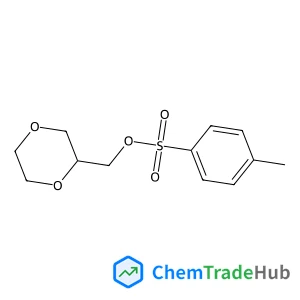
(S)-(1,4-Dioxan-2-yl)methyl 4-methylbenzenesulfonate
CAS Number:
917882-64-5
Molecular Formula:
C12H16O5S
![3,7-Di(1,1':3',1''-terphenyl-5'-yl)-10,11,12,13-tetrahydrodiindeno[7,1-de:1',7'-fg][1,3,2]dioxaphosphocin-5-ol 5-oxide structure](https://static.chemtradehub.com/structs/135/1352810-38-8-3f10.webp "3,7-Di(1,1':3',1''-terphenyl-5'-yl)-10,11,12,13-tetrahydrodiindeno[7,1-de:1',7'-fg][1,3,2]dioxaphosphocin-5-ol 5-oxide structure")
3,7-Di(1,1':3',1''-terphenyl-5'-yl)-10,11,12,13-tetrahydrodiindeno[7,1-de:1',7'-fg][1,3,2]dioxaphosphocin-5-ol 5-oxide
CAS Number:
1352810-38-8
Molecular Formula:
C53H39O4P
Recommended Suppliers






Disclaimer
This page provides academic journal information for reference and research purposes only. We are not affiliated with any journal publishers and do not handle publication submissions. For publication-related inquiries, please contact the respective journal publishers directly.
If you notice any inaccuracies in the information displayed, please contact us at support@chemtradehub.com. We will promptly review and address your concerns.