












The Crystal-T algorithm: a new approach to calculate the SLE of lipidic mixtures presenting solid solutions
Literature Information
Publication Date
2014-06-18
DOI
10.1039/C4CP01529K
Impact Factor
3.676
Authors
Guilherme J. Maximo, Mariana C. Costa, Antonio J. A. Meirelles
View Original
Abstract
Lipidic mixtures present a particular phase change profile highly affected by their unique crystalline structure. However, classical solid–liquid equilibrium (SLE) thermodynamic modeling approaches, which assume the solid phase to be a pure component, sometimes fail in the correct description of the phase behavior. In addition, their inability increases with the complexity of the system. To overcome some of these problems, this study describes a new procedure to depict the SLE of fatty binary mixtures presenting solid solutions, namely the “Crystal-T algorithm”. Considering the non-ideality of both liquid and solid phases, this algorithm is aimed at the determination of the temperature in which the first and last crystal of the mixture melts. The evaluation is focused on experimental data measured and reported in this work for systems composed of triacylglycerols and fatty alcohols. The liquidus and solidus lines of the SLE phase diagrams were described by using excess Gibbs energy based equations, and the group contribution UNIFAC model for the calculation of the activity coefficients of both liquid and solid phases. Very low deviations of theoretical and experimental data evidenced the strength of the algorithm, contributing to the enlargement of the scope of the SLE modeling.
Related Literature
First-principles investigation of polarization and ion conduction mechanisms in hydroxyapatite
Shusuke Kasamatsu, Osamu Sugino
2018-03-09
Paper
DOI: 10.1039/C7CP08409A
Temperature-programmed desorption studies of NH3 and H2O on the RuO2(110) surface: effects of adsorbate diffusion
Kai-Ting Wang, Santhanamoorthi Nachimuthu, Jyh-Chiang Jiang
2018-08-31
Paper
DOI: 10.1039/C8CP02568A
Substituent effect on the dynamics of the inclusion complex formation between protoberberine alkaloids and cucurbit[7]uril
Zsombor Miskolczy, László Biczók, György Lendvay
2018-05-14
Paper
DOI: 10.1039/C8CP01845F
Influence of conjugation length on ultrafast electronic tunneling in organic semiconductor thin films
Vincent V. Duong, Alexander L. Ayzner
2018-09-19
Paper
DOI: 10.1039/C8CP04746D
Pseudorotaxanes in the gas phase: structure and energetics of protonated dibenzylamine–crown ether complexes
Motoki Kida, Daisuke Shimoyama, Toshiaki Ikeda, Ryo Sekiya, Takeharu Haino, Takayuki Ebata, Christophe Jouvet, Yoshiya Inokuchi
2018-06-22
Paper
DOI: 10.1039/C8CP02707B
Competition between salt bridge and non-zwitterionic structures in deprotonated amino acid dimers
Giel Berden, Evan R. Williams
2018-05-18
Paper
DOI: 10.1039/C8CP01458B
Electronic and optical properties of hydrogenated group-IV multilayer materials
Renato Borges Pontes, Rosana Rabelo Mançano, Rafael da Silva, Luiz Fernando Cótica, Roberto Hiroki Miwa, José Eduardo Padilha
2018-02-19
Paper
DOI: 10.1039/C7CP08471D
Superatom chemistry: promising properties of near-spherical noble metal clusters
2018-08-28
Perspective
DOI: 10.1039/C8CP04651D
Impact of junction formation processes on single molecular conductance
Y. Isshiki, S. Fujii, T. Nishino, M. Kiguchi
2018-02-15
Paper
DOI: 10.1039/C8CP00317C
You might also like
Compound Q&A
Is 2-(2-chloroacetamido)-3-phenylpropanoic acid (CAS: 7765-11-9) safe?
2-(2-Chloroacetamido)-3-phenylpropanoic acid (CAS: 7765-11-9) is generally consi...
7765-11-92-(2-chloroacetamido...
Compound Q&A
Is 2-(Benzyloxy)-5-bromobenzoic acid (CAS: 62176-31-2) safe?
2-(Benzyloxy)-5-bromobenzoic acid can be handled safely if appropriate precautio...
62176-31-22-(Benzyloxy)-5-brom...
Compound Q&A
What is (4-Methyl-1,2,5-oxadiazol-3-yl)methanamine hydrochloride (CAS: 1159825-48-5)?
(4-Methyl-1,2,5-oxadiazol-3-yl)methanamine hydrochloride is a chemical compound ...
1159825-48-5(4-Methyl-1,2,5-oxad...
Compound Q&A
What is 2-(5-Hexylthiophen-2-yl)-4,4,5,5-tetramethyl-1,3,2-dioxaborolane (CAS: 917985-54-7)?
2-(5-Hexylthiophen-2-yl)-4,4,5,5-tetramethyl-1,3,2-dioxaborolane (CAS: 917985-54...
917985-54-72-(5-Hexylthiophen-2...
Compound Q&A
Are there alternatives to 4-(8-Methyl-9H-1,3-dioxolo[4,5-h][2,3]benzodiazepin-5-yl)benzenamine (CAS: 102771-26-6) in synthesis?
While 4-(8-Methyl-9H-1,3-dioxolo[4,5-h][2,3]benzodiazepin-5-yl)benzenamine (CAS:...
102771-26-64-(8-Methyl-9H-1,3-d...
Compound Q&A
What is the market or research trend for tert-butyl 3-hydroxy-4,5,7,8-tetrahydro-2H-pyrazolo[3,4-d]azepine-6-carboxylate (CAS: 851376-80-2)?
The market for tert-butyl 3-hydroxy-4,5,7,8-tetrahydro-2H-pyrazolo[3,4-d]azepine...
851376-80-2tert-butyl 3-hydroxy...
Compound Q&A
How should waste containing 3,5-Diamino-1H-pyrazole-4-carbonitrile (CAS: 6844-58-2) be handled?
Waste containing 3,5-Diamino-1H-pyrazole-4-carbonitrile (CAS: 6844-58-2) should ...
6844-58-23,5-Diamino-1H-pyraz...
Compound Q&A
How is (6-Fluoro-3-pyridinyl)boronic acid (CAS: 351019-18-6) typically synthesized?
(6-Fluoro-3-pyridinyl)boronic acid can be synthesized through the reaction of 6-...
351019-18-6(6-Fluoro-3-pyridiny...
Compound Q&A
What industries use Dibenzyl carbonimidoylbiscarbamate (CAS: 10065-79-9)?
Dibenzyl carbonimidoylbiscarbamate (CAS: 10065-79-9) finds applications in vario...
10065-79-9Dibenzyl carbonimido...
Compound Q&A
What is the market or research trend for (beta,beta,2,3,4,5,6-~2~H_7_)Phenylalanine (CAS: 74228-83-4)?
The market for (beta,beta,2,3,4,5,6-~2~H_7_)Phenylalanine (CAS: 74228-83-4) is g...
74228-83-4(beta,beta,2,3,4,5,6...
Source Journal
Physical Chemistry Chemical Physics

CiteScore:
5.5
Self-citation Rate:
10.3%
Articles per Year:
3036
Physical Chemistry Chemical Physics (PCCP) is an international journal co-owned by 19 physical chemistry and physics societies from around the world. This journal publishes original, cutting-edge research in physical chemistry, chemical physics and biophysical chemistry. To be suitable for publication in PCCP, articles must include significant innovation and/or insight into physical chemistry; this is the most important criterion that reviewers and Editors will judge against when evaluating submissions. The journal has a broad scope and welcomes contributions spanning experiment, theory, computation and data science. Topical coverage includes spectroscopy, dynamics, kinetics, statistical mechanics, thermodynamics, electrochemistry, catalysis, surface science, quantum mechanics, quantum computing and machine learning. Interdisciplinary research areas such as polymers and soft matter, materials, nanoscience, energy, surfaces/interfaces, and biophysical chemistry are welcomed if they demonstrate significant innovation and/or insight into physical chemistry. Joined experimental/theoretical studies are particularly appreciated when complementary and based on up-to-date approaches.
Recommended Compounds

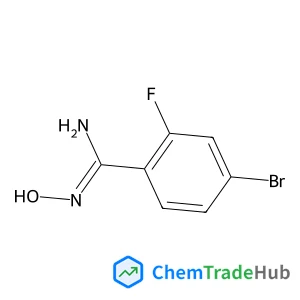
![19-[Chloro(dideuterio)methyl]-19-deuterio-20,20-dideuteriooxyoctatriacontane-18,21-dione structure](https://static.chemtradehub.com/structs/124/1246818-85-8-6244.webp "19-[Chloro(dideuterio)methyl]-19-deuterio-20,20-dideuteriooxyoctatriacontane-18,21-dione structure")
19-[Chloro(dideuterio)methyl]-19-deuterio-20,20-dideuteriooxyoctatriacontane-18,21-dione
CAS Number:
1246818-85-8
Molecular Formula:
C39H75ClO4
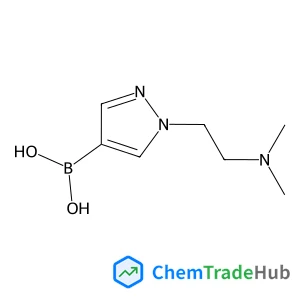
(1-(2-(Dimethylamino)ethyl)-1H-pyrazol-4-yl)boronic acid
CAS Number:
1086063-73-1
Molecular Formula:
C7H14BN3O2
Recommended Suppliers






Disclaimer
This page provides academic journal information for reference and research purposes only. We are not affiliated with any journal publishers and do not handle publication submissions. For publication-related inquiries, please contact the respective journal publishers directly.
If you notice any inaccuracies in the information displayed, please contact us at support@chemtradehub.com. We will promptly review and address your concerns.