


Ammonia as an efficient catalyst for decomposition of carbonic acid: a quantum chemical investigation
Literature Information
Publication Date
2016-05-19
DOI
10.1039/C6CP02407F
Impact Factor
3.676
Authors
Biman Bandyopadhyay, Partha Biswas, Pradeep Kumar
View Original
Abstract
Electronic structure calculations using M06-2X, MP2 and CCSD(T) methods have been employed to show ammonia as an efficient catalyst for decomposition of carbonic acid. The results predict that ammonia can catalyze the reaction as both a monomer and dimer, the latter being more efficient as it makes the reaction nearly barrierless. It has been shown that monomeric ammonia makes the process significantly faster compared with the water monomer (the rate constant being 104 to 105 times higher) as well as the water dimer (10–20 times faster). Dimeric ammonia has been shown to be a better catalyst than its monomeric counterpart (the rate constant being 103 to 104 times higher). Its efficiency as a catalyst was found to be close to that of formic acid. Owing to the fact that ammonia is present in the Earth's atmosphere at a significant trace level, it is expected to play a nontrivial, if not pivotal, role in atmospheric chemistry as a catalyst.
Recommended Journals

Main Group Chemistry

Biocatalysis and Biotransformation

Atomization and Sprays

NDT & E International

Acta Metallurgica Sinica-English Letters

Journal of the Indian Institute of Science

Medicinal Chemistry Research

Heteroatom Chemistry

Critical Reviews in Solid State and Materials Sciences

Journal of Asian Natural Products Research
Related Literature
Synthesis of polycyclic aromatic hydrocarbons by palladium-catalysed [3 + 3] annulation
Bartłomiej Pigulski, Marta Ximenis
2020-08-28
Research Article
DOI: 10.1039/D0QO00968G
A cell-permeant small molecule for the super-resolution imaging of the endoplasmic reticulum in live cells
Adiki Raja Sekhar, Bhagaban Mallik, Vimlesh Kumar, Jeyaraman Sankar
2019-03-19
Communication
DOI: 10.1039/C9OB00408D
Recent progress in the usage of tetrabromo-substituted naphthalenetetracarboxylic dianhydride as a building block to construct organic semiconductors and their applications
Zongrui Wang, Hua Li, Jianmei Lu
2020-07-22
Review Article
DOI: 10.1039/D0QO00637H
Palladium-catalyzed cyanation of aryl halides with in situ generated CN− from ClCF2H and NaNH2
Changjiang Yu, Xingxing Ma, Qiuling Song
2020-08-19
Research Article
DOI: 10.1039/D0QO00775G
Synthesis of the tetrasaccharide repeating unit of the cryoprotectant capsular polysaccharide from Colwellia psychrerythraea 34H
Giulia Vessella, Angela Casillo, Antonio Fabozzi, Serena Traboni, Alfonso Iadonisi, Maria Michela Corsaro, Emiliano Bedini
2019-02-27
Paper
DOI: 10.1039/C9OB00104B
Cold-induced aldimine bond cleavage by Tris in Bacillus subtilis alanine racemase
Noelia Bernardo-García, Pedro A. Sánchez-Murcia, Akbar Espaillat, Siseth Martínez-Caballero, Felipe Cava, Juan A. Hermoso, Federico Gago
2019-04-08
Paper
DOI: 10.1039/C9OB00223E
Cavity-based applications of metallo-supramolecular coordination cages (MSCCs)
Sarita Yadav, Palanisamy Kannan, Guanyinsheng Qiu
2020-07-20
Review Article
DOI: 10.1039/D0QO00681E
Making endo-cyclizations favorable again: a conceptually new synthetic approach to benzotriazoles via azide group directed lithiation/cyclization of 2-azidoaryl bromides
Alexandra A. Ageshina, Igor V. Alabugin
2019-04-08
Paper
DOI: 10.1039/C9OB00615J
Perylenequinonoid-catalyzed photoredox activation for the direct arylation of (het)arenes with sunlight
Zhaocheng Tang, Wenhao Bao, Jia Li, Baodang Guo, Shuping Huang, Yan Zhang, Yijian Rao
2019-04-09
Paper
DOI: 10.1039/C9OB00659A
You might also like
Compound Q&A
Is 2-(2-chloroacetamido)-3-phenylpropanoic acid (CAS: 7765-11-9) safe?
2-(2-Chloroacetamido)-3-phenylpropanoic acid (CAS: 7765-11-9) is generally consi...
7765-11-92-(2-chloroacetamido...
Compound Q&A
Is 2-(Benzyloxy)-5-bromobenzoic acid (CAS: 62176-31-2) safe?
2-(Benzyloxy)-5-bromobenzoic acid can be handled safely if appropriate precautio...
62176-31-22-(Benzyloxy)-5-brom...
Compound Q&A
What is (4-Methyl-1,2,5-oxadiazol-3-yl)methanamine hydrochloride (CAS: 1159825-48-5)?
(4-Methyl-1,2,5-oxadiazol-3-yl)methanamine hydrochloride is a chemical compound ...
1159825-48-5(4-Methyl-1,2,5-oxad...
Compound Q&A
What is 2-(5-Hexylthiophen-2-yl)-4,4,5,5-tetramethyl-1,3,2-dioxaborolane (CAS: 917985-54-7)?
2-(5-Hexylthiophen-2-yl)-4,4,5,5-tetramethyl-1,3,2-dioxaborolane (CAS: 917985-54...
917985-54-72-(5-Hexylthiophen-2...
Compound Q&A
Are there alternatives to 4-(8-Methyl-9H-1,3-dioxolo[4,5-h][2,3]benzodiazepin-5-yl)benzenamine (CAS: 102771-26-6) in synthesis?
While 4-(8-Methyl-9H-1,3-dioxolo[4,5-h][2,3]benzodiazepin-5-yl)benzenamine (CAS:...
102771-26-64-(8-Methyl-9H-1,3-d...
Compound Q&A
What is the market or research trend for tert-butyl 3-hydroxy-4,5,7,8-tetrahydro-2H-pyrazolo[3,4-d]azepine-6-carboxylate (CAS: 851376-80-2)?
The market for tert-butyl 3-hydroxy-4,5,7,8-tetrahydro-2H-pyrazolo[3,4-d]azepine...
851376-80-2tert-butyl 3-hydroxy...
Compound Q&A
How should waste containing 3,5-Diamino-1H-pyrazole-4-carbonitrile (CAS: 6844-58-2) be handled?
Waste containing 3,5-Diamino-1H-pyrazole-4-carbonitrile (CAS: 6844-58-2) should ...
6844-58-23,5-Diamino-1H-pyraz...
Compound Q&A
How is (6-Fluoro-3-pyridinyl)boronic acid (CAS: 351019-18-6) typically synthesized?
(6-Fluoro-3-pyridinyl)boronic acid can be synthesized through the reaction of 6-...
351019-18-6(6-Fluoro-3-pyridiny...
Compound Q&A
What industries use Dibenzyl carbonimidoylbiscarbamate (CAS: 10065-79-9)?
Dibenzyl carbonimidoylbiscarbamate (CAS: 10065-79-9) finds applications in vario...
10065-79-9Dibenzyl carbonimido...
Compound Q&A
What is the market or research trend for (beta,beta,2,3,4,5,6-~2~H_7_)Phenylalanine (CAS: 74228-83-4)?
The market for (beta,beta,2,3,4,5,6-~2~H_7_)Phenylalanine (CAS: 74228-83-4) is g...
74228-83-4(beta,beta,2,3,4,5,6...
Source Journal
Physical Chemistry Chemical Physics

CiteScore:
5.5
Self-citation Rate:
10.3%
Articles per Year:
3036
Physical Chemistry Chemical Physics (PCCP) is an international journal co-owned by 19 physical chemistry and physics societies from around the world. This journal publishes original, cutting-edge research in physical chemistry, chemical physics and biophysical chemistry. To be suitable for publication in PCCP, articles must include significant innovation and/or insight into physical chemistry; this is the most important criterion that reviewers and Editors will judge against when evaluating submissions. The journal has a broad scope and welcomes contributions spanning experiment, theory, computation and data science. Topical coverage includes spectroscopy, dynamics, kinetics, statistical mechanics, thermodynamics, electrochemistry, catalysis, surface science, quantum mechanics, quantum computing and machine learning. Interdisciplinary research areas such as polymers and soft matter, materials, nanoscience, energy, surfaces/interfaces, and biophysical chemistry are welcomed if they demonstrate significant innovation and/or insight into physical chemistry. Joined experimental/theoretical studies are particularly appreciated when complementary and based on up-to-date approaches.
Recommended Compounds
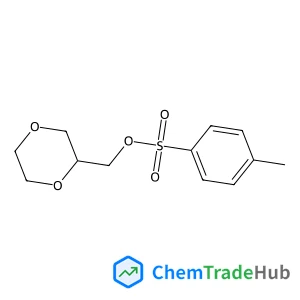
(S)-(1,4-Dioxan-2-yl)methyl 4-methylbenzenesulfonate
CAS Number:
917882-64-5
Molecular Formula:
C12H16O5S
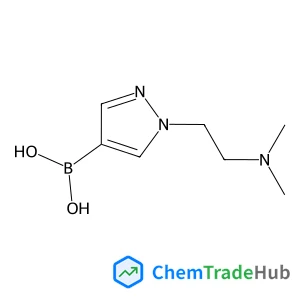
(1-(2-(Dimethylamino)ethyl)-1H-pyrazol-4-yl)boronic acid
CAS Number:
1086063-73-1
Molecular Formula:
C7H14BN3O2
Recommended Suppliers






Disclaimer
This page provides academic journal information for reference and research purposes only. We are not affiliated with any journal publishers and do not handle publication submissions. For publication-related inquiries, please contact the respective journal publishers directly.
If you notice any inaccuracies in the information displayed, please contact us at support@chemtradehub.com. We will promptly review and address your concerns.