












![N-[(9H-Fluoren-9-ylmethoxy)carbonyl]serine structure](https://static.chemtradehub.com/structs/737/73724-45-5-b0dc.webp "N-[(9H-Fluoren-9-ylmethoxy)carbonyl]serine structure")
Revisiting an old concept: the coupled oscillator model for VCD. Part 2: implications of the generalised coupled oscillator mechanism for the VCD robustness concept
Literature Information
Publication Date
2016-07-12
DOI
10.1039/C6CP01283C
Impact Factor
3.676
Authors
View Original
Abstract
Using two illustrative examples it is shown that the generalised coupled oscillator (GCO) mechanism implies that the stability of the VCD sign computed for a given normal mode is not reflected by the magnitude of the ratio ζ between the rotational strength and dipole strength of the respective mode, i.e., the VCD robustness criterium proposed by Góbi and Magyarfalvi. The performed VCD GCO analysis brings further insight into the GCO mechanism and also into the VCD robustness concept. First, it shows that the GCO mechanism can be interpreted as a VCD resonance enhancement mechanism, i.e. very large VCD signals can be observed when the interacting molecular fragments are in favourable orientation. Second, it shows that the uncertainties observed in the computed VCD signs are associated to uncertainties in the relative orientation of the coupled oscillator fragments and/or to uncertainties in the predicted nuclear displacement vectors, i.e. not uncertainties in the computed magnetic dipole transition moments as was originally assumed. Since it is able to identify such situations easily, the VCD GCO analysis can be used as a VCD robustness analysis.
Related Literature
Contrasting ring-opening propensities in UV-excited α-pyrone and coumarin
Daniel Murdock, Rebecca A. Ingle, Igor V. Sazanovich, Ian P. Clark, Yu Harabuchi, Tetsuya Taketsugu, Satoshi Maeda, Andrew J. Orr-Ewing, Michael N. R. Ashfold
2015-12-16
Paper
DOI: 10.1039/C5CP06597F
Nuclear quantum tunnelling in enzymatic reactions – an enzymologist's perspective
Linus O. Johannissen, Sam Hay, Nigel S. Scrutton
2015-03-27
Perspective
DOI: 10.1039/C5CP00614G
Variable electronic properties of lateral phosphorene–graphene heterostructures
Xiaoqing Tian, Lin Liu, Yu Du, Juan Gu, Jian-bin Xu, Boris I. Yakobson
2015-11-06
Paper
DOI: 10.1039/C5CP05443E
A slowing down of proton motion from HPTS to water adsorbed on the MCM-41 surface
Noemí Alarcos, Boiko Cohen, Abderrazzak Douhal
2015-12-16
Paper
DOI: 10.1039/C5CP04548G
Carbon monoxide oxidation catalysed by defective palladium chloride: DFT calculations, EXAFS, and in situ DRIRS measurements
Qiaohong Li, Luyang Qiao, Ruiping Chen, Zuju Ma, Rui Si, Yuangen Yao, Kechen Wu
2015-12-15
Paper
DOI: 10.1039/C5CP07309J
Thiophene functionalized silicon-containing aggregation-induced emission enhancement materials: applications as fluorescent probes for the detection of nitroaromatic explosives in aqueous-based solutions
Xuefeng Wang, Jiangyan Bian, Lichao Xu, Hua Wang, Shengyu Feng
2015-11-16
Paper
DOI: 10.1039/C5CP05473G
Strain tuning of the charge density wave in monolayer and bilayer 1T-TaS2
Li-Yong Gan, Li-Hong Zhang, Qingyun Zhang, Chun-Sheng Guo, Udo Schwingenschlögl
2015-12-07
Paper
DOI: 10.1039/C5CP05695K
A simulation study of the electrostriction effects in dielectric elastomer composites containing polarizable inclusions with different spatial distributions
Hartmut Löwen, Lei Zhu
2015-11-13
Paper
DOI: 10.1039/C5CP05522A
Quantitative monitoring of the removal of non-encapsulated material external to filled carbon nanotube samples
Markus Martincic, Elzbieta Pach, Belén Ballesteros, Gerard Tobias
2015-10-30
Paper
DOI: 10.1039/C5CP04664E
Real-space numerical grid methods in quantum chemistry
Luca Frediani, Dage Sundholm
2015-11-03
Editorial
DOI: 10.1039/C5CP90198G
You might also like
Compound Q&A
How should waste containing (6-Bromo-2-naphthyl)oxy](dimethyl)(2-methyl-2-propanyl)silane be handled?
Waste containing (6-Bromo-2-naphthyl)oxy](dimethyl)(2-methyl-2-propanyl)silane (...
100751-65-3[(6-Bromo-2-naphthyl...
Compound Q&A
How is 7-Fluoro-4-isoquinolinecarboxylic acid (CAS: 1841081-40-0) typically synthesized?
7-Fluoro-4-isoquinolinecarboxylic acid can be synthesized via a multi-step proce...
1841081-40-07-Fluoro-4-isoquinol...
Compound Q&A
What are the physical and chemical properties of 2,3,5,6-Tetrabromothieno[3,2-b]thiophene (CAS: 124638-53-5)?
2,3,5,6-Tetrabromothieno[3,2-b]thiophene is a crystalline compound with a high m...
124638-53-52,3,5,6-Tetrabromoth...
Compound Q&A
Is 1-[4-(Benzylamino)-7,8-dihydro-5H-pyrano[4,3-d]pyrimidin-2-yl]-2-methyl-1H-indole-4-carboxamide (CAS: 1542705-92-9) safe?
1-[4-(Benzylamino)-7,8-dihydro-5H-pyrano[4,3-d]pyrimidin-2-yl]-2-methyl-1H-indol...
1542705-92-91-[4-(Benzylamino)-7...
Compound Q&A
What is the market or research trend for imidazo[5,1-d]-1,2,3,5-tetrazine-8-carboxylic acid, 3,4-dihydro-3-methyl-4-oxo- (CAS: 113942-30-6)?
The market for imidazo[5,1-d]-1,2,3,5-tetrazine-8-carboxylic acid, 3,4-dihydro-3...
113942-30-6Imidazo[5,1-d]-1,2,3...
Compound Q&A
What is 3-(Triisopropylsilyl)propiolaldehyde (CAS: 163271-80-5)?
3-(Triisopropylsilyl)propiolaldehyde is a synthetic organic compound with the CA...
163271-80-53-(Triisopropylsilyl...
Compound Q&A
What regulatory guidelines apply to 6-Nitro-2H-1,4-benzoxazin-3(4H)-one (CAS: 81721-87-1)?
6-Nitro-2H-1,4-benzoxazin-3(4H)-one (CAS: 81721-87-1) is subject to various regu...
81721-87-16-Nitro-2H-1,4-benzo...
Compound Q&A
How should waste containing (3-Fluorophenyl)(4-{[(2-methyl-2-propanyl)oxy]carbonyl}-1-piperazinyl)acetic acid (CAS: 885272-91-3) be handled?
Waste containing (3-Fluorophenyl)(4-{[(2-methyl-2-propanyl)oxy]carbonyl}-1-piper...
885272-91-3(3-Fluorophenyl)(4-{...
Compound Q&A
What are the physical and chemical properties of N,N'-4,4'-Biphenyldiyldiisonicotinamide (CAS: 55119-40-9)?
N,N'-4,4'-Biphenyldiyldiisonicotinamide is a white crystalline solid with a mole...
55119-40-9N,N'-4,4'-Biphenyldi...
Compound Q&A
What industries use 6-Bromo-8-fluoro-2-quinazolinol (CAS: 1036756-15-6)?
6-Bromo-8-fluoro-2-quinazolinol is primarily used in the pharmaceutical industry...
1036756-15-66-Bromo-8-fluoro-2-q...
Source Journal
Physical Chemistry Chemical Physics

CiteScore:
5.5
Self-citation Rate:
10.3%
Articles per Year:
3036
Physical Chemistry Chemical Physics (PCCP) is an international journal co-owned by 19 physical chemistry and physics societies from around the world. This journal publishes original, cutting-edge research in physical chemistry, chemical physics and biophysical chemistry. To be suitable for publication in PCCP, articles must include significant innovation and/or insight into physical chemistry; this is the most important criterion that reviewers and Editors will judge against when evaluating submissions. The journal has a broad scope and welcomes contributions spanning experiment, theory, computation and data science. Topical coverage includes spectroscopy, dynamics, kinetics, statistical mechanics, thermodynamics, electrochemistry, catalysis, surface science, quantum mechanics, quantum computing and machine learning. Interdisciplinary research areas such as polymers and soft matter, materials, nanoscience, energy, surfaces/interfaces, and biophysical chemistry are welcomed if they demonstrate significant innovation and/or insight into physical chemistry. Joined experimental/theoretical studies are particularly appreciated when complementary and based on up-to-date approaches.
Recommended Compounds
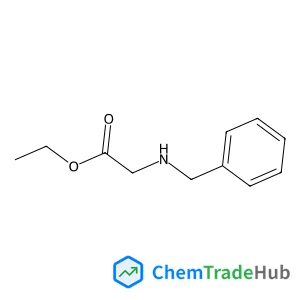
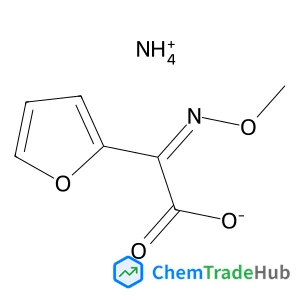
Ammonium (Z)-2-(furan-2-yl)-2-(methoxyimino)acetate
CAS Number:
97148-39-5
Molecular Formula:
C7H10N2O4
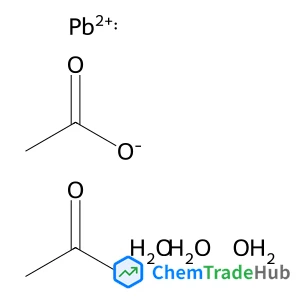
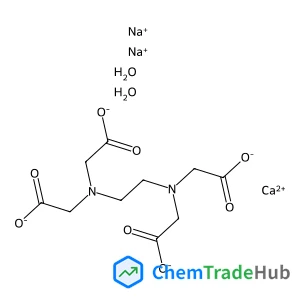
EthylenediaminetetraaceticacidcalciumDisodiumsalthydrate
CAS Number:
23411-34-9
Molecular Formula:
C10H16CaN2Na2O10
Recommended Suppliers





Disclaimer
This page provides academic journal information for reference and research purposes only. We are not affiliated with any journal publishers and do not handle publication submissions. For publication-related inquiries, please contact the respective journal publishers directly.
If you notice any inaccuracies in the information displayed, please contact us at support@chemtradehub.com. We will promptly review and address your concerns.