













Real-space numerical grid methods in quantum chemistry
Literature Information
Publication Date
2015-11-03
DOI
10.1039/C5CP90198G
Impact Factor
3.676
Authors
Luca Frediani, Dage Sundholm
View Original
Abstract
A graphical abstract is available for this content
Related Literature
A rapid identification of hit molecules for target proteins via physico-chemical descriptors
Goutam Mukherjee
2013-04-11
Paper
DOI: 10.1039/C3CP44697B
The conformational landscape of tartrate-based inhibitors of the TACE enzyme as revealed by Hamiltonian Replica Exchange simulation
Carlo Guardiani, Piero Procacci
2013-04-15
Paper
DOI: 10.1039/C3CP00108C
Amyloid-β–neuropeptide interactions assessed by ion mobility-mass spectrometry
Molly T. Soper, Alaina S. DeToma, Suk-Joon Hyung, Brandon T. Ruotolo
2013-04-15
Paper
DOI: 10.1039/C3CP50721A
Role of aromatic residues in amyloid fibril formation of human calcitonin by solid-state 13C NMR and molecular dynamics simulation
Hikari Itoh-Watanabe, Miya Kamihira-Ishijima, Namsrai Javkhlantugs, Ryozo Inoue, Yuki Itoh, Hiroshi Endo, Satoru Tuzi, Hazime Saitô, Kazuyoshi Ueda, Akira Naito
2013-03-08
Paper
DOI: 10.1039/C3CP44544E
Initiation of assembly of tau(273-284) and its ΔK280 mutant: an experimental and computational study
Megan Murray Gessel, Nichole E. LaPointe, Thanh D. Do, Michael T. Bowers, Stuart C. Feinstein
2013-03-08
Paper
DOI: 10.1039/C3CP00063J
Robust switching characteristics of CdSe/ZnS quantum dot non-volatile memory devices
V. Kannan, J. K. Rhee
2013-05-10
Paper
DOI: 10.1039/C3CP50216C
Contributions of magnetic properties in epitaxial copper-doped ZnO
Hongyan Liu, Fei Zeng, Shuang Gao, Guangyue Wang, Cheng Song, Feng Pan
2013-07-03
Paper
DOI: 10.1039/C3CP51894A
Experimental observation of C60 LUMO splitting in the C602− dianions due to the Jahn–Teller effect. Comparison with the C60˙− radical anions
Dmitri V. Konarev, Alexey V. Kuzmin, Sergey V. Simonov, Evgeniya I. Yudanova, Salavat S. Khasanov, Gunzi Saito, Rimma N. Lyubovskaya
2013-03-25
Paper
DOI: 10.1039/C3CP44359K
First-principles studies on transport properties and contact effects of Cu(111)/ZnO-nanobelt(100)/Cu(111) systems
Xu Sun, Yousong Gu, Xueqiang Wang, Yue Zhang
2013-05-31
Paper
DOI: 10.1039/C3CP50212K
You might also like
Compound Q&A
What are the main uses of 1H-Indazole-6-carbonitrile (CAS: 141290-59-7)?
1H-Indazole-6-carbonitrile finds applications in pharmaceuticals, where it serve...
141290-59-71H-Indazole-6-carbon...
Compound Q&A
How should waste containing Dioctyl (2E)-2-butenedioate (CAS: 2997-85-5) be handled?
Waste containing Dioctyl (2E)-2-butenedioate (CAS: 2997-85-5) should be collecte...
2997-85-5Dioctyl (2E)-2-buten...
Compound Q&A
What industries use Sodium [(1,2-benzoxazol-3-ylmethyl)sulfonyl]azanide (CAS: 68291-98-5)?
Sodium [(1,2-benzoxazol-3-ylmethyl)sulfonyl]azanide is primarily used in pharmac...
68291-98-5Sodium [(1,2-benzoxa...
Compound Q&A
Are there alternatives to Dimethyl 4-(4,4,5,5-tetramethyl-1,3,2-dioxaborolan-2-yl)-2,6-pyridinedicarboxylate (CAS: 741709-66-0) in synthesis?
Dimethyl 4-(4,4,5,5-tetramethyl-1,3,2-dioxaborolan-2-yl)-2,6-pyridinedicarboxyla...
741709-66-0Dimethyl 4-(4,4,5,5-...
Compound Q&A
How should waste containing 2-Fluoro-6-hydrazinopyridine (CAS: 80714-39-2) be handled?
Waste containing 2-Fluoro-6-hydrazinopyridine (CAS: 80714-39-2) should be manage...
80714-39-22-Fluoro-6-hydrazino...
Compound Q&A
What is 6-Formyl-2-pyridinecarboxylic acid (CAS: 499214-11-8)?
6-Formyl-2-pyridinecarboxylic acid is an organic compound with the molecular for...
499214-11-86-Formyl-2-pyridinec...
Compound Q&A
What is the market or research trend for 3-(3,4-dimethoxyphenyl)-2,5-dimethyl-N-(2-morpholin-4-ylethyl)pyrazolo[1,5-a]pyrimidin-7-amine (CAS: 900874-91-1)?
Research trends for this compound indicate a focus on its potential applications...
900874-91-13-(3,4-dimethoxyphen...
Compound Q&A
How is 9H-Tribenzo[b,d,f]azepine (CAS: 29875-73-8) typically synthesized?
9H-Tribenzo[b,d,f]azepine is typically synthesized via a multi-step process invo...
29875-73-89H-Tribenzo[b,d,f]az...
Compound Q&A
How is 1-Cyclopropyl-7-ethoxy-6-fluoro-8-methoxy-4-oxo-1,4-dihydro-3-quinolinecarboxylic acid (CAS: 1797982-51-4) typically synthesized?
1-Cyclopropyl-7-ethoxy-6-fluoro-8-methoxy-4-oxo-1,4-dihydro-3-quinolinecarboxyli...
1797982-51-41-Cyclopropyl-7-etho...
Compound Q&A
How should waste containing Methyl 3-oxo-1,2,3,4-tetrahydro-6-quinoxalinecarboxylate (CAS: 671820-52-3) be handled?
Waste containing Methyl 3-oxo-1,2,3,4-tetrahydro-6-quinoxalinecarboxylate (CAS: ...
671820-52-3Methyl 3-oxo-1,2,3,4...
Source Journal
Physical Chemistry Chemical Physics

CiteScore:
5.5
Self-citation Rate:
10.3%
Articles per Year:
3036
Physical Chemistry Chemical Physics (PCCP) is an international journal co-owned by 19 physical chemistry and physics societies from around the world. This journal publishes original, cutting-edge research in physical chemistry, chemical physics and biophysical chemistry. To be suitable for publication in PCCP, articles must include significant innovation and/or insight into physical chemistry; this is the most important criterion that reviewers and Editors will judge against when evaluating submissions. The journal has a broad scope and welcomes contributions spanning experiment, theory, computation and data science. Topical coverage includes spectroscopy, dynamics, kinetics, statistical mechanics, thermodynamics, electrochemistry, catalysis, surface science, quantum mechanics, quantum computing and machine learning. Interdisciplinary research areas such as polymers and soft matter, materials, nanoscience, energy, surfaces/interfaces, and biophysical chemistry are welcomed if they demonstrate significant innovation and/or insight into physical chemistry. Joined experimental/theoretical studies are particularly appreciated when complementary and based on up-to-date approaches.
Recommended Compounds
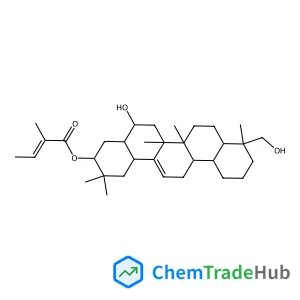
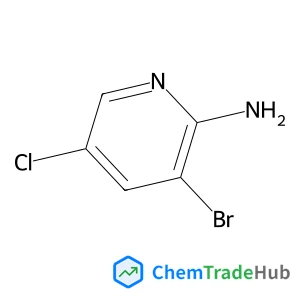
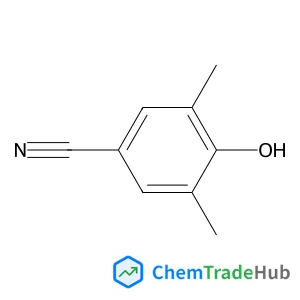
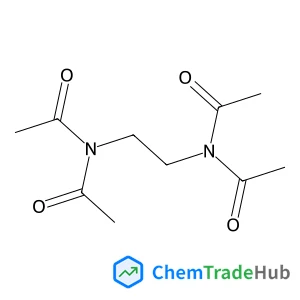
Recommended Suppliers







Disclaimer
This page provides academic journal information for reference and research purposes only. We are not affiliated with any journal publishers and do not handle publication submissions. For publication-related inquiries, please contact the respective journal publishers directly.
If you notice any inaccuracies in the information displayed, please contact us at support@chemtradehub.com. We will promptly review and address your concerns.