












Monte-Carlo modelling of nano-material photocatalysis: bridging photocatalytic activity and microscopic charge kinetics
Literature Information
Publication Date
2016-04-11
DOI
10.1039/C6CP01065B
Impact Factor
3.676
Authors
View Original
Abstract
In photocatalysis, it is known that light intensity, organic concentration, and temperature affect the photocatalytic activity by changing the microscopic kinetics of holes and electrons. However, how the microscopic kinetics of holes and electrons relates to the photocatalytic activity was not well known. In the present research, we developed a Monte-Carlo random walking model that involved all of the charge kinetics, including the photo-generation, the recombination, the transport, and the interfacial transfer of holes and electrons, to simulate the overall photocatalytic reaction, which we called a “computer experiment” of photocatalysis. By using this model, we simulated the effect of light intensity, temperature, and organic surface coverage on the photocatalytic activity and the density of the free electrons that accumulate in the simulated system. It was seen that the increase of light intensity increases the electron density and its mobility, which increases the probability for a hole/electron to find an electron/hole for recombination, and consequently led to an apparent kinetics that the quantum yield (QY) decreases with the increase of light intensity. It was also seen that the increase of organic surface coverage could increase the rate of hole interfacial transfer and result in the decrease of the probability for an electron to recombine with a hole. Moreover, the increase of organic coverage on the nano-material surface can also increase the accumulation of electrons, which enhances the mobility for electrons to undergo interfacial transfer, and finally leads to the increase of photocatalytic activity. The simulation showed that the temperature had a more complicated effect, as it can simultaneously change the activation of electrons, the interfacial transfer of holes, and the interfacial transfer of electrons. It was shown that the interfacial transfer of holes might play a main role at low temperature, with the temperature-dependence of QY conforming to the Arrhenius model. The activation of electrons from the traps to the conduction band might become important at high temperature, which accelerates the electron movement for recombination and leads to a temperature dependence of QY that deviates from the Arrhenius model.
Related Literature
Probing glycosaminoglycan spectral signatures in live cells and their conditioned media by Raman microspectroscopy
H. T. Mohamed
2017-03-20
Paper
DOI: 10.1039/C6AN01951J
Diatoms response to salinity changes: investigations using single pulse and cross polarisation magic angle spinning 29Si NMR spectra
M. R. Johnston, J. R. Gascooke, A. V. Ellis, S. C. Leterme
2018-09-05
Paper
DOI: 10.1039/C8AN00948A
Simple construction of ratiometric fluorescent probe for the detection of dopamine and tyrosinase by the naked eye
Guobin Mao, Mingyuan Du, Xinxin Wang, Xinghu Ji, Zhike He
2018-09-21
Paper
DOI: 10.1039/C8AN01640B
Ratiometric red-emission fluorescence detection of Al3+ in pure aqueous solution and live cells by a fluorescent peptidyl probe using aggregation-induced emission
Lok Nath Neupane, Pramod Kumar Mehta, Semin Oh, See-Hyoung Park, Keun-Hyeung Lee
2018-09-04
Paper
DOI: 10.1039/C8AN01221K
Sensitive fluorescence detection of heparin based on self-assembly of mesoporous silica nanoparticle–gold nanoclusters with emission enhancement characteristics
Lin Ma, Mengyue Zhang, Aijun Yang, Qin Wang, Fei Qu, Fengli Qu, Rong-Mei Kong
2018-09-18
Paper
DOI: 10.1039/C8AN01556B
Multi-lumen capillary based trypsin micro-reactor for the rapid digestion of proteins
S. A. Currivan, W. Q. Chen, R. Wilson, E. Sanz Rodriguez, N. Upadhyay, D. Connolly
2018-09-10
Paper
DOI: 10.1039/C8AN01330F
Digital enzyme assay using attoliter droplet array
Takao Ono, Takanori Ichiki
2018-09-17
Paper
DOI: 10.1039/C8AN01152D
NIR two-photon fluorescent probe for biothiol detection and imaging of living cells in vivo
Xiang Xia, Ying Qian
2018-09-20
Paper
DOI: 10.1039/C8AN01605D
An up-converting phosphor technology-based lateral flow assay for point-of-collection detection of morphine and methamphetamine in saliva
Qiushi Hu, Qiaozhen Wei, Pingping Zhang, Shuang Li, Lei Xue, Ruifu Yang, Lei Zhou
2018-08-01
Paper
DOI: 10.1039/C8AN00651B
Structuring polarity-inverted TBA to G-quadruplex for selective recognition of planarity of natural isoquinoline alkaloids
Yufeng Zhou, Yali Yu, Longlong Gao, Yifan Fei, Ting Ye, Qiusha Li, Xiaoshun Zhou, Ning Gan, Yong Shao
2018-08-28
Paper
DOI: 10.1039/C8AN01561A
You might also like
Compound Q&A
What is the market or research trend for N-(4-Methoxybenzyl)-2-pyridinamine (CAS: 52818-63-0)?
N-(4-Methoxybenzyl)-2-pyridinamine (CAS: 52818-63-0) is increasingly being used ...
52818-63-0N-(4-Methoxybenzyl)-...
Compound Q&A
What precautions should be taken when handling Ethyl 4-(2-chlorophenyl)-1,3-thiazole-2-carboxylate (CAS: 1050507-06-6)?
When handling Ethyl 4-(2-chlorophenyl)-1,3-thiazole-2-carboxylate, appropriate p...
1050507-06-6Ethyl 4-(2-chlorophe...
Compound Q&A
What regulatory guidelines apply to diethyldiselane (CAS: 628-39-7)?
Diethyldiselane (CAS: 628-39-7) is classified under the Globally Harmonized Syst...
628-39-7Diethyldiselane
Compound Q&A
What is the market or research trend for oxocopper (CAS: 12053-18-8)?
The market for oxocopper (CAS: 12053-18-8) is primarily driven by its use in cat...
12053-18-8oxocopper; oxo-(oxoc...
Compound Q&A
What is the market or research trend for 5-{[(2-Methyl-2-propanyl)oxy]carbonyl}-5-azaspiro[2.4]heptane-7-carboxylic acid?
The market for 5-{[(2-Methyl-2-propanyl)oxy]carbonyl}-5-azaspiro[2.4]heptane-7-c...
1268519-54-55-{[(2-Methyl-2-prop...
Compound Q&A
What is 2-(1-Pyrrolidinyl)-4-pyridinamine (CAS: 35981-63-6)?
2-(1-Pyrrolidinyl)-4-pyridinamine is a chemical compound with the CAS number 359...
35981-63-62-(1-Pyrrolidinyl)-4...
Compound Q&A
What are the physical and chemical properties of 2-(3-Pyridinyl)-1-azabicyclo[2.2.2]octane (CAS: 91556-75-1)?
2-(3-Pyridinyl)-1-azabicyclo[2.2.2]octane (CAS: 91556-75-1) is a crystalline sol...
91556-75-12-(3-Pyridinyl)-1-az...
Compound Q&A
How is (S)-Alpha-allyl-proline hydrochloride (CAS: 129704-91-2) typically synthesized?
(S)-Alpha-allyl-proline hydrochloride is usually synthesized via a Wittig reacti...
129704-91-2(S)-Alpha-allyl-prol...
Compound Q&A
What is 3-Methyl-1,2-oxazole-5-carboxylic acid (CAS: 4857-42-5)?
3-Methyl-1,2-oxazole-5-carboxylic acid (CAS: 4857-42-5) is an organic compound w...
4857-42-53-Methyl-1,2-oxazole...
Compound Q&A
How is Lys-SMCC-DM1 (CAS: 1281816-04-3) typically synthesized?
Lys-SMCC-DM1 is synthesized via a multi-step process involving the coupling of S...
1281816-04-3Lys-SMCC-DM1
Source Journal
Physical Chemistry Chemical Physics

CiteScore:
5.5
Self-citation Rate:
10.3%
Articles per Year:
3036
Physical Chemistry Chemical Physics (PCCP) is an international journal co-owned by 19 physical chemistry and physics societies from around the world. This journal publishes original, cutting-edge research in physical chemistry, chemical physics and biophysical chemistry. To be suitable for publication in PCCP, articles must include significant innovation and/or insight into physical chemistry; this is the most important criterion that reviewers and Editors will judge against when evaluating submissions. The journal has a broad scope and welcomes contributions spanning experiment, theory, computation and data science. Topical coverage includes spectroscopy, dynamics, kinetics, statistical mechanics, thermodynamics, electrochemistry, catalysis, surface science, quantum mechanics, quantum computing and machine learning. Interdisciplinary research areas such as polymers and soft matter, materials, nanoscience, energy, surfaces/interfaces, and biophysical chemistry are welcomed if they demonstrate significant innovation and/or insight into physical chemistry. Joined experimental/theoretical studies are particularly appreciated when complementary and based on up-to-date approaches.
Recommended Compounds
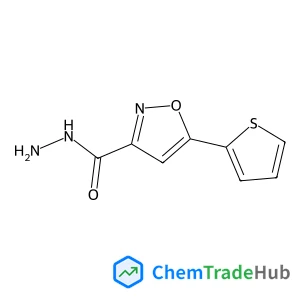
![N-{[(2-Methyl-2-propanyl)oxy]carbonyl}-L-methionylglycine structure](https://static.chemtradehub.com/structs/234/23446-03-9-e1e5.webp "N-{[(2-Methyl-2-propanyl)oxy]carbonyl}-L-methionylglycine structure")
N-{[(2-Methyl-2-propanyl)oxy]carbonyl}-L-methionylglycine
CAS Number:
23446-03-9
Molecular Formula:
C12H22N2O5S
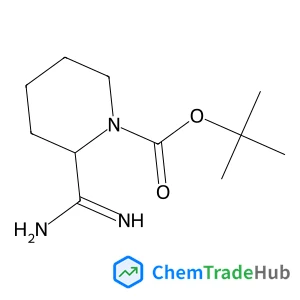
2-Methyl-2-propanyl 2-carbamimidoyl-1-piperidinecarboxylate
CAS Number:
1258640-98-0
Molecular Formula:
C11H21N3O2
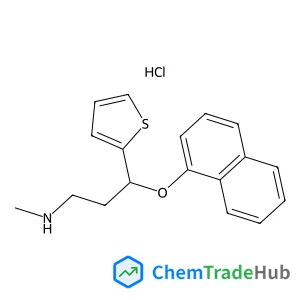
N-Methyl-3-(1-naphthyloxy)-3-(2-thienyl)-1-propanamine hydrochloride (1:1)
CAS Number:
1188266-11-6
Molecular Formula:
C18H20ClNOS
Recommended Suppliers





Disclaimer
This page provides academic journal information for reference and research purposes only. We are not affiliated with any journal publishers and do not handle publication submissions. For publication-related inquiries, please contact the respective journal publishers directly.
If you notice any inaccuracies in the information displayed, please contact us at support@chemtradehub.com. We will promptly review and address your concerns.