












![1-oxaspiro[4.4]nonan-6-one structure](https://static.chemtradehub.com/structs/134/134179-01-4-e051.webp "1-oxaspiro[4.4]nonan-6-one structure")
Degradation behavior and biosafety studies of the mPEG–PLGA–PLL copolymer
Literature Information
Publication Date
2016-03-29
DOI
10.1039/C6CP00767H
Impact Factor
3.676
Authors
Ying Sun, Jun Cao, Yourong Duan
View Original
Abstract
In a previous study, a novel biodegradable multiblock copolymer, monomethoxy(poly-ethylene glycol)–poly(D,L-lactide-co-glycolide)–poly(L-lysine) (PEAL), was developed as a new drug carrier material. It is imperative to study the biocompatibility and degradation behavior of PEAL to pave the way for clinical applications. Here, we systematically demonstrated that the PEAL copolymer has the appropriate hydrophilicity and biosafety. The degradation rate of the PEAL films was obtained by observing changes in mass, molecular weight (Mw), Mw distribution and degradation products. The degradation rate was observed to have a highly positive correlation with the pH of the medium and negative correlation with the ratio of lactic acid to glycolic acid (LA/GA). Cytotoxicity tests indicated that the degradation products of the copolymer were non-toxic to cells. In zebrafish embryos, the PEAL nanoparticles had no obvious impact on heart rate, production of reactive oxygen species, mortality, or cell apoptosis, and they were observed to have a long circulation time. Therefore, the PEAL copolymer has great potential for use as a drug carrier material.
Related Literature
Probing micro-solvation in “numbers”: the case of neutral dipeptides in water
Panteleimon G. Takis, Konstantinos D. Papavasileiou, Loukas D. Peristeras, Vasilios S. Melissas, Anastassios N. Troganis
2013-03-22
Paper
DOI: 10.1039/C3CP44606A
Long-range Li+ dynamics in the lithium argyrodite Li7PSe6 as probed by rotating-frame spin–lattice relaxation NMR
V. Epp, Ö. Gün, H.-J. Deiseroth, M. Wilkening
2013-03-18
Paper
DOI: 10.1039/C3CP44379E
Improving the thermoelectric properties of half-Heusler TiNiSn through inclusion of a second full-Heusler phase: microwave preparation and spark plasma sintering of TiNi1+xSn
Bethany R. Lettiere, Gareth Seward, Nisha Verma, Yichi Zhang
2013-04-04
Paper
DOI: 10.1039/C3CP50918D
Benchmarks for 0–0 transitions of aromatic organic molecules: DFT/B3LYP, ADC(2), CC2, SOS-CC2 and SCS-CC2 compared to high-resolution gas-phase data
Nina O. C. Winter, Nora K. Graf, Samuel Leutwyler, Christof Hättig
2012-10-19
Paper
DOI: 10.1039/C2CP42694C
Nature of proton transport in a water-filled carbon nanotube and in liquid water
Ji Chen, Qianfan Zhang, Angelos Michaelides, Enge Wang
2013-03-07
Paper
DOI: 10.1039/C3CP50218J
Thermal evaporation-induced anhydrous synthesis of Fe3O4–graphene composite with enhanced rate performance and cyclic stability for lithium ion batteries
Ruguang Ma, Mingjun Hu, Hua Cheng, Yang Yang Li
2013-03-15
Paper
DOI: 10.1039/C3CP50588J
Hydrogen and carbon monoxide generation from laser-induced graphitized nanodiamonds in water
Dong Myung Jang, Hyung Soon Im, Yoon Myung, Yong Jae Cho, Han Sung Kim, Seung Hyuk Back, Jeunghee Park, Eun Hee Cha, Minyung Lee
2013-03-19
Paper
DOI: 10.1039/C3CP50769F
Specific many-electron effects in X-ray spectra of simple metals and graphene
R. E. Ovcharenko, I. I. Tupitsyn, E. P. Savinov, E. N. Voloshina, B. Paulus, Yu. S. Dedkov, A. S. Shulakov
2013-03-14
Paper
DOI: 10.1039/C3CP44304C
Combined experimental and theoretical investigation of the hemi-squaraine/TiO2 interface for dye sensitized solar cells
Giancarlo Cicero, Bruno Camino, Stefano Bianco, Anna Maria Ferrari, Barbara Ballarin, Claudia Barolo
2013-03-18
Paper
DOI: 10.1039/C3CP50559F
Photovoltaic devices and characterization of a dodecyloxybenzothiadiazole-based copolymer
Purna P. Maharjan, Qiliang Chen, Lianjie Zhang, Olusegun Adebanjo, Nirmal Adhikari, Swaminathan Venkatesan, Prajwal Adhikary, Bjorn Vaagensmith, Qiquan Qiao
2013-03-14
Paper
DOI: 10.1039/C3CP51070K
You might also like
Compound Q&A
What is the market or research trend for N-(4-Methoxybenzyl)-2-pyridinamine (CAS: 52818-63-0)?
N-(4-Methoxybenzyl)-2-pyridinamine (CAS: 52818-63-0) is increasingly being used ...
52818-63-0N-(4-Methoxybenzyl)-...
Compound Q&A
What precautions should be taken when handling Ethyl 4-(2-chlorophenyl)-1,3-thiazole-2-carboxylate (CAS: 1050507-06-6)?
When handling Ethyl 4-(2-chlorophenyl)-1,3-thiazole-2-carboxylate, appropriate p...
1050507-06-6Ethyl 4-(2-chlorophe...
Compound Q&A
What regulatory guidelines apply to diethyldiselane (CAS: 628-39-7)?
Diethyldiselane (CAS: 628-39-7) is classified under the Globally Harmonized Syst...
628-39-7Diethyldiselane
Compound Q&A
What is the market or research trend for oxocopper (CAS: 12053-18-8)?
The market for oxocopper (CAS: 12053-18-8) is primarily driven by its use in cat...
12053-18-8oxocopper; oxo-(oxoc...
Compound Q&A
What is the market or research trend for 5-{[(2-Methyl-2-propanyl)oxy]carbonyl}-5-azaspiro[2.4]heptane-7-carboxylic acid?
The market for 5-{[(2-Methyl-2-propanyl)oxy]carbonyl}-5-azaspiro[2.4]heptane-7-c...
1268519-54-55-{[(2-Methyl-2-prop...
Compound Q&A
What is 2-(1-Pyrrolidinyl)-4-pyridinamine (CAS: 35981-63-6)?
2-(1-Pyrrolidinyl)-4-pyridinamine is a chemical compound with the CAS number 359...
35981-63-62-(1-Pyrrolidinyl)-4...
Compound Q&A
What are the physical and chemical properties of 2-(3-Pyridinyl)-1-azabicyclo[2.2.2]octane (CAS: 91556-75-1)?
2-(3-Pyridinyl)-1-azabicyclo[2.2.2]octane (CAS: 91556-75-1) is a crystalline sol...
91556-75-12-(3-Pyridinyl)-1-az...
Compound Q&A
How is (S)-Alpha-allyl-proline hydrochloride (CAS: 129704-91-2) typically synthesized?
(S)-Alpha-allyl-proline hydrochloride is usually synthesized via a Wittig reacti...
129704-91-2(S)-Alpha-allyl-prol...
Compound Q&A
What is 3-Methyl-1,2-oxazole-5-carboxylic acid (CAS: 4857-42-5)?
3-Methyl-1,2-oxazole-5-carboxylic acid (CAS: 4857-42-5) is an organic compound w...
4857-42-53-Methyl-1,2-oxazole...
Compound Q&A
How is Lys-SMCC-DM1 (CAS: 1281816-04-3) typically synthesized?
Lys-SMCC-DM1 is synthesized via a multi-step process involving the coupling of S...
1281816-04-3Lys-SMCC-DM1
Source Journal
Physical Chemistry Chemical Physics

CiteScore:
5.5
Self-citation Rate:
10.3%
Articles per Year:
3036
Physical Chemistry Chemical Physics (PCCP) is an international journal co-owned by 19 physical chemistry and physics societies from around the world. This journal publishes original, cutting-edge research in physical chemistry, chemical physics and biophysical chemistry. To be suitable for publication in PCCP, articles must include significant innovation and/or insight into physical chemistry; this is the most important criterion that reviewers and Editors will judge against when evaluating submissions. The journal has a broad scope and welcomes contributions spanning experiment, theory, computation and data science. Topical coverage includes spectroscopy, dynamics, kinetics, statistical mechanics, thermodynamics, electrochemistry, catalysis, surface science, quantum mechanics, quantum computing and machine learning. Interdisciplinary research areas such as polymers and soft matter, materials, nanoscience, energy, surfaces/interfaces, and biophysical chemistry are welcomed if they demonstrate significant innovation and/or insight into physical chemistry. Joined experimental/theoretical studies are particularly appreciated when complementary and based on up-to-date approaches.
Recommended Compounds
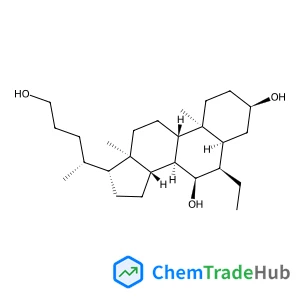
(3alpha,5beta,6alpha,7alpha)-6-Ethylcholane-3,7,24-triol
CAS Number:
1537866-49-1
Molecular Formula:
C26H46O3
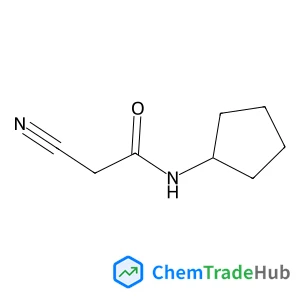

2-(4,4-Difluorobutyl)-1H-isoindole-1,3(2H)-dione
CAS Number:
1265341-14-7
Molecular Formula:
C12H11F2NO2
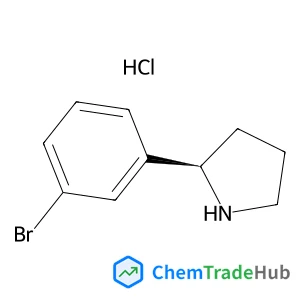
(2R)-2-(3-Bromophenyl)pyrrolidine hydrochloride (1:1)
CAS Number:
1391550-13-2
Molecular Formula:
C10H13BrClN
Recommended Suppliers



Disclaimer
This page provides academic journal information for reference and research purposes only. We are not affiliated with any journal publishers and do not handle publication submissions. For publication-related inquiries, please contact the respective journal publishers directly.
If you notice any inaccuracies in the information displayed, please contact us at support@chemtradehub.com. We will promptly review and address your concerns.