



Temperature-dependent effect of percolation and Brownian motion on the thermal conductivity of TiO2–ethanol nanofluids
Literature Information
Publication Date
2016-05-10
DOI
10.1039/C6CP00500D
Impact Factor
3.676
Authors
Chien-Cheng Li, Nga Yu Hau, Yuechen Wang, Ai Kah Soh, Shien-Ping Feng
View Original
Abstract
Ethanol-based nanofluids have attracted much attention due to the enhancement in heat transfer and their potential applications in nanofluid-type fuels and thermal storage. Most research has been conducted on ethanol-based nanofluids containing various nanoparticles in low mass fraction; however, to-date such studies based on high weight fraction of nanoparticles are limited due to the poor stability problem. In addition, very little existing work has considered the inevitable water content in ethanol for the change of thermal conductivity. In this paper, the highly stable and well-dispersed TiO2–ethanol nanofluids of high weight fraction of up to 3 wt% can be fabricated by stirred bead milling, which enables the studies of thermal conductivity of TiO2–ethanol nanofluids over a wide range of operating temperatures. Our results provide evidence that the enhanced thermal conductivity is mainly contributed by the percolation network of nanoparticles at low temperatures, while it is in combination with both Brownian motion and local percolation of nanoparticle clustering at high temperatures.
Recommended Journals

Bioorganic & Medicinal Chemistry

Journal of Chemical Sciences

Topics in Catalysis

Acta Metallurgica Sinica-English Letters

Polycyclic Aromatic Compounds

Electroanalysis

Herald of the Russian Academy of Sciences

Journal of Asian Natural Products Research

Bioorganic & Medicinal Chemistry Letters

Medicinal Chemistry Research
Related Literature
Selective azide–alkyne cycloaddition reactions of azidoalkylated calixarenes
Alexander Gorbunov, Julia Kuznetsova, Ilya Deltsov, Anastasia Molokanova, Dmitry Cheshkov, Stanislav Bezzubov, Vladimir Kovalev, Ivan Vatsouro
2020-07-15
Research Article
DOI: 10.1039/D0QO00650E
Tailoring radicals by asymmetric electrochemical catalysis
2020-08-20
Highlight
DOI: 10.1039/D0QO00803F
Acid–base controlled multiple conformation and aromaticity switches in tren-capped hexaphyrins
Stéphane Le Gac, Elsa Caytan, Vincent Dorcet, Bernard Boitrel
2019-03-20
Communication
DOI: 10.1039/C9OB00489K
Discovery and characterization of four glycosyltransferases involved in anthraquinone glycoside biosynthesis in Rubia yunnanensis
Shanyong Yi, Tongdong Kuang, Yuanyuan Miao, Yanqing Xu, Zhe Wang, Liao-Bin Dong, Ninghua Tan
2020-07-14
Research Article
DOI: 10.1039/D0QO00579G
Recent advances in nitro-involved radical reactions
Jiapian Huang, Feng Ding, Pornchai Rojsitthisak, Fu-Sheng He
2020-07-17
Review Article
DOI: 10.1039/D0QO00563K
High photodynamic activities of water-soluble inclusion complexes of 5,15-diazaporphyrins in cyclodextrin
Shuhei Satake, Hideyuki Shinmori, Shigeki Kawabata, Kouta Sugikawa, Hisakage Funabashi, Akio Kuroda, Atsushi Ikeda
2019-02-27
Paper
DOI: 10.1039/C9OB00101H
You might also like
Compound Q&A
Is 2-(2-chloroacetamido)-3-phenylpropanoic acid (CAS: 7765-11-9) safe?
2-(2-Chloroacetamido)-3-phenylpropanoic acid (CAS: 7765-11-9) is generally consi...
7765-11-92-(2-chloroacetamido...
Compound Q&A
Is 2-(Benzyloxy)-5-bromobenzoic acid (CAS: 62176-31-2) safe?
2-(Benzyloxy)-5-bromobenzoic acid can be handled safely if appropriate precautio...
62176-31-22-(Benzyloxy)-5-brom...
Compound Q&A
What is (4-Methyl-1,2,5-oxadiazol-3-yl)methanamine hydrochloride (CAS: 1159825-48-5)?
(4-Methyl-1,2,5-oxadiazol-3-yl)methanamine hydrochloride is a chemical compound ...
1159825-48-5(4-Methyl-1,2,5-oxad...
Compound Q&A
What is 2-(5-Hexylthiophen-2-yl)-4,4,5,5-tetramethyl-1,3,2-dioxaborolane (CAS: 917985-54-7)?
2-(5-Hexylthiophen-2-yl)-4,4,5,5-tetramethyl-1,3,2-dioxaborolane (CAS: 917985-54...
917985-54-72-(5-Hexylthiophen-2...
Compound Q&A
Are there alternatives to 4-(8-Methyl-9H-1,3-dioxolo[4,5-h][2,3]benzodiazepin-5-yl)benzenamine (CAS: 102771-26-6) in synthesis?
While 4-(8-Methyl-9H-1,3-dioxolo[4,5-h][2,3]benzodiazepin-5-yl)benzenamine (CAS:...
102771-26-64-(8-Methyl-9H-1,3-d...
Compound Q&A
What is the market or research trend for tert-butyl 3-hydroxy-4,5,7,8-tetrahydro-2H-pyrazolo[3,4-d]azepine-6-carboxylate (CAS: 851376-80-2)?
The market for tert-butyl 3-hydroxy-4,5,7,8-tetrahydro-2H-pyrazolo[3,4-d]azepine...
851376-80-2tert-butyl 3-hydroxy...
Compound Q&A
How should waste containing 3,5-Diamino-1H-pyrazole-4-carbonitrile (CAS: 6844-58-2) be handled?
Waste containing 3,5-Diamino-1H-pyrazole-4-carbonitrile (CAS: 6844-58-2) should ...
6844-58-23,5-Diamino-1H-pyraz...
Compound Q&A
How is (6-Fluoro-3-pyridinyl)boronic acid (CAS: 351019-18-6) typically synthesized?
(6-Fluoro-3-pyridinyl)boronic acid can be synthesized through the reaction of 6-...
351019-18-6(6-Fluoro-3-pyridiny...
Compound Q&A
What industries use Dibenzyl carbonimidoylbiscarbamate (CAS: 10065-79-9)?
Dibenzyl carbonimidoylbiscarbamate (CAS: 10065-79-9) finds applications in vario...
10065-79-9Dibenzyl carbonimido...
Compound Q&A
What is the market or research trend for (beta,beta,2,3,4,5,6-~2~H_7_)Phenylalanine (CAS: 74228-83-4)?
The market for (beta,beta,2,3,4,5,6-~2~H_7_)Phenylalanine (CAS: 74228-83-4) is g...
74228-83-4(beta,beta,2,3,4,5,6...
Source Journal
Physical Chemistry Chemical Physics

CiteScore:
5.5
Self-citation Rate:
10.3%
Articles per Year:
3036
Physical Chemistry Chemical Physics (PCCP) is an international journal co-owned by 19 physical chemistry and physics societies from around the world. This journal publishes original, cutting-edge research in physical chemistry, chemical physics and biophysical chemistry. To be suitable for publication in PCCP, articles must include significant innovation and/or insight into physical chemistry; this is the most important criterion that reviewers and Editors will judge against when evaluating submissions. The journal has a broad scope and welcomes contributions spanning experiment, theory, computation and data science. Topical coverage includes spectroscopy, dynamics, kinetics, statistical mechanics, thermodynamics, electrochemistry, catalysis, surface science, quantum mechanics, quantum computing and machine learning. Interdisciplinary research areas such as polymers and soft matter, materials, nanoscience, energy, surfaces/interfaces, and biophysical chemistry are welcomed if they demonstrate significant innovation and/or insight into physical chemistry. Joined experimental/theoretical studies are particularly appreciated when complementary and based on up-to-date approaches.
Recommended Compounds
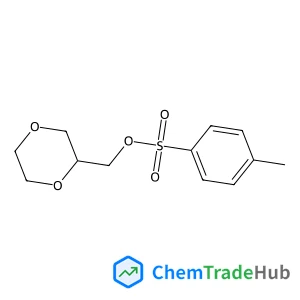
(S)-(1,4-Dioxan-2-yl)methyl 4-methylbenzenesulfonate
CAS Number:
917882-64-5
Molecular Formula:
C12H16O5S
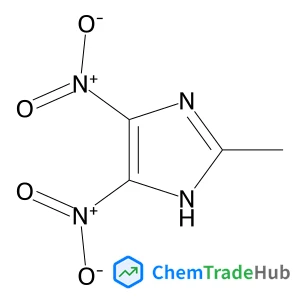
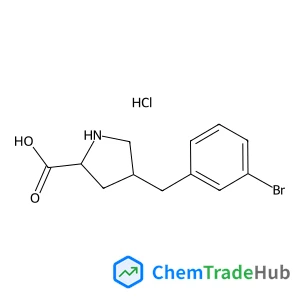
(2S,4R)-4-(3-Bromobenzyl)pyrrolidine-2-carboxylic acid hydrochloride
CAS Number:
1049734-10-2
Molecular Formula:
C12H15BrClNO2
![Ethyl thieno[3,2-f]quinoline-2-carboxylate structure](https://static.chemtradehub.com/structs/299/29948-26-3-f62b.webp "Ethyl thieno[3,2-f]quinoline-2-carboxylate structure")
Recommended Suppliers





Disclaimer
This page provides academic journal information for reference and research purposes only. We are not affiliated with any journal publishers and do not handle publication submissions. For publication-related inquiries, please contact the respective journal publishers directly.
If you notice any inaccuracies in the information displayed, please contact us at support@chemtradehub.com. We will promptly review and address your concerns.