












Front cover
Literature Information
Publication Date
DOI
10.1039/C9OB90067E
Impact Factor
3.876
Authors
View Original
Abstract
A graphical abstract is available for this content
Related Literature
Infrared characterisation of acetonitrile and propionitrile aerosols under Titan's atmospheric conditions
C. Ennis, R. Auchettl, M. Ruzi, E. G. Robertson
2017-01-12
Paper
DOI: 10.1039/C6CP08110J
Interfacial water on organic substrates at cryogenic temperatures: hydrogen bonding and quantification in the submonolayer regime
D. Houdoux, J. Houplin, L. Amiaud, A. Lafosse, C. Dablemont
2017-01-05
Paper
DOI: 10.1039/C6CP03328H
The impact of the structuring of hydrotropes in water on the mesoscale solubilisation of a third hydrophobic component
Thomas Buchecker, Sebastian Krickl, Robert Winkler, Isabelle Grillo, Pierre Bauduin, Didier Touraud, Arno Pfitzner, Werner Kunz
2016-11-30
Paper
DOI: 10.1039/C6CP06696H
A simple guiding principle for the temperature dependence of the solubility of light gases in imidazolium-based ionic liquids derived from molecular simulations
Daniela Kerlé, Majid Namayandeh Jorabchi, Sebastian Wohlrab, Dietmar Paschek
2016-11-08
Paper
DOI: 10.1039/C6CP06792A
A new potential for methylammonium lead iodide
C. M. Handley, C. L. Freeman
2016-12-08
Paper
DOI: 10.1039/C6CP05829A
Size-dependent one-photon- and two-photon-pumped amplified spontaneous emission from organometal halide CH3NH3PbBr3 perovskite cubic microcrystals
Zhen-Yu Zhang, Hai-Yu Wang, Yan-Xia Zhang, Kai-Jiao Li, Xue-Peng Zhan, Bing-Rong Gao, Qi-Dai Chen, Hong-Bo Sun
2016-12-12
Paper
DOI: 10.1039/C6CP07522C
Substituent effects on the relaxation dynamics of furan, furfural and β-furfural: a combined theoretical and experimental approach
Sven Oesterling, Oliver Schalk, Ting Geng, Richard D. Thomas, Tony Hansson, Regina de Vivie-Riedle
2016-12-16
Paper
DOI: 10.1039/C6CP06240G
Double electron–electron resonance with multiple non-selective chirp refocusing
Andrin Doll, Gunnar Jeschke
2016-12-08
Paper
DOI: 10.1039/C6CP07262C
The intrinsic stabilities and structures of alkali metal cationized guanine quadruplexes
M. Azargun, Y. Jami-Alahmadi, T. D. Fridgen
2016-11-25
Paper
DOI: 10.1039/C6CP07301H
You might also like
Compound Q&A
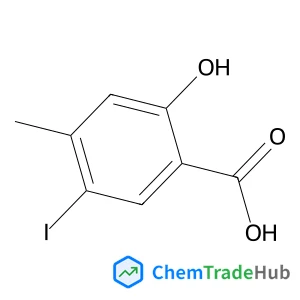
Is 2-(2-chloroacetamido)-3-phenylpropanoic acid (CAS: 7765-11-9) safe?
2-(2-Chloroacetamido)-3-phenylpropanoic acid (CAS: 7765-11-9) is generally consi...
7765-11-92-(2-chloroacetamido...
Compound Q&A
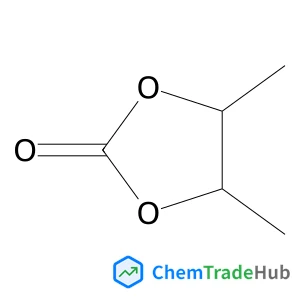
Is 2-(Benzyloxy)-5-bromobenzoic acid (CAS: 62176-31-2) safe?
2-(Benzyloxy)-5-bromobenzoic acid can be handled safely if appropriate precautio...
62176-31-22-(Benzyloxy)-5-brom...
Compound Q&A
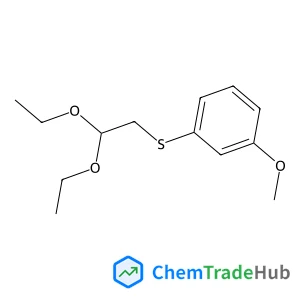
What is (4-Methyl-1,2,5-oxadiazol-3-yl)methanamine hydrochloride (CAS: 1159825-48-5)?
(4-Methyl-1,2,5-oxadiazol-3-yl)methanamine hydrochloride is a chemical compound ...
1159825-48-5(4-Methyl-1,2,5-oxad...
Compound Q&A
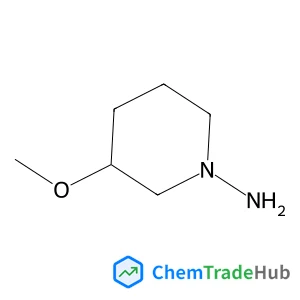
What is 2-(5-Hexylthiophen-2-yl)-4,4,5,5-tetramethyl-1,3,2-dioxaborolane (CAS: 917985-54-7)?
2-(5-Hexylthiophen-2-yl)-4,4,5,5-tetramethyl-1,3,2-dioxaborolane (CAS: 917985-54...
917985-54-72-(5-Hexylthiophen-2...
Compound Q&A
Are there alternatives to 4-(8-Methyl-9H-1,3-dioxolo[4,5-h][2,3]benzodiazepin-5-yl)benzenamine (CAS: 102771-26-6) in synthesis?
While 4-(8-Methyl-9H-1,3-dioxolo[4,5-h][2,3]benzodiazepin-5-yl)benzenamine (CAS:...
102771-26-64-(8-Methyl-9H-1,3-d...
Compound Q&A
What is the market or research trend for tert-butyl 3-hydroxy-4,5,7,8-tetrahydro-2H-pyrazolo[3,4-d]azepine-6-carboxylate (CAS: 851376-80-2)?
The market for tert-butyl 3-hydroxy-4,5,7,8-tetrahydro-2H-pyrazolo[3,4-d]azepine...
851376-80-2tert-butyl 3-hydroxy...
Compound Q&A
How should waste containing 3,5-Diamino-1H-pyrazole-4-carbonitrile (CAS: 6844-58-2) be handled?
Waste containing 3,5-Diamino-1H-pyrazole-4-carbonitrile (CAS: 6844-58-2) should ...
6844-58-23,5-Diamino-1H-pyraz...
Compound Q&A
How is (6-Fluoro-3-pyridinyl)boronic acid (CAS: 351019-18-6) typically synthesized?
(6-Fluoro-3-pyridinyl)boronic acid can be synthesized through the reaction of 6-...
351019-18-6(6-Fluoro-3-pyridiny...
Compound Q&A
What industries use Dibenzyl carbonimidoylbiscarbamate (CAS: 10065-79-9)?
Dibenzyl carbonimidoylbiscarbamate (CAS: 10065-79-9) finds applications in vario...
10065-79-9Dibenzyl carbonimido...
Compound Q&A
What is the market or research trend for (beta,beta,2,3,4,5,6-~2~H_7_)Phenylalanine (CAS: 74228-83-4)?
The market for (beta,beta,2,3,4,5,6-~2~H_7_)Phenylalanine (CAS: 74228-83-4) is g...
74228-83-4(beta,beta,2,3,4,5,6...
Source Journal
Organic & Biomolecular Chemistry

CiteScore:
3.4
Self-citation Rate:
10.3%
Articles per Year:
1041
Organic & Biomolecular Chemistry (OBC) publishes original and high impact research and reviews in organic chemistry. We welcome research that shows new or significantly improved protocols or methodologies in total synthesis, synthetic methodology or physical and theoretical organic chemistry as well as research that shows a significant advance in the organic chemistry or molecular design aspects of chemical biology, catalysis, supramolecular and macromolecular chemistry, theoretical chemistry, mechanism-oriented physical organic chemistry, medicinal chemistry or natural products. Articles published in the journal should report new work which makes a highly-significant impact in the field. Routine and incremental work is generally not suitable for publication in the journal. More details about key areas of our scope are below. In all cases authors should include in their article clear rationale for why their research has been carried out.
Recommended Compounds
![2-[(E)-(2-Methoxyphenyl)diazenyl]-3-oxo-N-(2-oxo-2,3-dihydro-1H-benzimidazol-5-yl)butanamide structure](https://static.chemtradehub.com/structs/821/82199-12-0-f1d0.webp "2-[(E)-(2-Methoxyphenyl)diazenyl]-3-oxo-N-(2-oxo-2,3-dihydro-1H-benzimidazol-5-yl)butanamide structure")
2-[(E)-(2-Methoxyphenyl)diazenyl]-3-oxo-N-(2-oxo-2,3-dihydro-1H-benzimidazol-5-yl)butanamide
CAS Number:
82199-12-0
Molecular Formula:
C18H17N5O4
Recommended Suppliers





Disclaimer
This page provides academic journal information for reference and research purposes only. We are not affiliated with any journal publishers and do not handle publication submissions. For publication-related inquiries, please contact the respective journal publishers directly.
If you notice any inaccuracies in the information displayed, please contact us at support@chemtradehub.com. We will promptly review and address your concerns.