













Surface hopping investigation of benzophenone excited state dynamics
Literature Information
Publication Date
2016-03-09
DOI
10.1039/C6CP00328A
Impact Factor
3.676
Authors
Lucilla Favero, Giovanni Granucci, Maurizio Persico
View Original
Abstract
We present a simulation of the photodynamics of benzophenone for the first 20 ps after n → π* excitation, performed by trajectory surface hopping calculations with on-the-fly semiempirical determination of potential energy surfaces and electronic wavefunctions. Both the dynamic and spin–orbit couplings are taken into account, and time-resolved fluorescence emission is also simulated. The computed decay time of the S1 state is in agreement with experimental observations. The direct S1 → T1 intersystem crossing (ISC) accounts for about 2/3 of the S1 decay rate. The remaining 1/3 goes through T2 or higher triplets. The nonadiabatic transitions within the triplet manifold are much faster than ISC and keep the population of T1 at about 3/4 of the total triplet population, and that of the other states (mainly T2) at 1/4. Two internal coordinates are vibrationally active immediately after n → π* excitation: one is the CO stretching and the other one is a combination of the conrotatory torsion of phenyl rings and of bending involving the carbonyl C atom. The period of the torsion-bending mode coincides with oscillations in the time-resolved photoelectron spectra of Spighi et al. and substantially confirms their assignment.
Recommended Journals
Related Literature
Correlated/non-correlated ion dynamics of charge-neutral ion couples: the origin of ionicity in ionic liquids
G. W. Driver, Y. Huang, A. Laaksonen, T. Sparrman, Y.-L. Wang, P.-O. Westlund
2016-12-08
Paper
DOI: 10.1039/C6CP05801A
Room-temperature ferromagnetism in the two-dimensional layered Cu2MoS4 nanosheets
Ke Zhang, Rashid Khan, Hongyan Guo, Irfan Ali, Xiuling Li, Yunxiang Lin, Haiping Chen, Wensheng Yan, Xiaojun Wu, Li Song
2016-12-12
Communication
DOI: 10.1039/C6CP07270D
Understanding the influence of Mg doping for the stabilization of capacity and higher discharge voltage of Li- and Mn-rich cathodes for Li-ion batteries
Prasant Kumar Nayak, Judith Grinblat, Elena Levi, Mikhael Levi, Boris Markovsky, Doron Aurbach
2017-01-20
Paper
DOI: 10.1039/C6CP07383B
The crucial role of Mn spiral spin order in stabilizing the Dy–Mn exchange striction in multiferroic DyMnO3
H. W. Wang, C. L. Li, S. L. Yuan, J. F. Wang, C. L. Lu, J.-M. Liu
2017-01-04
Paper
DOI: 10.1039/C6CP06369A
Adsorbing the 3d-transition metal atoms to effectively modulate the electronic and magnetic behaviors of zigzag SiC nanoribbons
Hui Li, Wei Chen, Xiaopeng Shen, Jingwei Liu, Xuri Huang, Guangtao Yu
2017-01-03
Paper
DOI: 10.1039/C6CP06717D
Charge transport in organic donor–acceptor mixed-stack crystals: the role of nonlocal electron–phonon couplings
Lingyun Zhu, Hua Geng, Yuanping Yi, Zhixiang Wei
2017-01-06
Paper
DOI: 10.1039/C6CP07417K
Effective pair potential between charged nanoparticles at high volume fractions
Guillaume Bareigts, Christophe Labbez
2017-01-20
Paper
DOI: 10.1039/C6CP08056A
Influence of NO and (NO)2 adsorption on the properties of Fe-N4 porphyrin-like graphene sheets
Elham Ashori, Francesc Illas
2017-01-03
Paper
DOI: 10.1039/C6CP07898B
Conformational and electronic effects on the formation of anti cyclobutane pyrimidine dimers in G-quadruplex structures
Wook Lee, Spiridoula Matsika
2016-12-08
Paper
DOI: 10.1039/C6CP05604K
You might also like
Compound Q&A
What precautions should be taken when handling 4-(2-Furylmethyl)thiomorpholine 1,1-dioxide (CAS: 79206-94-3)?
When handling 4-(2-Furylmethyl)thiomorpholine 1,1-dioxide (CAS: 79206-94-3), it ...
79206-94-34-(2-Furylmethyl)thi...
Compound Q&A
What precautions should be taken when handling 4-Chloro-N-[2-(4-morpholinyl)ethyl]benzamide (CAS: 71320-77-9)?
When handling 4-Chloro-N-[2-(4-morpholinyl)ethyl]benzamide (CAS: 71320-77-9), it...
71320-77-94-Chloro-N-[2-(4-mor...
Compound Q&A
How should waste containing 2-[2-(2-Methoxyethoxy)ethoxy]ethyl 4-methylbenzenesulfonate (CAS: 62921-74-8) be handled?
Waste containing this compound (CAS: 62921-74-8) should be handled according to ...
62921-74-82-[2-(2-Methoxyethox...
Compound Q&A
How should waste containing (S)-Methyl 2-amino-3-cyclohexylpropanoate be handled?
Waste containing (S)-Methyl 2-amino-3-cyclohexylpropanoate should be collected i...
40056-18-6(S)-Methyl 2-amino-3...
Compound Q&A
How is 5-({4-[(2S,4R)-4-Hydroxy-2-methyltetrahydro-2H-pyran-4-yl]-2-thienyl}sulfanyl)-1-methyl-1,3-dihydro-2H-indol-2-one (CAS: 166882-70-8) typically synthesized?
This compound can be synthesized using a multi-step process involving the conjug...
166882-70-85-({4-[(2S,4R)-4-Hyd...
Compound Q&A
Are there alternatives to (2E)-3-(3,4-Dichlorophenyl)acrylic acid (CAS: 7312-27-8) in synthesis?
There are several alternatives to (2E)-3-(3,4-Dichlorophenyl)acrylic acid in syn...
7312-27-8(2E)-3-(3,4-Dichloro...
Compound Q&A
How should Ethyl 6-(2-nitrophenyl)imidazo[2,1-b][1,3]thiazole-3-carboxylate (CAS: 925437-84-9) be stored?
Ethyl 6-(2-nitrophenyl)imidazo[2,1-b][1,3]thiazole-3-carboxylate (CAS: 925437-84...
925437-84-9Ethyl 6-(2-nitrophen...
Compound Q&A
How should waste containing 2-(1,3-Thiazol-2-yl)ethanamine (CAS: 18453-07-1) be handled?
Waste containing 2-(1,3-Thiazol-2-yl)ethanamine (CAS: 18453-07-1) should be coll...
18453-07-12-(1,3-Thiazol-2-yl)...
Compound Q&A
How is Methyl 5-iodo-2-methylbenzoate (CAS: 103440-54-6) typically synthesized?
Methyl 5-iodo-2-methylbenzoate can be synthesized through the iodination of meth...
103440-54-6Methyl 5-iodo-2-meth...
Compound Q&A
How is 5-Chloro[1,2,4]triazolo[1,5-a]pyridine (CAS: 1427399-34-5) typically synthesized?
5-Chloro[1,2,4]triazolo[1,5-a]pyridine is commonly synthesized via the condensat...
1427399-34-55-Chloro[1,2,4]triaz...
Source Journal
Physical Chemistry Chemical Physics

CiteScore:
5.5
Self-citation Rate:
10.3%
Articles per Year:
3036
Physical Chemistry Chemical Physics (PCCP) is an international journal co-owned by 19 physical chemistry and physics societies from around the world. This journal publishes original, cutting-edge research in physical chemistry, chemical physics and biophysical chemistry. To be suitable for publication in PCCP, articles must include significant innovation and/or insight into physical chemistry; this is the most important criterion that reviewers and Editors will judge against when evaluating submissions. The journal has a broad scope and welcomes contributions spanning experiment, theory, computation and data science. Topical coverage includes spectroscopy, dynamics, kinetics, statistical mechanics, thermodynamics, electrochemistry, catalysis, surface science, quantum mechanics, quantum computing and machine learning. Interdisciplinary research areas such as polymers and soft matter, materials, nanoscience, energy, surfaces/interfaces, and biophysical chemistry are welcomed if they demonstrate significant innovation and/or insight into physical chemistry. Joined experimental/theoretical studies are particularly appreciated when complementary and based on up-to-date approaches.
Recommended Compounds

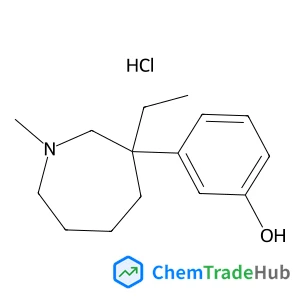
3-(3-Ethyl-1-methyl-3-azepanyl)phenol hydrochloride (1:1)
CAS Number:
59263-76-2
Molecular Formula:
C15H24ClNO
Recommended Suppliers





Disclaimer
This page provides academic journal information for reference and research purposes only. We are not affiliated with any journal publishers and do not handle publication submissions. For publication-related inquiries, please contact the respective journal publishers directly.
If you notice any inaccuracies in the information displayed, please contact us at support@chemtradehub.com. We will promptly review and address your concerns.