












Adsorbing the 3d-transition metal atoms to effectively modulate the electronic and magnetic behaviors of zigzag SiC nanoribbons
Literature Information
Publication Date
2017-01-03
DOI
10.1039/C6CP06717D
Impact Factor
3.676
Authors
Hui Li, Wei Chen, Xiaopeng Shen, Jingwei Liu, Xuri Huang, Guangtao Yu
View Original
Abstract
On the basis of first-principles computations, we propose a simple and effective strategy through surface-adsorbing 3d-transition metal (TM) atoms, including Ti, Cr, Mn, Fe and Co, to modulate the electronic and magnetic behaviors of zigzag SiC nanoribbons (zSiCNRs), in view of the unique d electronic structures and intrinsic magnetic moments of TM atoms. It is revealed that like applying an electric field, the adsorption of these transition metal atoms can induce an evident change in the electrostatic potential of the substrate zSiCNRs owing to the electron transfer from the TM atom to the substrate. This can break the magnetic degeneracy of zSiCNRs and solely ferromagnetic (FM) or antiferromagnetic (AFM) metallicity and even intriguing FM or AFM half-metallicity can be observed in the TM-modified zSiCNR systems. Moreover, all these modified systems can exhibit considerably large adsorption energies ranging from −0.872 eV to −4.304 eV, indicating their considerably high structural stabilities. These intriguing findings will be advantageous for promoting excellent SiC-based nanomaterials in the practical application of spintronics and multifunctional nanodevices in the near future.
Recommended Journals
Related Literature
Hierarchical ordering and multilayer structure of poly(ε-caprolactone) end-functionalized by a liquid crystalline unit: role of polymer crystallization
Wenqing Xu, Xing Li, Wenhua Yuan, Jian Zhou
2021-07-05
Paper
DOI: 10.1039/D1PY00702E
The effect of alkyl chain lengths on the red-to-near-infrared emission of boron-fused azomethine conjugated polymers and their film-state stimuli-responsivities
Shunsuke Ohtani, Natsumi Yamada, Masayuki Gon, Kazuo Tanaka, Yoshiki Chujo
2021-04-19
Paper
DOI: 10.1039/D1PY00213A
Purpurin derivatives as visible-light photosensitizers for 3D printing and valuable biological applications
Pauline Sautrot-Ba, Vlasta Brezová, Jean-Pierre Malval, Annalisa Chiappone, Louise Breloy, Samir Abbad-Andaloussi, Davy-Louis Versace
2021-03-24
Paper
DOI: 10.1039/D1PY00126D
Impact of side reactions on molar mass distribution, unsaturation level and branching density in solution free radical polymerization of n-butyl acrylate under well-defined lab-scale reactor conditions
Mariya Edeleva, Yoshi W. Marien, Paul H. M. Van Steenberge
2021-03-10
Paper
DOI: 10.1039/D1PY00151E
One-shot synthesis of star gradient copolymers with controllable graft density
2021-04-06
Paper
DOI: 10.1039/D1PY00313E
Facile construction of noncovalent graft copolymers with triple stimuli-responsiveness for triggered drug delivery
Lei Xu, Hairong Wang, Hongrui Tian, Mingzu Zhang, Jinlin He, Peihong Ni
2021-03-12
Paper
DOI: 10.1039/D1PY00135C
You might also like
Compound Q&A
What precautions should be taken when handling 4-(2-Furylmethyl)thiomorpholine 1,1-dioxide (CAS: 79206-94-3)?
When handling 4-(2-Furylmethyl)thiomorpholine 1,1-dioxide (CAS: 79206-94-3), it ...
79206-94-34-(2-Furylmethyl)thi...
Compound Q&A
What precautions should be taken when handling 4-Chloro-N-[2-(4-morpholinyl)ethyl]benzamide (CAS: 71320-77-9)?
When handling 4-Chloro-N-[2-(4-morpholinyl)ethyl]benzamide (CAS: 71320-77-9), it...
71320-77-94-Chloro-N-[2-(4-mor...
Compound Q&A
How should waste containing 2-[2-(2-Methoxyethoxy)ethoxy]ethyl 4-methylbenzenesulfonate (CAS: 62921-74-8) be handled?
Waste containing this compound (CAS: 62921-74-8) should be handled according to ...
62921-74-82-[2-(2-Methoxyethox...
Compound Q&A
How should waste containing (S)-Methyl 2-amino-3-cyclohexylpropanoate be handled?
Waste containing (S)-Methyl 2-amino-3-cyclohexylpropanoate should be collected i...
40056-18-6(S)-Methyl 2-amino-3...
Compound Q&A
How is 5-({4-[(2S,4R)-4-Hydroxy-2-methyltetrahydro-2H-pyran-4-yl]-2-thienyl}sulfanyl)-1-methyl-1,3-dihydro-2H-indol-2-one (CAS: 166882-70-8) typically synthesized?
This compound can be synthesized using a multi-step process involving the conjug...
166882-70-85-({4-[(2S,4R)-4-Hyd...
Compound Q&A
Are there alternatives to (2E)-3-(3,4-Dichlorophenyl)acrylic acid (CAS: 7312-27-8) in synthesis?
There are several alternatives to (2E)-3-(3,4-Dichlorophenyl)acrylic acid in syn...
7312-27-8(2E)-3-(3,4-Dichloro...
Compound Q&A
How should Ethyl 6-(2-nitrophenyl)imidazo[2,1-b][1,3]thiazole-3-carboxylate (CAS: 925437-84-9) be stored?
Ethyl 6-(2-nitrophenyl)imidazo[2,1-b][1,3]thiazole-3-carboxylate (CAS: 925437-84...
925437-84-9Ethyl 6-(2-nitrophen...
Compound Q&A
How should waste containing 2-(1,3-Thiazol-2-yl)ethanamine (CAS: 18453-07-1) be handled?
Waste containing 2-(1,3-Thiazol-2-yl)ethanamine (CAS: 18453-07-1) should be coll...
18453-07-12-(1,3-Thiazol-2-yl)...
Compound Q&A
How is Methyl 5-iodo-2-methylbenzoate (CAS: 103440-54-6) typically synthesized?
Methyl 5-iodo-2-methylbenzoate can be synthesized through the iodination of meth...
103440-54-6Methyl 5-iodo-2-meth...
Compound Q&A
How is 5-Chloro[1,2,4]triazolo[1,5-a]pyridine (CAS: 1427399-34-5) typically synthesized?
5-Chloro[1,2,4]triazolo[1,5-a]pyridine is commonly synthesized via the condensat...
1427399-34-55-Chloro[1,2,4]triaz...
Source Journal
Physical Chemistry Chemical Physics

CiteScore:
5.5
Self-citation Rate:
10.3%
Articles per Year:
3036
Physical Chemistry Chemical Physics (PCCP) is an international journal co-owned by 19 physical chemistry and physics societies from around the world. This journal publishes original, cutting-edge research in physical chemistry, chemical physics and biophysical chemistry. To be suitable for publication in PCCP, articles must include significant innovation and/or insight into physical chemistry; this is the most important criterion that reviewers and Editors will judge against when evaluating submissions. The journal has a broad scope and welcomes contributions spanning experiment, theory, computation and data science. Topical coverage includes spectroscopy, dynamics, kinetics, statistical mechanics, thermodynamics, electrochemistry, catalysis, surface science, quantum mechanics, quantum computing and machine learning. Interdisciplinary research areas such as polymers and soft matter, materials, nanoscience, energy, surfaces/interfaces, and biophysical chemistry are welcomed if they demonstrate significant innovation and/or insight into physical chemistry. Joined experimental/theoretical studies are particularly appreciated when complementary and based on up-to-date approaches.
Recommended Compounds
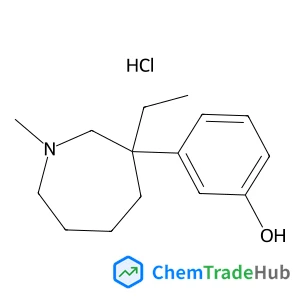
3-(3-Ethyl-1-methyl-3-azepanyl)phenol hydrochloride (1:1)
CAS Number:
59263-76-2
Molecular Formula:
C15H24ClNO

![[4-Amino-2-(methylsulfanyl)-5-pyrimidinyl]methanol structure](https://static.chemtradehub.com/structs/588/588-36-3-fc73.webp "[4-Amino-2-(methylsulfanyl)-5-pyrimidinyl]methanol structure")
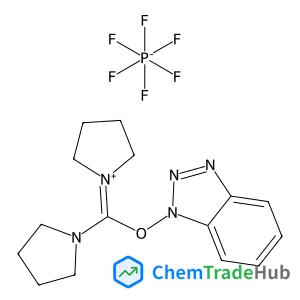
(1H-Benzotriazol-1-yloxy)(di-1-pyrrolidinyl)methylium hexafluorophosphate
CAS Number:
105379-24-6
Molecular Formula:
C15H21F6N5OP
Recommended Suppliers






Disclaimer
This page provides academic journal information for reference and research purposes only. We are not affiliated with any journal publishers and do not handle publication submissions. For publication-related inquiries, please contact the respective journal publishers directly.
If you notice any inaccuracies in the information displayed, please contact us at support@chemtradehub.com. We will promptly review and address your concerns.