












![[4-(Heptyloxy)phenyl]boronic acid structure](https://static.chemtradehub.com/structs/136/136370-19-9-ad33.webp "[4-(Heptyloxy)phenyl]boronic acid structure")
Conformational and electronic effects on the formation of anti cyclobutane pyrimidine dimers in G-quadruplex structures
Literature Information
Publication Date
2016-12-08
DOI
10.1039/C6CP05604K
Impact Factor
3.676
Authors
Wook Lee, Spiridoula Matsika
View Original
Abstract
Cyclobutane pyrimidine dimers (CPDs) are the most commonly formed photochemical products when nucleic acids interact with UV radiation. In duplex DNA, the relative inflexible structure allows for only the cis, syn CPD isomer to be formed. G-quadruplex structures, however, have loops that are more flexible and allow for different orientations of the bases to interact. As a result, the highly unusual formation of an anti CPD has been observed in these structures. Due to the close proximity between two opposing loops containing the TTA sequence in two G-quadruplex structures (called “form-3” and “basket”), a high yield of anti CPD formation was expected in these structures. However, while significant yields of anti CPDs are observed in form-3, the anti CPD is hardly observed in the basket structure. To account for this inconsistency, we examine the process of anti CPD formation in form-3 and basket structures using simulations at the atomistic level. Here, we consider the conformational effect using MD simulations, which show whether the formation of the anti CPD is structurally feasible. Quantum mechanical/molecular mechanical (QM/MM) calculations of excited states are also used to consider the electronic effect by an adjacent guanine base which can quench the formation of the anti CPD through charge transfer (CT). Our results are in qualitative agreement with the experimental results, predicting a significant yield of the anti CPD in the form-3 structure and a negligible yield in the basket structure, while they also predict the formation of the cis, syn CPD between two opposing loops in form-3. Most importantly, our simulation results show that the yields of the anti CPD in the G-quadruplex are affected significantly by both conformational and electronic effects.
Related Literature
Structural design of pyrene-functionalized TEMPO-containing polymers for enhanced electrochemical storage performance
Hatice Mutlu, Hongjiao Li, Wolfgang Wenzel
2021-04-06
Paper
DOI: 10.1039/D0PY01421D
Composition processing property relationship of vitrimers Based on polyethyleneimine
Natanel Jarach, Daniel Golani, Ofer Asaf, Hanna Dodiuk, Yoav Shamir, Amir Goldbourt, Samuel Kenig, Naum Naveh
2021-04-06
Paper
DOI: 10.1039/D1PY00116G
Mediating covalent crosslinking of single-chain nanoparticles through solvophobicity in organic solvents
Georg M. Scheutz, Justine Elgoyhen, Kyle C. Bentz, Hao Sun, Junpeng Zhao, Daniel A. Savin, Brent S. Sumerlin
2021-07-27
Communication
DOI: 10.1039/D1PY00780G
Hollow microspherical carbazole-based conjugated polymers by photoinduced step-growth polymerization
Tugba Celiker, Ali Suerkan, Sinem Altinisik, Mert Akgun, Sermet Koyuncu
2021-07-21
Paper
DOI: 10.1039/D1PY00822F
The effect of alkyl chain lengths on the red-to-near-infrared emission of boron-fused azomethine conjugated polymers and their film-state stimuli-responsivities
Shunsuke Ohtani, Natsumi Yamada, Masayuki Gon, Kazuo Tanaka, Yoshiki Chujo
2021-04-19
Paper
DOI: 10.1039/D1PY00213A
Impact of side reactions on molar mass distribution, unsaturation level and branching density in solution free radical polymerization of n-butyl acrylate under well-defined lab-scale reactor conditions
Mariya Edeleva, Yoshi W. Marien, Paul H. M. Van Steenberge
2021-03-10
Paper
DOI: 10.1039/D1PY00151E
Polyamides containing a biorenewable aromatic monomer based on coumalate esters: from synthesis to evaluation of the thermal and mechanical properties
Jurrie Noordijk, Bert Gebben, Monique H. M. Meeusen-Wierts, Katrien V. Bernaerts
2021-03-23
Paper
DOI: 10.1039/D1PY00005E
Novel carbazole-acridine-based hole transport polymer for low turn-on voltage of green quantum dot light-emitting diodes
Chai Won Kim, Ji Hye Lee, Seunguk Cho, Hyung Jong Kim, Jinhyo Hwang, Yong Woo Kim, Dae Hyuk Choi, Min Ju Cho, Kwangyeol Lee, Dong Hoon Choi
2021-07-26
Paper
DOI: 10.1039/D1PY00497B
Novel imino- and aryl-sulfonate based photoacid generators for the cationic ring-opening polymerization of ε-caprolactone
Xabier Lopez de Pariza, Nicolas Zivic, Fernando Ruipérez, Timothy E. Long, Haritz Sardon
2021-06-30
Paper
DOI: 10.1039/D1PY00734C
You might also like
Compound Q&A
What precautions should be taken when handling 4-(2-Furylmethyl)thiomorpholine 1,1-dioxide (CAS: 79206-94-3)?
When handling 4-(2-Furylmethyl)thiomorpholine 1,1-dioxide (CAS: 79206-94-3), it ...
79206-94-34-(2-Furylmethyl)thi...
Compound Q&A
What precautions should be taken when handling 4-Chloro-N-[2-(4-morpholinyl)ethyl]benzamide (CAS: 71320-77-9)?
When handling 4-Chloro-N-[2-(4-morpholinyl)ethyl]benzamide (CAS: 71320-77-9), it...
71320-77-94-Chloro-N-[2-(4-mor...
Compound Q&A
How should waste containing 2-[2-(2-Methoxyethoxy)ethoxy]ethyl 4-methylbenzenesulfonate (CAS: 62921-74-8) be handled?
Waste containing this compound (CAS: 62921-74-8) should be handled according to ...
62921-74-82-[2-(2-Methoxyethox...
Compound Q&A
How should waste containing (S)-Methyl 2-amino-3-cyclohexylpropanoate be handled?
Waste containing (S)-Methyl 2-amino-3-cyclohexylpropanoate should be collected i...
40056-18-6(S)-Methyl 2-amino-3...
Compound Q&A
How is 5-({4-[(2S,4R)-4-Hydroxy-2-methyltetrahydro-2H-pyran-4-yl]-2-thienyl}sulfanyl)-1-methyl-1,3-dihydro-2H-indol-2-one (CAS: 166882-70-8) typically synthesized?
This compound can be synthesized using a multi-step process involving the conjug...
166882-70-85-({4-[(2S,4R)-4-Hyd...
Compound Q&A
Are there alternatives to (2E)-3-(3,4-Dichlorophenyl)acrylic acid (CAS: 7312-27-8) in synthesis?
There are several alternatives to (2E)-3-(3,4-Dichlorophenyl)acrylic acid in syn...
7312-27-8(2E)-3-(3,4-Dichloro...
Compound Q&A
How should Ethyl 6-(2-nitrophenyl)imidazo[2,1-b][1,3]thiazole-3-carboxylate (CAS: 925437-84-9) be stored?
Ethyl 6-(2-nitrophenyl)imidazo[2,1-b][1,3]thiazole-3-carboxylate (CAS: 925437-84...
925437-84-9Ethyl 6-(2-nitrophen...
Compound Q&A
How should waste containing 2-(1,3-Thiazol-2-yl)ethanamine (CAS: 18453-07-1) be handled?
Waste containing 2-(1,3-Thiazol-2-yl)ethanamine (CAS: 18453-07-1) should be coll...
18453-07-12-(1,3-Thiazol-2-yl)...
Compound Q&A
How is Methyl 5-iodo-2-methylbenzoate (CAS: 103440-54-6) typically synthesized?
Methyl 5-iodo-2-methylbenzoate can be synthesized through the iodination of meth...
103440-54-6Methyl 5-iodo-2-meth...
Compound Q&A
How is 5-Chloro[1,2,4]triazolo[1,5-a]pyridine (CAS: 1427399-34-5) typically synthesized?
5-Chloro[1,2,4]triazolo[1,5-a]pyridine is commonly synthesized via the condensat...
1427399-34-55-Chloro[1,2,4]triaz...
Source Journal
Physical Chemistry Chemical Physics

CiteScore:
5.5
Self-citation Rate:
10.3%
Articles per Year:
3036
Physical Chemistry Chemical Physics (PCCP) is an international journal co-owned by 19 physical chemistry and physics societies from around the world. This journal publishes original, cutting-edge research in physical chemistry, chemical physics and biophysical chemistry. To be suitable for publication in PCCP, articles must include significant innovation and/or insight into physical chemistry; this is the most important criterion that reviewers and Editors will judge against when evaluating submissions. The journal has a broad scope and welcomes contributions spanning experiment, theory, computation and data science. Topical coverage includes spectroscopy, dynamics, kinetics, statistical mechanics, thermodynamics, electrochemistry, catalysis, surface science, quantum mechanics, quantum computing and machine learning. Interdisciplinary research areas such as polymers and soft matter, materials, nanoscience, energy, surfaces/interfaces, and biophysical chemistry are welcomed if they demonstrate significant innovation and/or insight into physical chemistry. Joined experimental/theoretical studies are particularly appreciated when complementary and based on up-to-date approaches.
Recommended Compounds
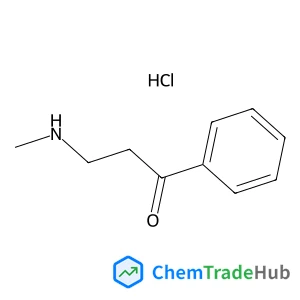
3-(Methylamino)-1-phenyl-1-propanone hydrochloride (1:1)
CAS Number:
2538-50-3
Molecular Formula:
C10H14ClNO
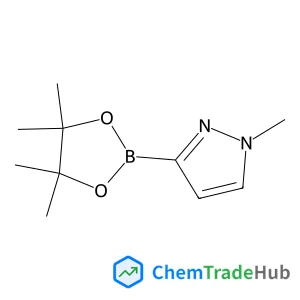
1-Methyl-3-(4,4,5,5-tetramethyl-1,3,2-dioxaborolan-2-yl)-1H-pyrazole
CAS Number:
1020174-04-2
Molecular Formula:
C10H17BN2O2
Recommended Suppliers




Disclaimer
This page provides academic journal information for reference and research purposes only. We are not affiliated with any journal publishers and do not handle publication submissions. For publication-related inquiries, please contact the respective journal publishers directly.
If you notice any inaccuracies in the information displayed, please contact us at support@chemtradehub.com. We will promptly review and address your concerns.