












Revising the common understanding of metamagnetism in the molecule-based bisdithiazolyl BDTMe compound
Literature Information
Publication Date
2019-05-31
DOI
10.1039/C9CP00467J
Impact Factor
3.676
Authors
Mercè Deumal
View Original
Abstract
The BDTMe molecule-based material is the first example of a thiazyl radical to exhibit metamagnetic behavior. Contrary to the common idea that metamagnetism occurs in low-dimensional systems, it is found that BDTMe magnetic topology consists of a complex 3D network of almost isotropic ferromagnetic spin-ladders that are coupled ferromagnetically and further connected by some weaker antiferromagnetic interactions. Calculated magnetic susceptibility χT(T) data is in agreement with experiment. Calculated M(H) data clearly show the typical sigmoidal shape of a metamagnet at temperatures below 2 K. The calculated critical field becomes more apparent in the dM/dH(H) plot, being in very good agreement with experiment. Our computational study concludes that the magnetic topology of BDTMe is preserved throughout the entire experimental range of temperatures (0–100 K). Accordingly, the ground state is the same irrespective of the temperature at which we study the BDTMe crystal. Revising the commonly accepted understanding of a metamagnet explained as ground state changing from antiferromagnetic to ferromagnetic, the Boltzmann population of the different states is here suggested to be the key concept: at 2 K the ground singlet state has more weight (24%) than at 10 K (1.5%), where excited states have an important role. Changes in the antiferromagnetic interactions that couple the ferromagnetic skeleton of BDTMe will directly affect the population of the distinct states that belong to a given magnetic topology and thus its magnetic response. Accordingly, this strategy could be valid for a wide range of bisdithiazolyl BDT-compounds whose magnetism can be tuned by means of weak antiferromagnetic interactions.
Recommended Journals
Related Literature
Two colours of light drive PET–RAFT photoligation
Kenward Jung, Cyrille Boyer
2020-09-10
Paper
DOI: 10.1039/D0PY01078B
One-component rapid Norrish Type II photoinitiation of bulk photo-CuAAC polymer networks
Abhishek U. Shete, Bryan P. Sutherland
2020-11-03
Paper
DOI: 10.1039/D0PY01310B
Photoactive rose bengal-based latex via RAFT emulsion polymerization-induced self-assembly
Charlène Boussiron, Mickaël Le Bechec, Julia Sabalot, Sylvie Lacombe, Maud Save
2020-10-13
Paper
DOI: 10.1039/D0PY01128B
Substituted glycolides from natural sources: preparation, alcoholysis and polymerization
Andrey V. Shlyakhtin, Vladimir V. Bagrov, Pavel D. Komarov, Andrei V. Churakov
2020-10-12
Paper
DOI: 10.1039/D0PY01297A
Semifluorinated, kinked polyarylenes via direct arylation polycondensation
Fabian Kempe, Felix Riehle, Hartmut Komber, Rukiya Matsidik, Michael Walter, Michael Sommer
2020-10-07
Paper
DOI: 10.1039/D0PY00973C
Lipase-catalysed polycondensation of levulinic acid derived diol-diamide monomers: access to new poly(ester-co-amide)s
Julie Meimoun, Yann Bernhard, Lydie Pelinski, Till Bousquet, Sylvain Pellegrini, Jean-Marie Raquez, Julien De Winter, Pascal Gerbaux, Frédéric Cazaux, Jean-François Tahon, Valérie Gaucher, Thomas Chenal, Audrey Favrelle-Huret, Philippe Zinck
2020-11-12
Paper
DOI: 10.1039/D0PY01301C
Ratiometric co-delivery of doxorubicin and docetaxel by covalently conjugating with mPEG-poly(β-malic acid) for enhanced synergistic breast tumor therapy
Zhe Yu, Hua Li, Yiyang Jia, Youbei Qiao, Chaoli Wang, Qing Zhou, Xin He, Shibin Yu, Tiehong Yang, Hong Wu
2020-09-28
Paper
DOI: 10.1039/D0PY01130D
Facile synthesis of a porous polynorbornene with an azobenzene subunit: selective adsorption of 4-nitrophenol over 4-aminophenol in water
Shan-Qing Peng, Butian Zhang, Wenhao Fan, Shuifeng Wang, Zhi-Hao Zhang, Yan Liu, Shi-Lu Chen, Mu-Hua Huang
2020-09-28
Communication
DOI: 10.1039/D0PY00994F
Photocontrolled cationic degenerate chain transfer polymerizations via thioacetal initiators
Renee J. Sifri, Audrey J. Kennedy, Brett P. Fors
2020-09-11
Paper
DOI: 10.1039/D0PY01100B
Self-assembly of rod-coil block copolymers on a substrate into micrometer-scale ordered stripe nanopatterns
Zhengmin Tang, Da Li, Jiaping Lin, Liangshun Zhang, Chunhua Cai, Yuan Yao, Chunming Yang, Xiaohui Tian
2020-11-06
Paper
DOI: 10.1039/D0PY01404D
You might also like
Compound Q&A
What are the main uses of 1H-Indazole-6-carbonitrile (CAS: 141290-59-7)?
1H-Indazole-6-carbonitrile finds applications in pharmaceuticals, where it serve...
141290-59-71H-Indazole-6-carbon...
Compound Q&A
How should waste containing Dioctyl (2E)-2-butenedioate (CAS: 2997-85-5) be handled?
Waste containing Dioctyl (2E)-2-butenedioate (CAS: 2997-85-5) should be collecte...
2997-85-5Dioctyl (2E)-2-buten...
Compound Q&A
What industries use Sodium [(1,2-benzoxazol-3-ylmethyl)sulfonyl]azanide (CAS: 68291-98-5)?
Sodium [(1,2-benzoxazol-3-ylmethyl)sulfonyl]azanide is primarily used in pharmac...
68291-98-5Sodium [(1,2-benzoxa...
Compound Q&A
Are there alternatives to Dimethyl 4-(4,4,5,5-tetramethyl-1,3,2-dioxaborolan-2-yl)-2,6-pyridinedicarboxylate (CAS: 741709-66-0) in synthesis?
Dimethyl 4-(4,4,5,5-tetramethyl-1,3,2-dioxaborolan-2-yl)-2,6-pyridinedicarboxyla...
741709-66-0Dimethyl 4-(4,4,5,5-...
Compound Q&A
How should waste containing 2-Fluoro-6-hydrazinopyridine (CAS: 80714-39-2) be handled?
Waste containing 2-Fluoro-6-hydrazinopyridine (CAS: 80714-39-2) should be manage...
80714-39-22-Fluoro-6-hydrazino...
Compound Q&A
What is 6-Formyl-2-pyridinecarboxylic acid (CAS: 499214-11-8)?
6-Formyl-2-pyridinecarboxylic acid is an organic compound with the molecular for...
499214-11-86-Formyl-2-pyridinec...
Compound Q&A
What is the market or research trend for 3-(3,4-dimethoxyphenyl)-2,5-dimethyl-N-(2-morpholin-4-ylethyl)pyrazolo[1,5-a]pyrimidin-7-amine (CAS: 900874-91-1)?
Research trends for this compound indicate a focus on its potential applications...
900874-91-13-(3,4-dimethoxyphen...
Compound Q&A
How is 9H-Tribenzo[b,d,f]azepine (CAS: 29875-73-8) typically synthesized?
9H-Tribenzo[b,d,f]azepine is typically synthesized via a multi-step process invo...
29875-73-89H-Tribenzo[b,d,f]az...
Compound Q&A
How is 1-Cyclopropyl-7-ethoxy-6-fluoro-8-methoxy-4-oxo-1,4-dihydro-3-quinolinecarboxylic acid (CAS: 1797982-51-4) typically synthesized?
1-Cyclopropyl-7-ethoxy-6-fluoro-8-methoxy-4-oxo-1,4-dihydro-3-quinolinecarboxyli...
1797982-51-41-Cyclopropyl-7-etho...
Compound Q&A
How should waste containing Methyl 3-oxo-1,2,3,4-tetrahydro-6-quinoxalinecarboxylate (CAS: 671820-52-3) be handled?
Waste containing Methyl 3-oxo-1,2,3,4-tetrahydro-6-quinoxalinecarboxylate (CAS: ...
671820-52-3Methyl 3-oxo-1,2,3,4...
Source Journal
Physical Chemistry Chemical Physics

CiteScore:
5.5
Self-citation Rate:
10.3%
Articles per Year:
3036
Physical Chemistry Chemical Physics (PCCP) is an international journal co-owned by 19 physical chemistry and physics societies from around the world. This journal publishes original, cutting-edge research in physical chemistry, chemical physics and biophysical chemistry. To be suitable for publication in PCCP, articles must include significant innovation and/or insight into physical chemistry; this is the most important criterion that reviewers and Editors will judge against when evaluating submissions. The journal has a broad scope and welcomes contributions spanning experiment, theory, computation and data science. Topical coverage includes spectroscopy, dynamics, kinetics, statistical mechanics, thermodynamics, electrochemistry, catalysis, surface science, quantum mechanics, quantum computing and machine learning. Interdisciplinary research areas such as polymers and soft matter, materials, nanoscience, energy, surfaces/interfaces, and biophysical chemistry are welcomed if they demonstrate significant innovation and/or insight into physical chemistry. Joined experimental/theoretical studies are particularly appreciated when complementary and based on up-to-date approaches.
Recommended Compounds

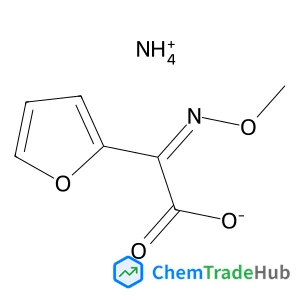
Ammonium (Z)-2-(furan-2-yl)-2-(methoxyimino)acetate
CAS Number:
97148-39-5
Molecular Formula:
C7H10N2O4
Recommended Suppliers




Disclaimer
This page provides academic journal information for reference and research purposes only. We are not affiliated with any journal publishers and do not handle publication submissions. For publication-related inquiries, please contact the respective journal publishers directly.
If you notice any inaccuracies in the information displayed, please contact us at support@chemtradehub.com. We will promptly review and address your concerns.