












![1-[6-(1H-Imidazol-1-yl)-3-pyridinyl]methanamine structure](https://static.chemtradehub.com/structs/914/914637-08-4-8825.webp "1-[6-(1H-Imidazol-1-yl)-3-pyridinyl]methanamine structure")
Identification of bacterial species by untargeted NMR spectroscopy of the exo-metabolome
Literature Information
Publication Date
2016-06-16
DOI
10.1039/C6AN00393A
Impact Factor
4.616
Authors
T. L. Palama, I. Canard, G. J. P. Rautureau, C. Mirande, S. Chatellier, B. Elena-Herrmann
View Original
Abstract
Identification of bacterial species is a crucial bottleneck for clinical diagnosis of infectious diseases. Quick and reliable identification is a key factor to provide suitable antibiotherapies and avoid the development of multiple-drug resistance. We propose a novel nuclear magnetic resonance (NMR)-based metabolomics strategy for rapid discrimination and identification of several bacterial species that relies on untargeted metabolic profiling of supernatants from bacterial culture media. We show that six bacterial species (Gram negative: Escherichia coli, Pseudomonas aeruginosa, Proteus mirabilis; Gram positive: Enterococcus faecalis, Staphylococcus aureus, and Staphylococcus saprophyticus) can be well discriminated from multivariate statistical analysis, opening new prospects for NMR applications to microbial clinical diagnosis.
Recommended Journals
Related Literature
The photonic opal – the jewel in the crown of optical information processing
2003-10-07
Focus
DOI: 10.1039/B306771H
On-chip separation of peptides prepared within a micro reactor
Vinod George, Paul Watts, Stephen J. Haswell, Esteban Pombo-Villar
2003-10-22
Communication
DOI: 10.1039/B310744B
Coordinative and electrostatic forces in action: from the design of differential chromogenic anion sensors to selective carboxylate recognition
Beatriz García-Acosta, Xavier Albiach-Martí, Eduardo García, Luis Gil, Ramón Martínez-Máñez, Knut Rurack, Félix Sancenón, Juan Soto
2004-02-26
Communication
DOI: 10.1039/B314997H
Carbonate and oxalate dianions as prolific hydrogen-bond acceptors in supramolecular assembly‡
Chi-Keung Lam, Thomas C. W. Mak
2003-10-08
Communication
DOI: 10.1039/B306649E
The generation and trapping of organozinc carbenoids from N-diethoxymethyl amides: a new amidocyclopropanation reaction
Guillaume Bégis, David Cladingboel, William B. Motherwell
2003-10-03
Communication
DOI: 10.1039/B309887G
Magnetic bead-based label-free chemiluminescence detection of telomeres
Jianzhong Lu, Choiwan Lau, Masaaki Kai
2003-10-20
Communication
DOI: 10.1039/B306895A
cis-Cyclopentyl PNA (cpPNA) as constrained chiral PNA analogues: stereochemical dependence of DNA/RNA hybridization
T. Govindaraju, Vaijayanti A. Kumar, Krishna N. Ganesh
2004-03-02
Communication
DOI: 10.1039/B317000D
Unusual reactions of N-allylic difluoroenamines under thermal conditions
Hideki Amii, Yutaka Ichihara, Takashi Nakagawa, Takeshi Kobayashi, Kenji Uneyama
2003-10-20
Communication
DOI: 10.1039/B309696C
Luminescent Ln3+ nitrobenzoato complexes: first examples of sensitization of green and red emission
Ana de Bettencourt Dias, Subha Viswanathan
2004-03-23
Communication
DOI: 10.1039/B402038C
Fluorescence studies of protein thermostability in ionic liquids
Sheila N. Baker, T. Mark McCleskey, Siddharth Pandey, Gary A. Baker
2004-03-19
Communication
DOI: 10.1039/B401304M
You might also like
Compound Q&A
What is the market or research trend for N-(4-Methoxybenzyl)-2-pyridinamine (CAS: 52818-63-0)?
N-(4-Methoxybenzyl)-2-pyridinamine (CAS: 52818-63-0) is increasingly being used ...
52818-63-0N-(4-Methoxybenzyl)-...
Compound Q&A
What precautions should be taken when handling Ethyl 4-(2-chlorophenyl)-1,3-thiazole-2-carboxylate (CAS: 1050507-06-6)?
When handling Ethyl 4-(2-chlorophenyl)-1,3-thiazole-2-carboxylate, appropriate p...
1050507-06-6Ethyl 4-(2-chlorophe...
Compound Q&A
What regulatory guidelines apply to diethyldiselane (CAS: 628-39-7)?
Diethyldiselane (CAS: 628-39-7) is classified under the Globally Harmonized Syst...
628-39-7Diethyldiselane
Compound Q&A
What is the market or research trend for oxocopper (CAS: 12053-18-8)?
The market for oxocopper (CAS: 12053-18-8) is primarily driven by its use in cat...
12053-18-8oxocopper; oxo-(oxoc...
Compound Q&A
What is the market or research trend for 5-{[(2-Methyl-2-propanyl)oxy]carbonyl}-5-azaspiro[2.4]heptane-7-carboxylic acid?
The market for 5-{[(2-Methyl-2-propanyl)oxy]carbonyl}-5-azaspiro[2.4]heptane-7-c...
1268519-54-55-{[(2-Methyl-2-prop...
Compound Q&A
What is 2-(1-Pyrrolidinyl)-4-pyridinamine (CAS: 35981-63-6)?
2-(1-Pyrrolidinyl)-4-pyridinamine is a chemical compound with the CAS number 359...
35981-63-62-(1-Pyrrolidinyl)-4...
Compound Q&A
What are the physical and chemical properties of 2-(3-Pyridinyl)-1-azabicyclo[2.2.2]octane (CAS: 91556-75-1)?
2-(3-Pyridinyl)-1-azabicyclo[2.2.2]octane (CAS: 91556-75-1) is a crystalline sol...
91556-75-12-(3-Pyridinyl)-1-az...
Compound Q&A
How is (S)-Alpha-allyl-proline hydrochloride (CAS: 129704-91-2) typically synthesized?
(S)-Alpha-allyl-proline hydrochloride is usually synthesized via a Wittig reacti...
129704-91-2(S)-Alpha-allyl-prol...
Compound Q&A
What is 3-Methyl-1,2-oxazole-5-carboxylic acid (CAS: 4857-42-5)?
3-Methyl-1,2-oxazole-5-carboxylic acid (CAS: 4857-42-5) is an organic compound w...
4857-42-53-Methyl-1,2-oxazole...
Compound Q&A
How is Lys-SMCC-DM1 (CAS: 1281816-04-3) typically synthesized?
Lys-SMCC-DM1 is synthesized via a multi-step process involving the coupling of S...
1281816-04-3Lys-SMCC-DM1
Source Journal
Analyst

CiteScore:
7.8
Self-citation Rate:
5.6%
Articles per Year:
653
Analyst publishes analytical and bioanalytical research that reports premier fundamental discoveries and inventions, and the applications of those discoveries, unconfined by traditional discipline barriers.
Recommended Compounds
![N-{15-[(2,5-Dioxo-1-pyrrolidinyl)oxy]-15-oxo-3,6,9,12-tetraoxapentadec-1-yl}-2-(2-propyn-1-yloxy)acetamide structure](https://static.chemtradehub.com/structs/210/2101206-92-0-2eb5.webp "N-{15-[(2,5-Dioxo-1-pyrrolidinyl)oxy]-15-oxo-3,6,9,12-tetraoxapentadec-1-yl}-2-(2-propyn-1-yloxy)acetamide structure")
N-{15-[(2,5-Dioxo-1-pyrrolidinyl)oxy]-15-oxo-3,6,9,12-tetraoxapentadec-1-yl}-2-(2-propyn-1-yloxy)acetamide
CAS Number:
2101206-92-0
Molecular Formula:
C20H30N2O10
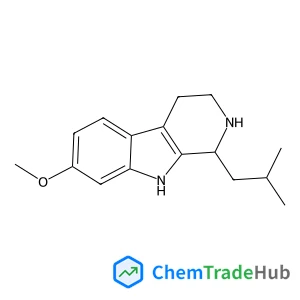
1-Isobutyl-7-methoxy-2,3,4,9-tetrahydro-1H-beta-carboline
CAS Number:
175975-76-5
Molecular Formula:
C16H22N2O

Recommended Suppliers






Disclaimer
This page provides academic journal information for reference and research purposes only. We are not affiliated with any journal publishers and do not handle publication submissions. For publication-related inquiries, please contact the respective journal publishers directly.
If you notice any inaccuracies in the information displayed, please contact us at support@chemtradehub.com. We will promptly review and address your concerns.