


Nickel-catalyzed reductive coupling of alkyl halides with other electrophiles: concept and mechanistic considerations
Literature Information
Publication Date
2015-08-20
DOI
10.1039/C5QO00224A
Impact Factor
5.281
Authors
Jun Gu, Xuan Wang, Weichao Xue
View Original
Abstract
The formation of C–C bonds directly by catalytic reductive cross-coupling of two different electrophiles represents one of the practical synthetic protocols that differs from the conventional nucleophile/electrophile coupling methods. Particularly the reductive coupling of alkyl electrophiles with other electrophiles is still a challenge. This report summarizes the advances in the formation of C(sp3)–C(sp3) bonds between two alkyl electrophiles, with emphasis on the control of chemoselectivity that is exceedingly challenging to achieve due to similar structures and reactivities of two unactivated alkyl halides. The coupling of alkyl halides with aryl or acyl electrophiles was also discussed based on the chemical approach developed by our group, followed by a brief overview of the reactions of tertiary alkyl halides. In the end, a brief overview of the challenges in this exciting field was illustrated. Whereas the reaction mechanisms generating alkyl–alkyl products are proposed to involve reactions of Ni(I) species with alkyl halides to generate Ralkyl–Ni(III)–Ralkyl intermediates through a radical/Ni cage-rebound process, the obtained evidence seemingly supports that the radical chain mechanism governs the acylation and arylation of alkyl halides. The latter features a cage-escaped alkyl radical.
Recommended Journals

Journal of Medicinal Chemistry

Israel Journal of Chemistry

Nature

Journal of Organometallic Chemistry

Pharmacological Reviews

Planta Medica

Journal of Heterocyclic Chemistry

Proceedings of the National Academy of Sciences of the United States of America

Organic Preparations and Procedures International

Science
Related Literature
Resonance enhanced multiphoton ionization spectroscopy of NHD2via the 1E′′-state
Chung-Hsin Yang, Gautam Sarma, Ashim Kumar Saha, David H. Parker, Colin M. Western
2013-03-15
Paper
DOI: 10.1039/C3CP00012E
Synthesis and application of FePt/CNTs nanocomposite as a sensor and novel amideligand as a mediator for simultaneous determination of glutathione, nicotinamide adenine dinucleotide and tryptophan
R. Moradi, S. A. Sebt, Roya Sadeghi, F. Karimi, A. Bahari, H. Arabi
2013-02-07
Paper
DOI: 10.1039/C3CP00033H
Implicit inclusion of atomic polarization in modeling of partitioning between water and lipid bilayers
Joakim P. M. Jämbeck, Alexander P. Lyubartsev
2013-02-11
Paper
DOI: 10.1039/C3CP44472D
Spatio-chemical characterization of a polymer blend by magnetic resonance force microscopy
Ivan T. Tomka, Jacco D. van Beek, Rosmarie Joss, Beat H. Meier
2013-01-14
Communication
DOI: 10.1039/C3CP44196B
Single-molecule surface-enhanced Raman spectroscopy: a perspective on the current status
Hae Mi Lee, Seung Min Jin, Hyung Min Kim, Yung Doug Suh
2013-03-11
Perspective
DOI: 10.1039/C3CP44463E
Towards a lattice-matching solid-state battery: synthesis of a new class of lithium-ion conductors with the spinel structure
Fabio Rosciano, Paolo P. Pescarmona, Kristof Houthoofd, Andre Persoons, Patrick Bottke, Martin Wilkening
2013-02-25
Paper
DOI: 10.1039/C3CP50803J
Formaldehyde and methanol formation from reaction of carbon monoxide and hydrogen on neutral Fe2S2 clusters in the gas phase
Shi Yin, Zhechen Wang, Elliot R. Bernstein
2013-02-11
Paper
DOI: 10.1039/C3CP50183C
Electrostatic spectral tuning mechanism of the green fluorescent protein
Ville R. I. Kaila, Robert Send, Dage Sundholm
2013-02-11
Communication
DOI: 10.1039/C3CP00058C
First-principles simulations on suspended coinage-metal nanotubes composed of different atomic species
2013-01-30
Paper
DOI: 10.1039/C3CP44169E
Improving charge collection in Escherichia coli–carbon electrode devices with conjugated oligoelectrolytes
Jenny Du, Xiaofen Chen, Alexander W. Thomas, Nathan D. Kirchhofer, Logan E. Garner, Myat Thiri Maw, Wee Han Poh, Jamie Hinks, Qichun Zhang
2013-02-19
Paper
DOI: 10.1039/C3CP50437A
You might also like
Compound Q&A
How should waste containing (6-Bromo-2-naphthyl)oxy](dimethyl)(2-methyl-2-propanyl)silane be handled?
Waste containing (6-Bromo-2-naphthyl)oxy](dimethyl)(2-methyl-2-propanyl)silane (...
100751-65-3[(6-Bromo-2-naphthyl...
Compound Q&A
How is 7-Fluoro-4-isoquinolinecarboxylic acid (CAS: 1841081-40-0) typically synthesized?
7-Fluoro-4-isoquinolinecarboxylic acid can be synthesized via a multi-step proce...
1841081-40-07-Fluoro-4-isoquinol...
Compound Q&A
What are the physical and chemical properties of 2,3,5,6-Tetrabromothieno[3,2-b]thiophene (CAS: 124638-53-5)?
2,3,5,6-Tetrabromothieno[3,2-b]thiophene is a crystalline compound with a high m...
124638-53-52,3,5,6-Tetrabromoth...
Compound Q&A
Is 1-[4-(Benzylamino)-7,8-dihydro-5H-pyrano[4,3-d]pyrimidin-2-yl]-2-methyl-1H-indole-4-carboxamide (CAS: 1542705-92-9) safe?
1-[4-(Benzylamino)-7,8-dihydro-5H-pyrano[4,3-d]pyrimidin-2-yl]-2-methyl-1H-indol...
1542705-92-91-[4-(Benzylamino)-7...
Compound Q&A
What is the market or research trend for imidazo[5,1-d]-1,2,3,5-tetrazine-8-carboxylic acid, 3,4-dihydro-3-methyl-4-oxo- (CAS: 113942-30-6)?
The market for imidazo[5,1-d]-1,2,3,5-tetrazine-8-carboxylic acid, 3,4-dihydro-3...
113942-30-6Imidazo[5,1-d]-1,2,3...
Compound Q&A
What is 3-(Triisopropylsilyl)propiolaldehyde (CAS: 163271-80-5)?
3-(Triisopropylsilyl)propiolaldehyde is a synthetic organic compound with the CA...
163271-80-53-(Triisopropylsilyl...
Compound Q&A
What regulatory guidelines apply to 6-Nitro-2H-1,4-benzoxazin-3(4H)-one (CAS: 81721-87-1)?
6-Nitro-2H-1,4-benzoxazin-3(4H)-one (CAS: 81721-87-1) is subject to various regu...
81721-87-16-Nitro-2H-1,4-benzo...
Compound Q&A
How should waste containing (3-Fluorophenyl)(4-{[(2-methyl-2-propanyl)oxy]carbonyl}-1-piperazinyl)acetic acid (CAS: 885272-91-3) be handled?
Waste containing (3-Fluorophenyl)(4-{[(2-methyl-2-propanyl)oxy]carbonyl}-1-piper...
885272-91-3(3-Fluorophenyl)(4-{...
Compound Q&A
What are the physical and chemical properties of N,N'-4,4'-Biphenyldiyldiisonicotinamide (CAS: 55119-40-9)?
N,N'-4,4'-Biphenyldiyldiisonicotinamide is a white crystalline solid with a mole...
55119-40-9N,N'-4,4'-Biphenyldi...
Compound Q&A
What industries use 6-Bromo-8-fluoro-2-quinazolinol (CAS: 1036756-15-6)?
6-Bromo-8-fluoro-2-quinazolinol is primarily used in the pharmaceutical industry...
1036756-15-66-Bromo-8-fluoro-2-q...
Source Journal
Organic Chemistry Frontiers

CiteScore:
7.8
Self-citation Rate:
8.7%
Articles per Year:
724
Organic Chemistry Frontiers publishes high-quality research from across organic chemistry. Emphases are placed on studies that make significant contributions to the field of organic chemistry by reporting either new or significantly improved protocols or methodologies. Topics include, but are not limited to the following: Organic synthesis Development of synthetic methodologies Catalysis Natural products Functional organic materials Supramolecular and macromolecular chemistry Physical and computational organic chemistry
Recommended Compounds
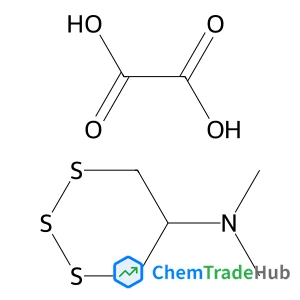
Oxalic acid compound with cyclohexylsulfamothioic O-acid (11)
CAS Number:
31895-22-4
Molecular Formula:
C7H13NO4S3
Recommended Suppliers








Disclaimer
This page provides academic journal information for reference and research purposes only. We are not affiliated with any journal publishers and do not handle publication submissions. For publication-related inquiries, please contact the respective journal publishers directly.
If you notice any inaccuracies in the information displayed, please contact us at support@chemtradehub.com. We will promptly review and address your concerns.