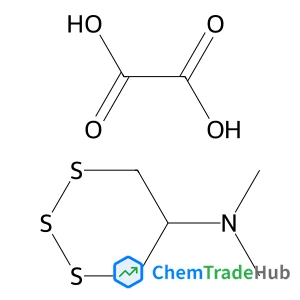
Oxalic acid compound with cyclohexylsulfamothioic O-acid (11)
CAS Number:
31895-22-4
Molecular Formula:
C7H13NO4S3
Joakim P. M. Jämbeck, Alexander P. Lyubartsev
We propose an effective and straightforward way of including atomic polarization in simulations of the partitioning of small molecules in inhomogenous media based on classical molecular dynamics with non-polarizable force fields. The approach presented here takes advantage of the relatively fast sampling of phase space obtained with additive force fields by adding the polarization effects afterwards. By using pre-polarized charges for the polar and non-polar phases together with a polarization correction term the effects of atomic polarization are effectively taken into account. The results show a clear improvement compared to using the more common setup with one set of charges obtained from gas phase ab initio calculations. It is shown that when proper measures are taken into account computer simulations with non-polarizable force fields are able to accurately determine water–membrane partitioning and preferential location of small molecules in the membrane interior. We believe that the approach presented here can be useful in rational drug design and in investigations of molecular mechanisms of anesthetic or toxic action.
Ramon A. Alvarez-Puebla, David S. dos Santos, Jr., Ricardo F. Aroca
DOI: 10.1039/B711361G
Jacqui L. Adcock, Paul S. Francis, Trevor A. Smith, Neil W. Barnett
DOI: 10.1039/B714147E
DOI: 10.1039/B502215K
Ghinwa Naja, Pierre Bouvrette, Sabahudin Hrapovic, John H. T. Luong
DOI: 10.1039/B701160A
Yun Xu, Richard G. Brereton, Karlheinz Trebesius, Ingrid Bergmaier, Elisabeth Oberzaucher, Karl Grammer, Dustin J. Penn
DOI: 10.1039/B702410J
Xiaomeng Wang, Ren-Ke Li
DOI: 10.1039/B714210B
Z. Hammody, S. Argov, R. K. Sahu, E. Cagnano, R. Moreh, S. Mordechai
DOI: 10.1039/B712040K
Tatineni Balaji, Manickam Sasidharan, Hideyuki Matsunaga
DOI: 10.1039/B503261J
Yohannes H. Rezenom, Jianan Dong, Kermit K. Murray
DOI: 10.1039/B715146B
María J. Culzoni, Héctor C. Goicoechea, Ariana P. Pagani, Miguel A. Cabezón, Alejandro C. Olivieri
DOI: 10.1039/B603383K
Waste containing (6-Bromo-2-naphthyl)oxy](dimethyl)(2-methyl-2-propanyl)silane (...
7-Fluoro-4-isoquinolinecarboxylic acid can be synthesized via a multi-step proce...
2,3,5,6-Tetrabromothieno[3,2-b]thiophene is a crystalline compound with a high m...
1-[4-(Benzylamino)-7,8-dihydro-5H-pyrano[4,3-d]pyrimidin-2-yl]-2-methyl-1H-indol...
The market for imidazo[5,1-d]-1,2,3,5-tetrazine-8-carboxylic acid, 3,4-dihydro-3...
3-(Triisopropylsilyl)propiolaldehyde is a synthetic organic compound with the CA...
6-Nitro-2H-1,4-benzoxazin-3(4H)-one (CAS: 81721-87-1) is subject to various regu...
Waste containing (3-Fluorophenyl)(4-{[(2-methyl-2-propanyl)oxy]carbonyl}-1-piper...
N,N'-4,4'-Biphenyldiyldiisonicotinamide is a white crystalline solid with a mole...
6-Bromo-8-fluoro-2-quinazolinol is primarily used in the pharmaceutical industry...

Physical Chemistry Chemical Physics (PCCP) is an international journal co-owned by 19 physical chemistry and physics societies from around the world. This journal publishes original, cutting-edge research in physical chemistry, chemical physics and biophysical chemistry. To be suitable for publication in PCCP, articles must include significant innovation and/or insight into physical chemistry; this is the most important criterion that reviewers and Editors will judge against when evaluating submissions. The journal has a broad scope and welcomes contributions spanning experiment, theory, computation and data science. Topical coverage includes spectroscopy, dynamics, kinetics, statistical mechanics, thermodynamics, electrochemistry, catalysis, surface science, quantum mechanics, quantum computing and machine learning. Interdisciplinary research areas such as polymers and soft matter, materials, nanoscience, energy, surfaces/interfaces, and biophysical chemistry are welcomed if they demonstrate significant innovation and/or insight into physical chemistry. Joined experimental/theoretical studies are particularly appreciated when complementary and based on up-to-date approaches.
![2,9-Dichloro-5,12-dihydroquinolino[2,3-b]acridine-7,14-dione structure](https://static.chemtradehub.com/structs/308/3089-17-6-750b.webp "2,9-Dichloro-5,12-dihydroquinolino[2,3-b]acridine-7,14-dione structure")