












Thermo- and pH-sensitive shape memory polyurethane containing carboxyl groups
Literature Information
Publication Date
2016-01-25
DOI
10.1039/C5PY02010G
Impact Factor
5.582
Authors
Qiuju Song, Shaobing Zhou, Keqing Zhao, Biqing Wang, Ping Hu
View Original
Abstract
A type of polyurethane with a thermo-induced triple shape memory effect and a pH-sensitive dual shape memory effect has been developed. Firstly, a series of polyurethanes were successfully synthesized through solution polymerisation of polyethylene glycol (PEG, Mn = 4000 kg mol−1), dimethylolpropionic acid (DMPA) and 4,4′-diphenylmethane diisocyanate (MDI). These polymers were named as PEG-i-MDI-DMPA (i = 20%, 30%, 40%), and i represents the weight content of PEG in the polymers. The results of shape memory testing showed that the PEG-30%-MDI-DMPA displays both the triple-shape memory effect and the pH sensitive dual-shape memory effect. In PEG-30%-MDI-DMPA, the glass transition of PEG chains and the association and disassociation of carboxylic dimers act as two switches to control the triple-shape memory effect, while the carboxylic dimer is affected by pH values to associate in acidic solutions (at pH 2) and dissociate in alkaline solutions (at pH 9) to induce the pH-sensitive shape memory. The carboxylic dimers play an important role in the construction of shape memory properties in this polyurethane.
Related Literature
Computational study of the mechanism of amide bond formation via CS2-releasing 1,3-acyl transfer
Yuan-Ye Jiang, Tian-Tian Liu, Xue Sun, Zhong-Yan Xu, Xia Fan, Ling Zhu, Siwei Bi
2018-07-25
Paper
DOI: 10.1039/C8OB01338A
Carbenium ion formation by fragmentation of electrochemically generated oxonium ions
Anna Lielpetere, Aigars Jirgensons
2018-06-27
Communication
DOI: 10.1039/C8OB01339J
Organocatalytic enantioselective Diels–Alder reaction between hydroxymaleimides and in situ generated nitrosoalkenes for direct preparation of chiral hemiketals with 1,2-oxazine skeleton
Fang Tian, Wen-Juan Wan, Li-Xin Wang
2021-08-30
Research Article
DOI: 10.1039/D1QO01022K
A theoretical study on NHC-catalysed enantioselective cycloaddition of ketenes and 3-aroylcoumarins: mechanism and enantioselectivity
Ramón J. Zaragozá, María J. Aurell, Miguel A. González-Cardenete
2018-07-11
Paper
DOI: 10.1039/C8OB01035H
Divergent biosynthesis of indole alkaloids FR900452 and spiro-maremycins
Yingyi Duan, Yanyan Liu, Tao Huang, Yi Zou, Tingting Huang, Kaifeng Hu, Zixin Deng, Shuangjun Lin
2018-07-18
Paper
DOI: 10.1039/C8OB01181H
Synthesis and biological evaluation of cyclic derivatives of combretastatin A-4 containing group 14 elements
Víctor Blasco, Juan Murga, Eva Falomir, Miguel Carda, Santiago Royo, Ana C. Cuñat, Juan F. Sanz-Cervera, J. Alberto Marco
2018-07-30
Paper
DOI: 10.1039/C8OB01148F
Conformation-guided analogue design identifies potential antimalarial compounds through inhibition of mitochondrial respiration
Erik M. Larsen, Chia-Fu Chang, Tomoyo Sakata-Kato, Joseph W. Arico, Vince M. Lombardo, Dyann F. Wirth, Richard E. Taylor
2018-07-11
Communication
DOI: 10.1039/C8OB01257A
Ruthenium-catalyzed synthesis of arylethyl 1,3,5-triazines from arylallyl alcohols and biguanides
Chen Zhang
2018-08-07
Paper
DOI: 10.1039/C8OB01397G
Two bifunctional desferrioxamine chelators for bioorthogonal labeling of biovectors with zirconium-89
F. Gao, C. Ieritano, K.-T. Chen, G. M. Dias, J. Rousseau, Y. Seimbille
2018-07-02
Communication
DOI: 10.1039/C8OB01434E
Peripheral cyclic β-amino acids balance the stability and edge-protection of β-sandwiches
Anasztázia Hetényi, Edit Wéber, Titanilla Szögi, Lívia Fülöp
2018-07-16
Paper
DOI: 10.1039/C8OB01322E
You might also like
Compound Q&A
What are the main uses of 4-Nitrophenyl phosphate disodium salt hexahydrate (CAS: 333338-18-4)?
4-Nitrophenyl phosphate disodium salt hexahydrate is primarily used as a substra...
333338-18-44-Nitrophenyl phosph...
Compound Q&A
What are the main uses of 2-(Trifluoromethyl)-1,3-oxazole-4-carboxylic Acid (CAS: 1060816-01-4)?
2-(Trifluoromethyl)-1,3-oxazole-4-carboxylic Acid (CAS: 1060816-01-4) is widely ...
1060816-01-42-(Trifluoromethyl)-...
Compound Q&A
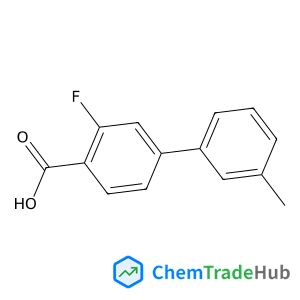
How should 2-Fluoro-4-biphenylcarboxylic acid (CAS: 137045-30-8) be stored?
2-Fluoro-4-biphenylcarboxylic acid should be stored in a cool, dry place at room...
137045-30-82-Fluoro-4-biphenylc...
Compound Q&A
What industries use Prednisolone-21-Carboxylic Acid (CAS: 61549-70-0)?
Prednisolone-21-Carboxylic Acid is primarily used in the pharmaceutical industry...
61549-70-0Prednisolone-21-Carb...
Compound Q&A
How should 4-(Hydrazinomethyl)-1,2,3-benzenetriol (CAS: 3614-72-0) be stored?
4-(Hydrazinomethyl)-1,2,3-benzenetriol (CAS: 3614-72-0) should be stored in a co...
3614-72-04-(Hydrazinomethyl)-...
Compound Q&A
What industries use 4-Amino-1-methyl-1H-pyrazole-5-carboxylic acid hydrochloride (CAS: 92534-70-8)?
4-Amino-1-methyl-1H-pyrazole-5-carboxylic acid hydrochloride (CAS: 92534-70-8) i...
92534-70-84-Amino-1-methyl-1H-...
Compound Q&A
What regulatory guidelines apply to dehydropachymic acid (CAS: 77012-31-8)?
Dehydropachymic acid (CAS: 77012-31-8) is regulated by various agencies. It fall...
77012-31-8Dehydropachymic acid
Compound Q&A
What is the market or research trend for 6-[(2,2-Dimethylpropanoyl)amino]nicotinic acid (CAS: 898561-66-5)?
The market and research trends for 6-[(2,2-Dimethylpropanoyl)amino]nicotinic aci...
898561-66-56-[(2,2-Dimethylprop...
Compound Q&A
How should 1,10-Phenanthroline-2,9-dicarbaldehyde (CAS: 57709-62-3) be stored?
1,10-Phenanthroline-2,9-dicarbaldehyde should be stored in a cool, dry place awa...
57709-62-31,10-Phenanthroline-...
Compound Q&A
How is 5-Carbamoyl-11-oxo-10,11-dihydro-5H-dibenzo[b,f]azepin-10-yl acetate (CAS: 113952-21-9) typically synthesized?
5-Carbamoyl-11-oxo-10,11-dihydro-5H-dibenzo[b,f]azepin-10-yl acetate can be synt...
113952-21-95-Carbamoyl-11-oxo-1...
Source Journal
Polymer Chemistry

CiteScore:
8.6
Self-citation Rate:
7.3%
Articles per Year:
457
Polymer Chemistry welcomes submissions in all areas of polymer science that have a strong focus on macromolecular chemistry. Manuscripts may cover a broad range of fields, yet no direct application focus is required.
Recommended Compounds
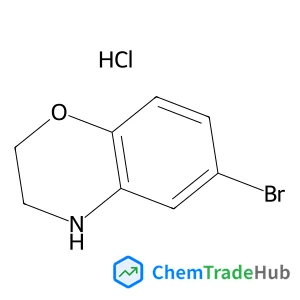
6-Bromo-3,4-dihydro-2H-1,4-benzoxazine hydrochloride (1:1)
CAS Number:
1260803-10-8
Molecular Formula:
C8H9BrClNO
Recommended Suppliers






Disclaimer
This page provides academic journal information for reference and research purposes only. We are not affiliated with any journal publishers and do not handle publication submissions. For publication-related inquiries, please contact the respective journal publishers directly.
If you notice any inaccuracies in the information displayed, please contact us at support@chemtradehub.com. We will promptly review and address your concerns.