


Synthesis and biological evaluation of cyclic derivatives of combretastatin A-4 containing group 14 elements
Literature Information
Publication Date
2018-07-30
DOI
10.1039/C8OB01148F
Impact Factor
3.876
Authors
Víctor Blasco, Juan Murga, Eva Falomir, Miguel Carda, Santiago Royo, Ana C. Cuñat, Juan F. Sanz-Cervera, J. Alberto Marco
View Original
Abstract
Several tricyclic compounds inspired by the structure of combretastatin A-4 and bearing group 14 elements have been synthesized by homocoupling lithiated aryl fragments followed by ring-closing metathesis. These tricyclic compounds and their diolefin precursors were evaluated for their antiproliferative action on the tumor cell lines HT-29, MCF-7, HeLa and A-549 and on the non-tumor cell line HEK-293. In addition, their effects on the cell cycle were also measured. The tricyclic compounds show antiproliferative activity similar to that of combretastatin A-4, even though they are not so active in arresting the cell cycle. However, some diolefin precursors are able to cause accumulation of cells in the G2/M phase in a higher percentage than combretastatin A-4 itself. Inhibition of endothelial tube formation and VEGFR-2 phosphorylation of some selected compounds is comparable to that of combretastatin A-4, particularly those of tin-containing compounds 23c and 26c, whose actions exceed those of sorafenib, a clinically used VEGFR-2 inhibitor.
Recommended Journals

Planta Medica

Proceedings of the National Academy of Sciences of the United States of America

Fibre Chemistry

Science Progress

Journal of Heterocyclic Chemistry

Organic Preparations and Procedures International

Molecular Pharmacology

Russian Chemical Reviews

Pure and Applied Chemistry

Journal of Organometallic Chemistry
Related Literature
Visualising electrochemical reaction layers: mediated vs. direct oxidation
Junling Ma, Minjun Yang, Christopher Batchelor-McAuley, Richard G. Compton
2020-05-22
Paper
DOI: 10.1039/D0CP01904F
Irreproducibility in the triboelectric charging of insulators: evidence of a non-monotonic charge versus contact time relationship
Jinyang Zhang, Chao Su, Fergus J. M. Rogers, Nadim Darwish, Michelle L. Coote, Simone Ciampi
2020-05-07
Paper
DOI: 10.1039/D0CP01317J
Correction: Liquid-phase exfoliated SnS as a semiconductor coating filler to enhance corrosion protection performance
Zuopeng Qu, Lei Wang, Xuejun Fan, Guoqi Zhang
2020-05-20
Correction
DOI: 10.1039/D0CP90112A
Bi-stimuli assisted engineering and control of magnetic phase in monolayer CrOCl
A. K. Nair, S. Rani, M. Venkata Kamalakar, S. J. Ray
2020-04-17
Paper
DOI: 10.1039/D0CP01204A
Theoretical free energy profile and benchmarking of functionals for amino-thiourea organocatalyzed nitro-Michael addition reaction
2020-05-05
Paper
DOI: 10.1039/D0CP00481B
X-ray photoelectron spectroscopy of piperidinium ionic liquids: a comparison to the charge delocalised pyridinium analogues
Peter Licence, Chi-Linh Do-Thanh, Huimin Luo, Sheng Dai
2020-05-06
Paper
DOI: 10.1039/D0CP01454K
UV-visible absorption spectrum of FAD and its reduced forms embedded in a cryptochrome protein
Karno Schwinn, Nicolas Ferré, Miquel Huix-Rotllant
2020-05-07
Paper
DOI: 10.1039/D0CP01714K
Predicting the phase diagram of titanium dioxide with random search and pattern recognition
Aleks Reinhardt
2020-05-22
Paper
DOI: 10.1039/D0CP02513E
Adiabatic motion and statistical mechanics via mass-zero constrained dynamics
Sara Bonella, Rodolphe Vuilleumier
2020-03-06
Paper
DOI: 10.1039/D0CP00163E
You might also like
Compound Q&A
What are the main uses of 4-Nitrophenyl phosphate disodium salt hexahydrate (CAS: 333338-18-4)?
4-Nitrophenyl phosphate disodium salt hexahydrate is primarily used as a substra...
333338-18-44-Nitrophenyl phosph...
Compound Q&A
What are the main uses of 2-(Trifluoromethyl)-1,3-oxazole-4-carboxylic Acid (CAS: 1060816-01-4)?
2-(Trifluoromethyl)-1,3-oxazole-4-carboxylic Acid (CAS: 1060816-01-4) is widely ...
1060816-01-42-(Trifluoromethyl)-...
Compound Q&A
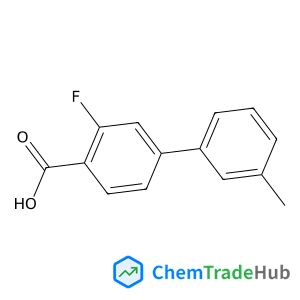
How should 2-Fluoro-4-biphenylcarboxylic acid (CAS: 137045-30-8) be stored?
2-Fluoro-4-biphenylcarboxylic acid should be stored in a cool, dry place at room...
137045-30-82-Fluoro-4-biphenylc...
Compound Q&A
What industries use Prednisolone-21-Carboxylic Acid (CAS: 61549-70-0)?
Prednisolone-21-Carboxylic Acid is primarily used in the pharmaceutical industry...
61549-70-0Prednisolone-21-Carb...
Compound Q&A
How should 4-(Hydrazinomethyl)-1,2,3-benzenetriol (CAS: 3614-72-0) be stored?
4-(Hydrazinomethyl)-1,2,3-benzenetriol (CAS: 3614-72-0) should be stored in a co...
3614-72-04-(Hydrazinomethyl)-...
Compound Q&A
What industries use 4-Amino-1-methyl-1H-pyrazole-5-carboxylic acid hydrochloride (CAS: 92534-70-8)?
4-Amino-1-methyl-1H-pyrazole-5-carboxylic acid hydrochloride (CAS: 92534-70-8) i...
92534-70-84-Amino-1-methyl-1H-...
Compound Q&A
What regulatory guidelines apply to dehydropachymic acid (CAS: 77012-31-8)?
Dehydropachymic acid (CAS: 77012-31-8) is regulated by various agencies. It fall...
77012-31-8Dehydropachymic acid
Compound Q&A
What is the market or research trend for 6-[(2,2-Dimethylpropanoyl)amino]nicotinic acid (CAS: 898561-66-5)?
The market and research trends for 6-[(2,2-Dimethylpropanoyl)amino]nicotinic aci...
898561-66-56-[(2,2-Dimethylprop...
Compound Q&A
How should 1,10-Phenanthroline-2,9-dicarbaldehyde (CAS: 57709-62-3) be stored?
1,10-Phenanthroline-2,9-dicarbaldehyde should be stored in a cool, dry place awa...
57709-62-31,10-Phenanthroline-...
Compound Q&A
How is 5-Carbamoyl-11-oxo-10,11-dihydro-5H-dibenzo[b,f]azepin-10-yl acetate (CAS: 113952-21-9) typically synthesized?
5-Carbamoyl-11-oxo-10,11-dihydro-5H-dibenzo[b,f]azepin-10-yl acetate can be synt...
113952-21-95-Carbamoyl-11-oxo-1...
Source Journal
Organic & Biomolecular Chemistry

CiteScore:
3.4
Self-citation Rate:
10.3%
Articles per Year:
1041
Organic & Biomolecular Chemistry (OBC) publishes original and high impact research and reviews in organic chemistry. We welcome research that shows new or significantly improved protocols or methodologies in total synthesis, synthetic methodology or physical and theoretical organic chemistry as well as research that shows a significant advance in the organic chemistry or molecular design aspects of chemical biology, catalysis, supramolecular and macromolecular chemistry, theoretical chemistry, mechanism-oriented physical organic chemistry, medicinal chemistry or natural products. Articles published in the journal should report new work which makes a highly-significant impact in the field. Routine and incremental work is generally not suitable for publication in the journal. More details about key areas of our scope are below. In all cases authors should include in their article clear rationale for why their research has been carried out.
Recommended Compounds
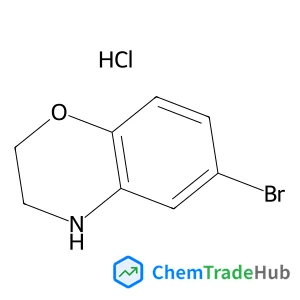
6-Bromo-3,4-dihydro-2H-1,4-benzoxazine hydrochloride (1:1)
CAS Number:
1260803-10-8
Molecular Formula:
C8H9BrClNO
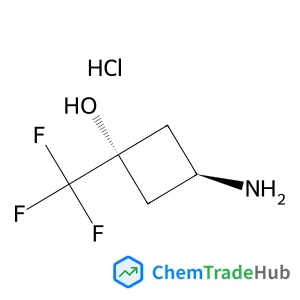
cis-3-Amino-1-(trifluoromethyl)cyclobutanol hydrochloride (1:1)
CAS Number:
1408075-16-0
Molecular Formula:
C5H9ClF3NO
Recommended Suppliers


Disclaimer
This page provides academic journal information for reference and research purposes only. We are not affiliated with any journal publishers and do not handle publication submissions. For publication-related inquiries, please contact the respective journal publishers directly.
If you notice any inaccuracies in the information displayed, please contact us at support@chemtradehub.com. We will promptly review and address your concerns.