












Synthesis, morphology, and electrical memory application of oligosaccharide-based block copolymers with π-conjugated pyrene moieties and their supramolecules
Literature Information
Publication Date
2015-12-09
DOI
10.1039/C5PY01697E
Impact Factor
5.582
Authors
Han-Sheng Sun, Yougen Chen, Wen-Ya Lee, Yu-Cheng Chiu, Takuya Isono, Toshifumi Satoh, Toyoji Kakuchi, Wen-Chang Chen
View Original
Abstract
We report the synthesis, morphology, and field effect transistor memory application of maltoheptaose-based block copolymers, maltoheptaose-block-poly(1-pyrenylmethyl methacrylate) (MH-b-PPyMA), and their supramolecules with (4-pyridyl)-acceptor-(4-pyridyl), MH(4Py-Acceptor-4Py)x-b-PPyMA. MH-b-PPyMA was prepared by the combination of the t-Bu-P4-catalyzed group transfer polymerization and the Cu(I)-catalyzed azide–alkyne cycloaddition reaction. After the thermal annealing process, the MH-b-PPyMA bulk sample underwent microphase separation to form the sub-10 nm periodic self-assembled nanostructure. The self-assembled morphologies transform from the hexagonal cylinder packing to the body-centered cubic sphere arrangement and the disordered spherical nanodomain with the increase of the PPyMA segment length. On the contrary, only the spherical nanodomain was observed in the thermo-annealed thin film samples of both MH-b-PPyMA and MH(4Py-Acceptor-4Py)x-b-PPyMA. The electrical characteristics of the p-type pentacene-based OFET memory device were studied using the thermo-annealed polymer thin film as the electret layer. The MH(4Py-Acceptor-4Py)x-b-PPyMA-based organic field effect transistor (OFET) devices had the high hole mobility of 0.20–1.08 cm2 V−1 s−1 and the ON/OFF current (ION/IOFF) ratio of 107–108, in which the acceptor of the benzo[c][1,2,5]thiadiazole (BT) based device possessed the higher hole mobility than that of the isoindigo-based one due to the more ordered packing pentacene crystals. The memory window (ΔVTH) of the supramolecule-based device was increased with enhancing the 4Py-Acceptor-4Py blending composition, and that of the MH(4Py-BT-4Py)1.5-b-PPyMA10-based device had the largest ΔVTH of ca. 9 V, a long-term retention time greater than 104 s and the high ION/IOFF memory ratio of 106–107 (reading at Vg = 0 V) for more than 100 programming/erasing cycles. Our results demonstrate that the bio-related block copolymers and their supramolecular thin film could be used as electret layers for high-performance nonvolatile flash green memory devices.
Related Literature
Study of the nanoparticle/matrix interactions in Y2O3–SiO2 samples
2002-04-25
Paper
DOI: 10.1039/B110996K
Two-step mechanism in cationic lipoplex formation as observed by dynamic light scattering, dielectric relaxation and circular dichroism methods
2002-05-13
Paper
DOI: 10.1039/B110503E
Surface photochemistry on confined systems: UV-laser-induced photodesorption of NO from Pd-nanostructures on Al2O3
Margarethe Kampling, Katharina Al-Shamery, Hans-Joachim Freund, Markus Wilde, Katsuyuki Fukutani, Yoshitada Murata
2002-05-09
Paper
DOI: 10.1039/B201357F
Development of kinetic models for the formation and degradation of unsaturated hydrocarbons at high temperature
2002-05-02
Paper
DOI: 10.1039/B110563A
Nano-Raman imaging of Cu–TCNQ clusters in TCNQ thin films by scanning near-field optical microscopy
P. G. Gucciardi, S. Trusso, C. Vasi, S. Patanè, M. Allegrini
2002-05-07
Paper
DOI: 10.1039/B110475F
Triaziridine and tetrazetidinevs. cyclic water trimer and tetramer: A computational approach to the relationship between molecular and supramolecular conformational analysis
Manuel Alcamí, Otilia Mó, Manuel Yáñez, Ibon Alkorta, José Elguero
2002-04-30
Paper
DOI: 10.1039/B108270C
Interaction between probe molecules and zeolites. Part II:Interpretation of the IR spectra of CO and N2 adsorbed in NaY and NaRbY
A. V. Larin, D. P. Vercauteren, C. Lamberti, S. Bordiga, A. Zecchina
2002-04-29
Paper
DOI: 10.1039/B107242K
Stability and reactivity patterns of medium-sized vanadium oxide cluster cations VxOy+ (4 ⩽ x ⩽ 14)
André Fielicke, Klaus Rademann
2002-05-14
Paper
DOI: 10.1039/B108046F
NO reduction with CO in the presence of O2 over Al2O3-supported and Cu-based catalysts
Takashi Yamamoto, Tsunehiro Tanaka, Ryoji Kuma, Sosuke Suzuki, Fumiaki Amano, Yutaka Shimooka, Yoshiumi Kohno, Takuzo Funabiki, Satohiro Yoshida
2002-04-29
Paper
DOI: 10.1039/B201120B
A Mössbauer study of In–Fe2O3/HZSM-5 catalysts for the selective catalytic reduction of NO by methane
Xiaodong Wang, Xuqun Zhao, Jianyi Shen, Xiaoying Sun, Tao Zhang, Liwu Lin
2002-05-15
Paper
DOI: 10.1039/B110515A
You might also like
Compound Q&A
How should waste containing (6-Bromo-2-naphthyl)oxy](dimethyl)(2-methyl-2-propanyl)silane be handled?
Waste containing (6-Bromo-2-naphthyl)oxy](dimethyl)(2-methyl-2-propanyl)silane (...
100751-65-3[(6-Bromo-2-naphthyl...
Compound Q&A
How is 7-Fluoro-4-isoquinolinecarboxylic acid (CAS: 1841081-40-0) typically synthesized?
7-Fluoro-4-isoquinolinecarboxylic acid can be synthesized via a multi-step proce...
1841081-40-07-Fluoro-4-isoquinol...
Compound Q&A
What are the physical and chemical properties of 2,3,5,6-Tetrabromothieno[3,2-b]thiophene (CAS: 124638-53-5)?
2,3,5,6-Tetrabromothieno[3,2-b]thiophene is a crystalline compound with a high m...
124638-53-52,3,5,6-Tetrabromoth...
Compound Q&A
Is 1-[4-(Benzylamino)-7,8-dihydro-5H-pyrano[4,3-d]pyrimidin-2-yl]-2-methyl-1H-indole-4-carboxamide (CAS: 1542705-92-9) safe?
1-[4-(Benzylamino)-7,8-dihydro-5H-pyrano[4,3-d]pyrimidin-2-yl]-2-methyl-1H-indol...
1542705-92-91-[4-(Benzylamino)-7...
Compound Q&A
What is the market or research trend for imidazo[5,1-d]-1,2,3,5-tetrazine-8-carboxylic acid, 3,4-dihydro-3-methyl-4-oxo- (CAS: 113942-30-6)?
The market for imidazo[5,1-d]-1,2,3,5-tetrazine-8-carboxylic acid, 3,4-dihydro-3...
113942-30-6Imidazo[5,1-d]-1,2,3...
Compound Q&A
What is 3-(Triisopropylsilyl)propiolaldehyde (CAS: 163271-80-5)?
3-(Triisopropylsilyl)propiolaldehyde is a synthetic organic compound with the CA...
163271-80-53-(Triisopropylsilyl...
Compound Q&A
What regulatory guidelines apply to 6-Nitro-2H-1,4-benzoxazin-3(4H)-one (CAS: 81721-87-1)?
6-Nitro-2H-1,4-benzoxazin-3(4H)-one (CAS: 81721-87-1) is subject to various regu...
81721-87-16-Nitro-2H-1,4-benzo...
Compound Q&A
How should waste containing (3-Fluorophenyl)(4-{[(2-methyl-2-propanyl)oxy]carbonyl}-1-piperazinyl)acetic acid (CAS: 885272-91-3) be handled?
Waste containing (3-Fluorophenyl)(4-{[(2-methyl-2-propanyl)oxy]carbonyl}-1-piper...
885272-91-3(3-Fluorophenyl)(4-{...
Compound Q&A
What are the physical and chemical properties of N,N'-4,4'-Biphenyldiyldiisonicotinamide (CAS: 55119-40-9)?
N,N'-4,4'-Biphenyldiyldiisonicotinamide is a white crystalline solid with a mole...
55119-40-9N,N'-4,4'-Biphenyldi...
Compound Q&A
What industries use 6-Bromo-8-fluoro-2-quinazolinol (CAS: 1036756-15-6)?
6-Bromo-8-fluoro-2-quinazolinol is primarily used in the pharmaceutical industry...
1036756-15-66-Bromo-8-fluoro-2-q...
Source Journal
Polymer Chemistry

CiteScore:
8.6
Self-citation Rate:
7.3%
Articles per Year:
457
Polymer Chemistry welcomes submissions in all areas of polymer science that have a strong focus on macromolecular chemistry. Manuscripts may cover a broad range of fields, yet no direct application focus is required.
Recommended Compounds
![N-[(E)-Phenylmethylene]benzenesulfonamide structure](https://static.chemtradehub.com/structs/139/13909-34-7-8167.webp "N-[(E)-Phenylmethylene]benzenesulfonamide structure")
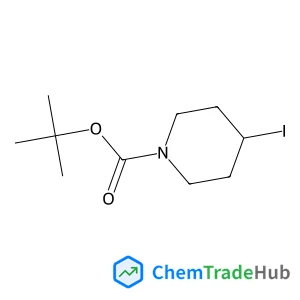
2-Methyl-2-propanyl 4-iodo-1-piperidinecarboxylate
CAS Number:
301673-14-3
Molecular Formula:
C10H18INO2
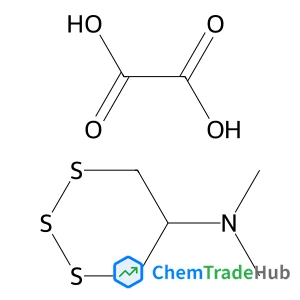
Oxalic acid compound with cyclohexylsulfamothioic O-acid (11)
CAS Number:
31895-22-4
Molecular Formula:
C7H13NO4S3
Recommended Suppliers




Disclaimer
This page provides academic journal information for reference and research purposes only. We are not affiliated with any journal publishers and do not handle publication submissions. For publication-related inquiries, please contact the respective journal publishers directly.
If you notice any inaccuracies in the information displayed, please contact us at support@chemtradehub.com. We will promptly review and address your concerns.