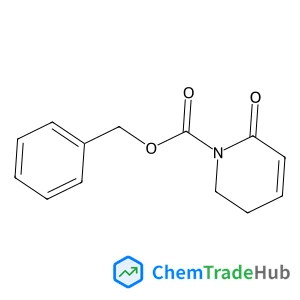
Benzyl 6-oxo-3,6-dihydro-1(2H)-pyridinecarboxylate
CAS Number:
725746-35-0
Molecular Formula:
C13H13NO3
A graphical abstract is available for this content

New Journal of Chemistry

Chemistry Education Research and Practice

Russian Journal of General Chemistry

Organic Process Research & Development

Journal of Peptide Science

Current Opinion in Colloid & Interface Science

Crystallography Reports

Saudi Pharmaceutical Journal

Russian Journal of Applied Chemistry

Russian Journal of Organic Chemistry
Alexander Holm, Alexander Southan, Curtis W. Frank
DOI: 10.1039/D0PY00697A
Amalie Solberg, Ingrid V. Mo, Finn L. Aachmann, Christophe Schatz, Bjørn E. Christensen
DOI: 10.1039/D1PY00727K
Keito Hagiwara
DOI: 10.1039/D0PY00648C
Daisuke Aoki, Gota Aibara
DOI: 10.1039/D1PY01197A
Hiroki Nishiyama, Feng Zheng, Shinsuke Inagi, Hiroyuki Fueno, Ikuyoshi Tomita
DOI: 10.1039/D0PY00724B
David K. Tran, Ahmed Z. Rashad, Donald J. Darensbourg
DOI: 10.1039/D1PY00784J
Shengfei Wang, Sen Zhang, Chun Feng, Guolin Lu, Xiaoyu Huang
DOI: 10.1039/D1PY01016F
Aurélie Destephen
DOI: 10.1039/D1PY01046H
DOI: 10.1039/D1PY00853F
Matthias Rohmer, Özgün Ucak, Rahul Fredrick, Wolfgang H. Binder
DOI: 10.1039/D1PY01021B
N-(4-Methoxybenzyl)-2-pyridinamine (CAS: 52818-63-0) is increasingly being used ...
When handling Ethyl 4-(2-chlorophenyl)-1,3-thiazole-2-carboxylate, appropriate p...
Diethyldiselane (CAS: 628-39-7) is classified under the Globally Harmonized Syst...
The market for oxocopper (CAS: 12053-18-8) is primarily driven by its use in cat...
The market for 5-{[(2-Methyl-2-propanyl)oxy]carbonyl}-5-azaspiro[2.4]heptane-7-c...
2-(1-Pyrrolidinyl)-4-pyridinamine is a chemical compound with the CAS number 359...
2-(3-Pyridinyl)-1-azabicyclo[2.2.2]octane (CAS: 91556-75-1) is a crystalline sol...
(S)-Alpha-allyl-proline hydrochloride is usually synthesized via a Wittig reacti...
3-Methyl-1,2-oxazole-5-carboxylic acid (CAS: 4857-42-5) is an organic compound w...
Lys-SMCC-DM1 is synthesized via a multi-step process involving the coupling of S...

Physical Chemistry Chemical Physics (PCCP) is an international journal co-owned by 19 physical chemistry and physics societies from around the world. This journal publishes original, cutting-edge research in physical chemistry, chemical physics and biophysical chemistry. To be suitable for publication in PCCP, articles must include significant innovation and/or insight into physical chemistry; this is the most important criterion that reviewers and Editors will judge against when evaluating submissions. The journal has a broad scope and welcomes contributions spanning experiment, theory, computation and data science. Topical coverage includes spectroscopy, dynamics, kinetics, statistical mechanics, thermodynamics, electrochemistry, catalysis, surface science, quantum mechanics, quantum computing and machine learning. Interdisciplinary research areas such as polymers and soft matter, materials, nanoscience, energy, surfaces/interfaces, and biophysical chemistry are welcomed if they demonstrate significant innovation and/or insight into physical chemistry. Joined experimental/theoretical studies are particularly appreciated when complementary and based on up-to-date approaches.

![1-{3-[4-Amino-3-(4-phenoxyphenyl)-1H-pyrazolo[3,4-d]pyrimidin-1-yl]-1-piperidinyl}-2,3-dihydroxy-1-propanone structure](https://static.chemtradehub.com/structs/122/1226872-27-0-e037.webp "1-{3-[4-Amino-3-(4-phenoxyphenyl)-1H-pyrazolo[3,4-d]pyrimidin-1-yl]-1-piperidinyl}-2,3-dihydroxy-1-propanone structure")