












Gas phase equilibrium structure of histamine
Literature Information
Publication Date
2016-01-19
DOI
10.1039/C5CP07719B
Impact Factor
3.676
Authors
Anatolii N. Rykov, Olga E. Grikina, Leonid S. Khaikin
View Original
Abstract
The first gas electron diffraction (GED) experiment for histamine was carried out. The equilibrium structure of histamine in the gas phase was determined on the basis of the data obtained. The refinement was also supported by the rotational constants obtained in previous studies [B. Vogelsanger, et al., J. Am. Chem. Soc., 1991, 113, 7864–7869; P. Godfrey, et al., J. Am. Chem. Soc., 1998, 120, 10724–10732] and quantum chemical calculations. The proposed mechanism of tautomerization by simultaneous intermolecular transfer of hydrogens in a histamine dimer helps to explain the distribution of tautomers in different experiments. The estimations of the conformational interconversion times provided the explanation for the absence of some conformers in the rotational spectroscopy experiments.
Related Literature
Pd nanoparticle-silica nanotubes (Pd@SNTs) as an efficient catalyst for Suzuki–Miyaura coupling and sp2 C–H arylation in water
Ginam Park, Sanghee Lee, Sang Jun Son, Seunghoon Shin
2013-10-03
Paper
DOI: 10.1039/C3GC41672K
Exergetic sustainability assessment of batch versus continuous wet granulation based pharmaceutical tablet manufacturing: a cohesive analysis at three different levels
Wouter De Soete, Jo Dewulf, Philippe Cappuyns, Geert Van der Vorst, Bert Heirman, Wim Aelterman, Kris Schoeters, Herman Van Langenhove
2013-09-04
Paper
DOI: 10.1039/C3GC41185K
A self-assembled Pd6L8 nanoball for Suzuki–Miyaura coupling reactions in both homogeneous and heterogeneous formats
Chao-Wei Zhao, Jian-Ping Ma, Qi-Kui Liu, Yang Yu, Peng Wang, Yan-An Li, Kui Wang, Yu-Bin Dong
2013-09-05
Communication
DOI: 10.1039/C3GC41154K
N-Chlorosuccinimide-promoted synthesis of thiophosphates from thiols and phosphonates under mild conditions
Yi-Chen Liu, Chin-Fa Lee
2013-10-28
Paper
DOI: 10.1039/C3GC41839A
Palladium supported on a magnetic microgel: an efficient and recyclable catalyst for Suzuki and Heck reactions in water
Jianhua Yang, Dongfang Wang, Wendong Liu, Xi Zhang, Fengling Bian, Wei Yu
2013-09-18
Paper
DOI: 10.1039/C3GC40941D
Highly effective tandem hydroformylation–acetalization of olefins using a long-life Brønsted acid–Rh bifunctional catalyst in ionic liquid–alcohol systems
Kun Zhao, Feifei Cui, Fangfang Kong, Qiangqiang Liu
2013-08-28
Paper
DOI: 10.1039/C3GC41231H
A new generation of aprotic yet Brønsted acidic imidazolium salts: effect of ester/amide groups in the C-2, C-4 and C-5 on antimicrobial toxicity and biodegradation
Rohitkumar G. Gore, Lauren Myles, Marcel Spulak, Ian Beadham, Teresa M. Garcia, Stephen J. Connon, Nicholas Gathergood
2013-09-05
Paper
DOI: 10.1039/C3GC40992A
Environmentally benign enhanced H2 production from abundant copious waste H2S using size tuneable cubic bismuth (Bi0) quantum dots–GeO2 glass photocatalyst under solar light
Sanjay K. Apte, Sunil N. Garaje, Sonali D. Naik, Rupali P. Waichal, Bharat B. Kale
2013-10-22
Paper
DOI: 10.1039/C3GC41940A
Robust porphyrincatalysts immobilized on biogenous iron oxide for the repetitive conversions of epoxides and CO2 into cyclic carbonates
Tadashi Ema, Yuki Miyazaki, Tomoya Taniguchi, Jun Takada
2013-07-18
Paper
DOI: 10.1039/C3GC41055B
You might also like
Compound Q&A
What are the main uses of 1-(3-Aminophenyl)-3-[(3R)-1-(3,3-dimethyl-2-oxobutyl)-2-oxo-5-(2-pyridinyl)-2,3-dihydro-1H-1,4-benzodiazepin-3-yl]urea (CAS: 155412-88-7)?
This compound is mainly used as an intermediate in the synthesis of antipsychoti...
155412-88-71-(3-Aminophenyl)-3-...
Compound Q&A
How should waste containing 1-(D-Ribofuranosyl)-1,4-dihydro-3-pyridinecarboxamide (CAS: 19132-12-8) be handled?
Waste containing 1-(D-Ribofuranosyl)-1,4-dihydro-3-pyridinecarboxamide (CAS: 191...
19132-12-81-(D-Ribofuranosyl)-...
Compound Q&A
What regulatory guidelines apply to 2-Methyl-2-propanyl 3-bromo-3-(hydroxymethyl)-1-azetidinecarboxylate (CAS: 2007919-81-3)?
2-Methyl-2-propanyl 3-bromo-3-(hydroxymethyl)-1-azetidinecarboxylate (CAS: 20079...
2007919-81-32-Methyl-2-propanyl ...
Compound Q&A
What is N-(4-Chloro-2-pyridinyl)acetamide (CAS: 245056-66-0)?
N-(4-Chloro-2-pyridinyl)acetamide (CAS: 245056-66-0) is a chemical compound with...
245056-66-0N-(4-Chloro-2-pyridi...
Compound Q&A
What is 5-Chloro-2-hydroxybenzoic acid (CAS: 321-14-2)?
5-Chloro-2-hydroxybenzoic acid, also known as 5-chlorosalicylic acid, is an arom...
321-14-25-Chloro-2-hydroxybe...
Compound Q&A
What precautions should be taken when handling 1,1-Dichloro-1-fluoroethane (CAS: 1717-00-6)?
When handling 1,1-Dichloro-1-fluoroethane (CAS: 1717-00-6), it is important to u...
1717-00-61,1-Dichloro-1-fluor...
Compound Q&A
What are the physical and chemical properties of Fmoc-(2S,3R)-3-phenylpyrrolidine-2-carboxylic acid (CAS: 281655-32-1)?
Fmoc-(2S,3R)-3-phenylpyrrolidine-2-carboxylic acid is a white crystalline solid ...
281655-32-1Fmoc-(2S,3R)-3-pheny...
Compound Q&A
What are the main uses of 4-Amino-5-bromo-2-pyridinecarboxylic acid (CAS: 1363381-01-4)?
4-Amino-5-bromo-2-pyridinecarboxylic acid is primarily used as a precursor in th...
1363381-01-44-Amino-5-bromo-2-py...
Compound Q&A
What precautions should be taken when handling (S)-tert-butyl 2-((2-(4-bromophenyl)-2-oxoethyl)carbamoyl)pyrrolidine-1-carboxylate (CAS: 1007881-98-2)?
Handling this compound should be done with personal protective equipment (PPE) i...
1007881-98-2(S)-tert-butyl 2-((2...
Compound Q&A
What precautions should be taken when handling 8-bromo-2,2-dimethyl-3,4-dihydro-2H-1,4-benzoxazin-3-one (CAS: 688363-73-7)?
When handling 8-bromo-2,2-dimethyl-3,4-dihydro-2H-1,4-benzoxazin-3-one, use prop...
688363-73-78-bromo-2,2-dimethyl...
Source Journal
Physical Chemistry Chemical Physics

CiteScore:
5.5
Self-citation Rate:
10.3%
Articles per Year:
3036
Physical Chemistry Chemical Physics (PCCP) is an international journal co-owned by 19 physical chemistry and physics societies from around the world. This journal publishes original, cutting-edge research in physical chemistry, chemical physics and biophysical chemistry. To be suitable for publication in PCCP, articles must include significant innovation and/or insight into physical chemistry; this is the most important criterion that reviewers and Editors will judge against when evaluating submissions. The journal has a broad scope and welcomes contributions spanning experiment, theory, computation and data science. Topical coverage includes spectroscopy, dynamics, kinetics, statistical mechanics, thermodynamics, electrochemistry, catalysis, surface science, quantum mechanics, quantum computing and machine learning. Interdisciplinary research areas such as polymers and soft matter, materials, nanoscience, energy, surfaces/interfaces, and biophysical chemistry are welcomed if they demonstrate significant innovation and/or insight into physical chemistry. Joined experimental/theoretical studies are particularly appreciated when complementary and based on up-to-date approaches.
Recommended Compounds
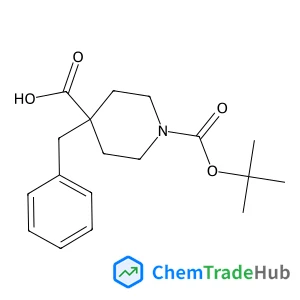
4-Benzyl-1-(tert-butoxycarbonyl)piperidine-4-carboxylic acid
CAS Number:
170838-87-6
Molecular Formula:
C18H25NO4


Recommended Suppliers







Disclaimer
This page provides academic journal information for reference and research purposes only. We are not affiliated with any journal publishers and do not handle publication submissions. For publication-related inquiries, please contact the respective journal publishers directly.
If you notice any inaccuracies in the information displayed, please contact us at support@chemtradehub.com. We will promptly review and address your concerns.