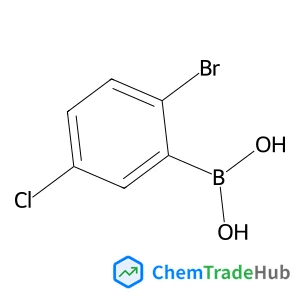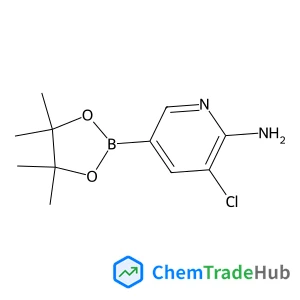
3-Chloro-5-(4,4,5,5-tetramethyl-1,3,2-dioxaborolan-2-yl)-2-pyridinamine
CAS Number:
1032758-99-8
Molecular Formula:
C11H16BClN2O2
Wouter De Soete, Jo Dewulf, Philippe Cappuyns, Geert Van der Vorst, Bert Heirman, Wim Aelterman, Kris Schoeters, Herman Van Langenhove
Identifying better performing Active Pharmaceutical Ingredient (API) synthesis routes with reference to green chemistry and green engineering principles was of the highest importance in the pharmaceutical industry during the past decade. However, very little attention was paid to other life cycle stages such as the Drug Product (DP) production, packaging and distribution. In this case, the environmental sustainability of batch versus continuous granulation based tablet manufacturing is quantified from a resource point of view by conducting Exergy Analysis (EA) and Exergetic Life Cycle Analysis (ELCA) at three different levels in order to identify and locate resource losses throughout the pharmaceutical supply chain. Assessing the potential implementation of the continuous production line ConsiGma™ at the Janssen-Cilag SpA pharmaceutical manufacturing plant and thereby replacing the conventional batch manufacturing mode would result in a resource consumption reduction of 10.2% (65.6 to 58.9 kJex per tablet), 15.2% (111 to 94.0 kJex per tablet) and 2.2% (2.3 to 2.2 MJex per tablet) at the process (α), plant (β) and overall industrial level (γ) respectively. Focusing on DP production processes by excluding transiting exergy in API, excipients and packaging materials resulted in a reduction of 34.0%, 25.9% and 14.7% at the respective system boundaries. The API dose seemed to be the parameter with highest sensitivity towards environmental burden. From an emission point of view, a Carbon Footprint (CF) reduction of 2.0% (0.22 to 0.21 kg CO2-eq per tablet) was obtained at the γ level in shifting from batch to continuous manufacturing of Tramacet®. Focusing on DP production revealed a CF reduction of 16.2%.

Bioorganic & Medicinal Chemistry Letters

Colloid Journal

Biocatalysis and Biotransformation

Journal of Asian Natural Products Research

Critical Reviews in Solid State and Materials Sciences

Heteroatom Chemistry

Atomization and Sprays

Herald of the Russian Academy of Sciences

Electroanalysis

Journal of the Indian Institute of Science
Emer Duffy, Sinéad Currivan, Andres Ruland, Rouhollah Jalili, Attila J. Mozer, Peter C. Innis, Gordon G. Wallace
DOI: 10.1039/C5AN02534F
DOI: 10.1039/C9AN01078E
Baljit Singh, Evangelia Flampouri, Eithne Dempsey
DOI: 10.1039/C9AN00982E
Magdalena Matczuk, Joanna Legat, Andrei R. Timerbaev, Maciej Jarosz
DOI: 10.1039/C6AN00276E
Yanli Zhou, Huijie Huangfu, Jie Yang, Hui Dong, Lantao liu, Maotian Xu
DOI: 10.1039/C9AN01600G
Jiaxin Fu, Yongxin Chang, Bai Li, Huihui Mei, Li Yang
DOI: 10.1039/C9AN01295H
Yuya Nagai, Woon Yong Sohn
DOI: 10.1039/C9AN01416K
This compound is mainly used as an intermediate in the synthesis of antipsychoti...
Waste containing 1-(D-Ribofuranosyl)-1,4-dihydro-3-pyridinecarboxamide (CAS: 191...
2-Methyl-2-propanyl 3-bromo-3-(hydroxymethyl)-1-azetidinecarboxylate (CAS: 20079...
N-(4-Chloro-2-pyridinyl)acetamide (CAS: 245056-66-0) is a chemical compound with...
5-Chloro-2-hydroxybenzoic acid, also known as 5-chlorosalicylic acid, is an arom...
When handling 1,1-Dichloro-1-fluoroethane (CAS: 1717-00-6), it is important to u...
Fmoc-(2S,3R)-3-phenylpyrrolidine-2-carboxylic acid is a white crystalline solid ...
4-Amino-5-bromo-2-pyridinecarboxylic acid is primarily used as a precursor in th...
Handling this compound should be done with personal protective equipment (PPE) i...
When handling 8-bromo-2,2-dimethyl-3,4-dihydro-2H-1,4-benzoxazin-3-one, use prop...

Green Chemistry provides a unique forum for the publication of innovative research on the development of alternative green and sustainable technologies. The scope of Green Chemistry is based on, but not limited to, the definition proposed by Anastas and Warner (Green Chemistry: Theory and Practice, P T Anastas and J C Warner, Oxford University Press, Oxford, 1998). Green chemistry is the utilisation of a set of principles that reduces or eliminates the use or generation of hazardous substances in the design, manufacture and application of chemical products. Green Chemistry is at the frontiers of this continuously-evolving interdisciplinary science and publishes research that attempts to reduce the environmental impact of the chemical enterprise by developing a technology base that is inherently non-toxic to living things and the environment. Submissions on all aspects of research relating to the endeavour are welcome. The journal publishes original and significant cutting-edge research that is likely to be of wide general appeal. To be published, work must present a significant advance in green chemistry. Papers must contain a comparison with existing methods and demonstrate advantages over those methods before publication can be considered. For more information please see this Editorial. Coverage includes the following, but is not limited to: Design (e.g. biomimicry, design for degradation/recycling/reduced toxicity…) Reagents & Feedstocks (e.g. renewables, CO2, solvents, auxiliary agents, waste utilization…) Synthesis (e.g. organic, inorganic, synthetic biology…) Catalysis (e.g. homogeneous, heterogeneous, enzyme, whole cell…) Process (e.g. process design, intensification, separations, recycling, efficiency…) Energy (e.g. renewable energy, fuels, photovoltaics, fuel cells, energy storage, energy carriers…) Applications (e.g. electronics, dyes, consumer products, coatings, pharmaceuticals, preservatives, building materials, chemicals for industry/agriculture/mining…) Impact (e.g. safety, metrics, LCA, sustainability, (eco)toxicology…) Green chemistry is, by definition, a continuously-evolving frontier. Therefore, the inclusion of a particular material or technology does not, of itself, guarantee that a paper is suitable for the journal. To be suitable, the novel advance should have the potential for reduced environmental impact relative to the state of the art. Green Chemistry does not normally deal with research associated with 'end-of-pipe' or remediation issues.