











![1-[3-(4-Morpholinylsulfonyl)phenyl]methanamine structure](https://static.chemtradehub.com/structs/933/933989-32-3-51af.webp "1-[3-(4-Morpholinylsulfonyl)phenyl]methanamine structure")
Kinetics of the ClO + HO2 reaction over the temperature range T = 210–298 K
Literature Information
Publication Date
2016-02-02
DOI
10.1039/C5CP07329D
Impact Factor
3.676
Authors
Michael K. M. Ward, David M. Rowley
View Original
Abstract
The rate coefficient for the atmospherically important radical reaction: ClO + HO2 → Productswhich leads to ozone depletion, has been studied over the temperature range T = 210–298 K and at ambient pressure p = 760 ± 20 Torr. The reaction was studied using laser flash photolysis radical generation coupled with broadband charge coupled device absorption spectroscopy employing a two-dimensional charge-coupled-device (CCD) detection system. ClO radicals were generated following the photolysis of Cl2 and Cl2O gas mixtures diluted in nitrogen and oxygen. ClO radicals were monitored using broadband fingerprinting of their characteristic vibronic (A2Π ← X2Π) spectral structure, representing a definitive monitoring of this radical. Addition of hydroperoxy radical precursors to the gas mixture (methanol and oxygen) subsequently led to a competition for photolytically generated Cl atoms and a simultaneous prompt formation of both ClO and HO2 radicals. Detailed analysis and modelling of the radical production routes provided a degree of constraint into numerical integration simulations which were then used to interrogate and fit to ClO temporal profiles to extract the rate coefficient k1. The ambient temperature (T = 298 K) rate coefficient reported is k1 = (8.5 ± 1.5) × 10−12 cm3 molecule−1 s−1. The rate coefficient, k1, is described by the Arrhenius expression:where errors are 1σ statistical only. This significant rate coefficient is greater than previously reported, with a stronger negative temperature dependence than previously observed. Consequently this suggests that the contribution of reaction (1) to ozone loss, in particular at mid-latitudes might be currently underestimated in models. This work reports atmospheric pressure kinetic parameters for this reaction which are greater than those reported from low pressure studies, perhaps supporting ClO and HO2 association as predicted by previous theoretical studies of this process and highlighting the need for further pressure dependent experimental studies of the title reaction, which has been demonstrated here to be effective as an ozone loss process over a wide temperature range.
Related Literature
Photocatalytic selective oxidation of the terminal methyl group of dodecane with molecular oxygen over atomically dispersed Ti in a mesoporous SiO2 matrix
Jae Yul Kim, Ji-Wook Jang, Duck Hyun Youn, Eun Sun Kim, Sun Hee Choi, Tae Joo Shin, Jae Sung Lee
2013-09-12
Paper
DOI: 10.1039/C3GC41343H
Self-floating ability and initiating gradient photopolymerization of acrylamide aqueous solution of a water-soluble polysiloxane benzophenone photoinitiator
Jiansheng Wang, Jiye Cheng, Jiancheng Liu, Yanjing Gao
2013-06-24
Paper
DOI: 10.1039/C3GC40704G
Aerobic oxidative coupling of alcohols and amines over Au–Pd/resin in water: Au/Pd molar ratios switch the reaction pathways to amides or imines
Wentao Wang, Aiqin Wang, Yitao Cui, Xiaofeng Yang, Yanqiang Huang, Xiaoyan Liu, Wengang Liu, Jin-Young Son, Hiroshi Oji, Tao Zhang
2013-08-06
Communication
DOI: 10.1039/C3GC41117F
Tandem ionic liquid antimicrobial toxicity and asymmetric catalysis study: carbonyl-ene reactions with trifluoropyruvate
Rohitkumar G. Gore, Thi-Kim-Thu Truong, Milan Pour, Lauren Myles, Stephen J. Connon, Nicholas Gathergood
2013-08-13
Paper
DOI: 10.1039/C3GC40875B
Self-healable polymer networks based on the cross-linking of epoxidised soybean oil by an aqueous citric acid solution
Facundo I. Altuna, Valeria Pettarin, Roberto J. J. Williams
2013-09-09
Paper
DOI: 10.1039/C3GC41384E
Polymer anchored Cu(ii) complex: an efficient and recyclable catalytic system for the one-pot synthesis of 1,4-disubstituted 1,2,3-triazoles starting from anilines in water
Susmita Roy, Tanmay Chatterjee, Sk. Manirul Islam
2013-07-12
Paper
DOI: 10.1039/C3GC41114A
Ru-based magnetic nanoparticles (MNP) for succinic acid synthesis from levulinic acid
Iunia Podolean, Victor Kuncser, Nicoleta Gheorghe, Dan Macovei, Vasile I. Parvulescu, Simona M. Coman
2013-08-14
Paper
DOI: 10.1039/C3GC41120F
How safe are protic ionic liquids? Explosion of pyrrolidinium nitrate
Ben Thijs, Koen Binnemans
2013-10-04
Letter
DOI: 10.1039/C3GC41328D
A continuous ionic liquid extraction process for the separation of cobalt from nickel
Remi Goovaerts, Claudia Möller, Jan Luyten, Ben Thijs, Koen Binnemans
2013-09-10
Communication
DOI: 10.1039/C3GC41519H
You might also like
Compound Q&A
What are the main uses of 1-(3-Aminophenyl)-3-[(3R)-1-(3,3-dimethyl-2-oxobutyl)-2-oxo-5-(2-pyridinyl)-2,3-dihydro-1H-1,4-benzodiazepin-3-yl]urea (CAS: 155412-88-7)?
This compound is mainly used as an intermediate in the synthesis of antipsychoti...
155412-88-71-(3-Aminophenyl)-3-...
Compound Q&A
How should waste containing 1-(D-Ribofuranosyl)-1,4-dihydro-3-pyridinecarboxamide (CAS: 19132-12-8) be handled?
Waste containing 1-(D-Ribofuranosyl)-1,4-dihydro-3-pyridinecarboxamide (CAS: 191...
19132-12-81-(D-Ribofuranosyl)-...
Compound Q&A
What regulatory guidelines apply to 2-Methyl-2-propanyl 3-bromo-3-(hydroxymethyl)-1-azetidinecarboxylate (CAS: 2007919-81-3)?
2-Methyl-2-propanyl 3-bromo-3-(hydroxymethyl)-1-azetidinecarboxylate (CAS: 20079...
2007919-81-32-Methyl-2-propanyl ...
Compound Q&A
What is N-(4-Chloro-2-pyridinyl)acetamide (CAS: 245056-66-0)?
N-(4-Chloro-2-pyridinyl)acetamide (CAS: 245056-66-0) is a chemical compound with...
245056-66-0N-(4-Chloro-2-pyridi...
Compound Q&A
What is 5-Chloro-2-hydroxybenzoic acid (CAS: 321-14-2)?
5-Chloro-2-hydroxybenzoic acid, also known as 5-chlorosalicylic acid, is an arom...
321-14-25-Chloro-2-hydroxybe...
Compound Q&A
What precautions should be taken when handling 1,1-Dichloro-1-fluoroethane (CAS: 1717-00-6)?
When handling 1,1-Dichloro-1-fluoroethane (CAS: 1717-00-6), it is important to u...
1717-00-61,1-Dichloro-1-fluor...
Compound Q&A
What are the physical and chemical properties of Fmoc-(2S,3R)-3-phenylpyrrolidine-2-carboxylic acid (CAS: 281655-32-1)?
Fmoc-(2S,3R)-3-phenylpyrrolidine-2-carboxylic acid is a white crystalline solid ...
281655-32-1Fmoc-(2S,3R)-3-pheny...
Compound Q&A
What are the main uses of 4-Amino-5-bromo-2-pyridinecarboxylic acid (CAS: 1363381-01-4)?
4-Amino-5-bromo-2-pyridinecarboxylic acid is primarily used as a precursor in th...
1363381-01-44-Amino-5-bromo-2-py...
Compound Q&A
What precautions should be taken when handling (S)-tert-butyl 2-((2-(4-bromophenyl)-2-oxoethyl)carbamoyl)pyrrolidine-1-carboxylate (CAS: 1007881-98-2)?
Handling this compound should be done with personal protective equipment (PPE) i...
1007881-98-2(S)-tert-butyl 2-((2...
Compound Q&A
What precautions should be taken when handling 8-bromo-2,2-dimethyl-3,4-dihydro-2H-1,4-benzoxazin-3-one (CAS: 688363-73-7)?
When handling 8-bromo-2,2-dimethyl-3,4-dihydro-2H-1,4-benzoxazin-3-one, use prop...
688363-73-78-bromo-2,2-dimethyl...
Source Journal
Physical Chemistry Chemical Physics

CiteScore:
5.5
Self-citation Rate:
10.3%
Articles per Year:
3036
Physical Chemistry Chemical Physics (PCCP) is an international journal co-owned by 19 physical chemistry and physics societies from around the world. This journal publishes original, cutting-edge research in physical chemistry, chemical physics and biophysical chemistry. To be suitable for publication in PCCP, articles must include significant innovation and/or insight into physical chemistry; this is the most important criterion that reviewers and Editors will judge against when evaluating submissions. The journal has a broad scope and welcomes contributions spanning experiment, theory, computation and data science. Topical coverage includes spectroscopy, dynamics, kinetics, statistical mechanics, thermodynamics, electrochemistry, catalysis, surface science, quantum mechanics, quantum computing and machine learning. Interdisciplinary research areas such as polymers and soft matter, materials, nanoscience, energy, surfaces/interfaces, and biophysical chemistry are welcomed if they demonstrate significant innovation and/or insight into physical chemistry. Joined experimental/theoretical studies are particularly appreciated when complementary and based on up-to-date approaches.
Recommended Compounds
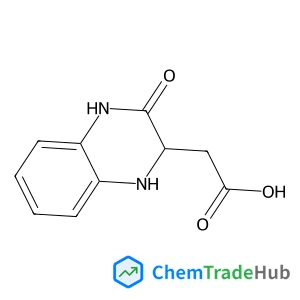
(3-Oxo-1,2,3,4-tetrahydro-2-quinoxalinyl)acetic acid
CAS Number:
136584-14-0
Molecular Formula:
C10H10N2O3
Recommended Suppliers







Disclaimer
This page provides academic journal information for reference and research purposes only. We are not affiliated with any journal publishers and do not handle publication submissions. For publication-related inquiries, please contact the respective journal publishers directly.
If you notice any inaccuracies in the information displayed, please contact us at support@chemtradehub.com. We will promptly review and address your concerns.