












Self-floating ability and initiating gradient photopolymerization of acrylamide aqueous solution of a water-soluble polysiloxane benzophenone photoinitiator
Literature Information
Publication Date
2013-06-24
DOI
10.1039/C3GC40704G
Impact Factor
10.182
Authors
Jiansheng Wang, Jiye Cheng, Jiancheng Liu, Yanjing Gao
View Original
Abstract
Three water-soluble polysiloxane benzophenone photoinitiators (W-Si-HBP2-A/B/C) with various silicon content used for preparing a gradient polymer were synthesized based on the traditional photoinitiator 4-hydroxybenzophenone (HBP) and aminopolysiloxane. The structures were confirmed by proton nuclear magnetic resonance (1H NMR), and gel permeation chromatography (GPC). The water solubility of the photoinitiators, the effect of the silicon content on their triplet state lifetimes and photopolymerization property and the self-floating ability in the water system, and the internal connection between the surface morphology and property of the gradient polymer and film initiated by the photoinitiators were investigated. All three photoinitiators showed relatively good solubility in water, and longer triplet lifetimes and a smaller rate constant than HBP. It is found that the photoinitiator with the highest silicon content had the best floating capability due to lower surface tension and energy of polysiloxane. By using this photoinitiator, the gradient polymer with a significant molecular weight gradient was obtained. In addition, the polysiloxane-based photoinitiators can decrease the dispersion surface energy of the gradient polymer, and the increase of photoinitiator content can change the microstructure of the gradient polymer film. The new green method for preparing gradient polymeric material by using the polymerization technology and the water-soluble polysiloxane-based photoinitiators may have potential applications in the green chemical industry.
Related Literature
18F-Labeled brain-penetrant EGFR tyrosine kinase inhibitors for PET imaging of glioblastoma
Jonathan E. Tsang, David A. Nathanson
2023-11-09
Edge Article
DOI: 10.1039/D3SC04424F
An orbitally adapted push–pull template for N2 activation and reduction to diazene-diide
David Specklin, Marie-Christine Boegli, Anaïs Coffinet, Léon Escomel, Laure Vendier, Mary Grellier, Antoine Simonneau
2023-11-21
Edge Article
DOI: 10.1039/D3SC04390H
Matrix stiffness-dependent microglia activation in response to inflammatory cues: in situ investigation by scanning electrochemical microscopy
Jian Zhuang, Hua Zhang
2023-11-28
Edge Article
DOI: 10.1039/D3SC03504B
From non-conductive MOF to proton-conducting metal-HOFs: a new class of reversible transformations induced by solvent-free mechanochemistry
Marcin Oszajca, Dariusz Matoga
2023-11-27
Edge Article
DOI: 10.1039/D3SC04401G
Highly dispersed Pd-based pseudo-single atoms in zeolites for hydrogen generation and pollutant disposal
Kai Zhang, Ning Wang, Yali Meng, Tianjun Zhang, Pu Zhao, Jihong Yu
2023-11-30
Edge Article
DOI: 10.1039/D3SC05851D
O–H bond activation of β,γ-unsaturated oximes via hydrogen atom transfer (HAT) and photoredox dual catalysis
Chen Zhu, Xiangyu Chen, Huifeng Yue, Tengfei Ji, Yiqiao Ma, Yuanyuan Cao, Rajesh Kancherla, Magnus Rueping
2023-11-30
Edge Article
DOI: 10.1039/D3SC04410F
Recent advances in the utilization of covalent organic frameworks (COFs) as electrode materials for supercapacitors
Shen Xu, Jinghang Wu, Xiang Wang
2023-11-07
Review Article
DOI: 10.1039/D3SC04571D
Solution-state mechanochromic luminescence of Pt(ii)-complexes displayed within micellar aromatic capsules
Yoshihisa Hashimoto, Yuri Katagiri, Yuya Tanaka, Michito Yoshizawa
2023-11-21
Edge Article
DOI: 10.1039/D3SC04613C
Computationally guided bioengineering of the active site, substrate access pathway, and water channels of thermostable cytochrome P450, CYP175A1, for catalyzing the alkane hydroxylation reaction
Mohd Taher, Kshatresh Dutta Dubey, Shyamalava Mazumdar
2023-12-04
Edge Article
DOI: 10.1039/D3SC02857G
You might also like
Compound Q&A
What precautions should be taken when handling 4-(2-Furylmethyl)thiomorpholine 1,1-dioxide (CAS: 79206-94-3)?
When handling 4-(2-Furylmethyl)thiomorpholine 1,1-dioxide (CAS: 79206-94-3), it ...
79206-94-34-(2-Furylmethyl)thi...
Compound Q&A
What precautions should be taken when handling 4-Chloro-N-[2-(4-morpholinyl)ethyl]benzamide (CAS: 71320-77-9)?
When handling 4-Chloro-N-[2-(4-morpholinyl)ethyl]benzamide (CAS: 71320-77-9), it...
71320-77-94-Chloro-N-[2-(4-mor...
Compound Q&A
How should waste containing 2-[2-(2-Methoxyethoxy)ethoxy]ethyl 4-methylbenzenesulfonate (CAS: 62921-74-8) be handled?
Waste containing this compound (CAS: 62921-74-8) should be handled according to ...
62921-74-82-[2-(2-Methoxyethox...
Compound Q&A
How should waste containing (S)-Methyl 2-amino-3-cyclohexylpropanoate be handled?
Waste containing (S)-Methyl 2-amino-3-cyclohexylpropanoate should be collected i...
40056-18-6(S)-Methyl 2-amino-3...
Compound Q&A
How is 5-({4-[(2S,4R)-4-Hydroxy-2-methyltetrahydro-2H-pyran-4-yl]-2-thienyl}sulfanyl)-1-methyl-1,3-dihydro-2H-indol-2-one (CAS: 166882-70-8) typically synthesized?
This compound can be synthesized using a multi-step process involving the conjug...
166882-70-85-({4-[(2S,4R)-4-Hyd...
Compound Q&A
Are there alternatives to (2E)-3-(3,4-Dichlorophenyl)acrylic acid (CAS: 7312-27-8) in synthesis?
There are several alternatives to (2E)-3-(3,4-Dichlorophenyl)acrylic acid in syn...
7312-27-8(2E)-3-(3,4-Dichloro...
Compound Q&A
How should Ethyl 6-(2-nitrophenyl)imidazo[2,1-b][1,3]thiazole-3-carboxylate (CAS: 925437-84-9) be stored?
Ethyl 6-(2-nitrophenyl)imidazo[2,1-b][1,3]thiazole-3-carboxylate (CAS: 925437-84...
925437-84-9Ethyl 6-(2-nitrophen...
Compound Q&A
How should waste containing 2-(1,3-Thiazol-2-yl)ethanamine (CAS: 18453-07-1) be handled?
Waste containing 2-(1,3-Thiazol-2-yl)ethanamine (CAS: 18453-07-1) should be coll...
18453-07-12-(1,3-Thiazol-2-yl)...
Compound Q&A
How is Methyl 5-iodo-2-methylbenzoate (CAS: 103440-54-6) typically synthesized?
Methyl 5-iodo-2-methylbenzoate can be synthesized through the iodination of meth...
103440-54-6Methyl 5-iodo-2-meth...
Compound Q&A
How is 5-Chloro[1,2,4]triazolo[1,5-a]pyridine (CAS: 1427399-34-5) typically synthesized?
5-Chloro[1,2,4]triazolo[1,5-a]pyridine is commonly synthesized via the condensat...
1427399-34-55-Chloro[1,2,4]triaz...
Source Journal
Green Chemistry

CiteScore:
16.1
Self-citation Rate:
7.5%
Articles per Year:
944
Green Chemistry provides a unique forum for the publication of innovative research on the development of alternative green and sustainable technologies. The scope of Green Chemistry is based on, but not limited to, the definition proposed by Anastas and Warner (Green Chemistry: Theory and Practice, P T Anastas and J C Warner, Oxford University Press, Oxford, 1998). Green chemistry is the utilisation of a set of principles that reduces or eliminates the use or generation of hazardous substances in the design, manufacture and application of chemical products. Green Chemistry is at the frontiers of this continuously-evolving interdisciplinary science and publishes research that attempts to reduce the environmental impact of the chemical enterprise by developing a technology base that is inherently non-toxic to living things and the environment. Submissions on all aspects of research relating to the endeavour are welcome. The journal publishes original and significant cutting-edge research that is likely to be of wide general appeal. To be published, work must present a significant advance in green chemistry. Papers must contain a comparison with existing methods and demonstrate advantages over those methods before publication can be considered. For more information please see this Editorial. Coverage includes the following, but is not limited to: Design (e.g. biomimicry, design for degradation/recycling/reduced toxicity…) Reagents & Feedstocks (e.g. renewables, CO2, solvents, auxiliary agents, waste utilization…) Synthesis (e.g. organic, inorganic, synthetic biology…) Catalysis (e.g. homogeneous, heterogeneous, enzyme, whole cell…) Process (e.g. process design, intensification, separations, recycling, efficiency…) Energy (e.g. renewable energy, fuels, photovoltaics, fuel cells, energy storage, energy carriers…) Applications (e.g. electronics, dyes, consumer products, coatings, pharmaceuticals, preservatives, building materials, chemicals for industry/agriculture/mining…) Impact (e.g. safety, metrics, LCA, sustainability, (eco)toxicology…) Green chemistry is, by definition, a continuously-evolving frontier. Therefore, the inclusion of a particular material or technology does not, of itself, guarantee that a paper is suitable for the journal. To be suitable, the novel advance should have the potential for reduced environmental impact relative to the state of the art. Green Chemistry does not normally deal with research associated with 'end-of-pipe' or remediation issues.
Recommended Compounds
![Methyl 4-({[(2-methyl-2-propanyl)oxy]carbonyl}amino)bicyclo[2.2.2]octane-1-carboxylate structure](https://static.chemtradehub.com/structs/943/943845-74-7-b7e5.webp "Methyl 4-({[(2-methyl-2-propanyl)oxy]carbonyl}amino)bicyclo[2.2.2]octane-1-carboxylate structure")
Methyl 4-({[(2-methyl-2-propanyl)oxy]carbonyl}amino)bicyclo[2.2.2]octane-1-carboxylate
CAS Number:
943845-74-7
Molecular Formula:
C15H25NO4
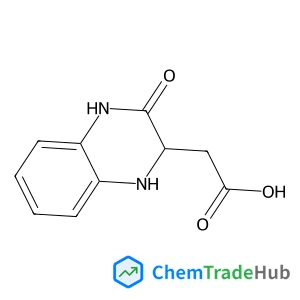
(3-Oxo-1,2,3,4-tetrahydro-2-quinoxalinyl)acetic acid
CAS Number:
136584-14-0
Molecular Formula:
C10H10N2O3
Recommended Suppliers







Disclaimer
This page provides academic journal information for reference and research purposes only. We are not affiliated with any journal publishers and do not handle publication submissions. For publication-related inquiries, please contact the respective journal publishers directly.
If you notice any inaccuracies in the information displayed, please contact us at support@chemtradehub.com. We will promptly review and address your concerns.