












Ru-based magnetic nanoparticles (MNP) for succinic acid synthesis from levulinic acid
Literature Information
Publication Date
2013-08-14
DOI
10.1039/C3GC41120F
Impact Factor
10.182
Authors
Iunia Podolean, Victor Kuncser, Nicoleta Gheorghe, Dan Macovei, Vasile I. Parvulescu, Simona M. Coman
View Original
Abstract
Ru(III)/functionalized silica-coated magnetic nanoparticles (Ru(III)-MNP) were proven to be a highly active, selective and easily recoverable catalyst for the oxidation of levulinic acid to succinic acid under green conditions.
Related Literature
Predicting efficacies of anticancer drugs using single cell HaloChip assay
Yong Qiao, Jincui An
2016-02-29
Paper
DOI: 10.1039/C5AN02564H
Improvement of the gas cluster ion beam-(GCIB)-based molecular secondary ion mass spectroscopy (SIMS) depth profile with O2+ cosputtering
Hua-Yang Liao, Kang-Yi Lin, Hsun-Yun Chang, Ding-Yuan Kuo, Yun-Wen You
2016-03-08
Paper
DOI: 10.1039/C5AN02677F
Dual-emissive fluorescence measurements of hydroxyl radicals using a coumarin-activated silica nanohybrid probe
Lei Yang, Yajun Zhang, Lijun Wu
2016-02-23
Paper
DOI: 10.1039/C5AN02261D
Electrochemical enzyme-linked immunosorbent assay (e-ELISA) for parasitic nematode Ostertagia ostertagi (brown stomach worm) infections in dairy cattle
Baljit Singh, Evangelia Flampouri, Eithne Dempsey
2019-08-15
Paper
DOI: 10.1039/C9AN00982E
2-(1-Pyrenyl) benzimidazole as a ratiometric and “turn-on” fluorescent probe for iron(iii) ions in aqueous solution
Meili Zhao, Zhifu Deng, Jian Tang, Xiufen Zhou, Zhi Chen, Xutian Li, Liting Yang
2016-02-10
Paper
DOI: 10.1039/C5AN02565F
A review on electronic bio-sensing approaches based on non-antibody recognition elements
Alagappan Palaniappan, Mark Platt
2016-03-09
Critical Review
DOI: 10.1039/C5AN02623G
Electrochemical detection of protein glycosylation using lectin and protein–gold affinity interactions
Laura G. Carrascosa, Abu A. I. Sina, Muhammad J. A. Shiddiky
2016-03-11
Communication
DOI: 10.1039/C6AN00528D
A sensitive and versatile method for characterization of protein-mediated transformations of quantum dots
Magdalena Matczuk, Joanna Legat, Andrei R. Timerbaev, Maciej Jarosz
2016-03-15
Paper
DOI: 10.1039/C6AN00276E
An antifouling interface integrated with HRP-based amplification to achieve a highly sensitive electrochemical aptasensor for lysozyme detection
Zimeng Liu, Haiyan Wang
2019-08-13
Paper
DOI: 10.1039/C9AN01430F
Fullerenes in asphaltenes and other carbonaceous materials: natural constituents or laser artifacts
Vanessa G. Santos, Marcos A. Pudenzi, Clécio F. Klitzke, Heliara L. Nascimento, Rosana C. L. Pereira, Wagner L. Bastos, Marcos N. Eberlin
2016-01-07
Paper
DOI: 10.1039/C5AN02333E
You might also like
Compound Q&A
What precautions should be taken when handling 4-(2-Furylmethyl)thiomorpholine 1,1-dioxide (CAS: 79206-94-3)?
When handling 4-(2-Furylmethyl)thiomorpholine 1,1-dioxide (CAS: 79206-94-3), it ...
79206-94-34-(2-Furylmethyl)thi...
Compound Q&A
What precautions should be taken when handling 4-Chloro-N-[2-(4-morpholinyl)ethyl]benzamide (CAS: 71320-77-9)?
When handling 4-Chloro-N-[2-(4-morpholinyl)ethyl]benzamide (CAS: 71320-77-9), it...
71320-77-94-Chloro-N-[2-(4-mor...
Compound Q&A
How should waste containing 2-[2-(2-Methoxyethoxy)ethoxy]ethyl 4-methylbenzenesulfonate (CAS: 62921-74-8) be handled?
Waste containing this compound (CAS: 62921-74-8) should be handled according to ...
62921-74-82-[2-(2-Methoxyethox...
Compound Q&A
How should waste containing (S)-Methyl 2-amino-3-cyclohexylpropanoate be handled?
Waste containing (S)-Methyl 2-amino-3-cyclohexylpropanoate should be collected i...
40056-18-6(S)-Methyl 2-amino-3...
Compound Q&A
How is 5-({4-[(2S,4R)-4-Hydroxy-2-methyltetrahydro-2H-pyran-4-yl]-2-thienyl}sulfanyl)-1-methyl-1,3-dihydro-2H-indol-2-one (CAS: 166882-70-8) typically synthesized?
This compound can be synthesized using a multi-step process involving the conjug...
166882-70-85-({4-[(2S,4R)-4-Hyd...
Compound Q&A
Are there alternatives to (2E)-3-(3,4-Dichlorophenyl)acrylic acid (CAS: 7312-27-8) in synthesis?
There are several alternatives to (2E)-3-(3,4-Dichlorophenyl)acrylic acid in syn...
7312-27-8(2E)-3-(3,4-Dichloro...
Compound Q&A
How should Ethyl 6-(2-nitrophenyl)imidazo[2,1-b][1,3]thiazole-3-carboxylate (CAS: 925437-84-9) be stored?
Ethyl 6-(2-nitrophenyl)imidazo[2,1-b][1,3]thiazole-3-carboxylate (CAS: 925437-84...
925437-84-9Ethyl 6-(2-nitrophen...
Compound Q&A
How should waste containing 2-(1,3-Thiazol-2-yl)ethanamine (CAS: 18453-07-1) be handled?
Waste containing 2-(1,3-Thiazol-2-yl)ethanamine (CAS: 18453-07-1) should be coll...
18453-07-12-(1,3-Thiazol-2-yl)...
Compound Q&A
How is Methyl 5-iodo-2-methylbenzoate (CAS: 103440-54-6) typically synthesized?
Methyl 5-iodo-2-methylbenzoate can be synthesized through the iodination of meth...
103440-54-6Methyl 5-iodo-2-meth...
Compound Q&A
How is 5-Chloro[1,2,4]triazolo[1,5-a]pyridine (CAS: 1427399-34-5) typically synthesized?
5-Chloro[1,2,4]triazolo[1,5-a]pyridine is commonly synthesized via the condensat...
1427399-34-55-Chloro[1,2,4]triaz...
Source Journal
Green Chemistry

CiteScore:
16.1
Self-citation Rate:
7.5%
Articles per Year:
944
Green Chemistry provides a unique forum for the publication of innovative research on the development of alternative green and sustainable technologies. The scope of Green Chemistry is based on, but not limited to, the definition proposed by Anastas and Warner (Green Chemistry: Theory and Practice, P T Anastas and J C Warner, Oxford University Press, Oxford, 1998). Green chemistry is the utilisation of a set of principles that reduces or eliminates the use or generation of hazardous substances in the design, manufacture and application of chemical products. Green Chemistry is at the frontiers of this continuously-evolving interdisciplinary science and publishes research that attempts to reduce the environmental impact of the chemical enterprise by developing a technology base that is inherently non-toxic to living things and the environment. Submissions on all aspects of research relating to the endeavour are welcome. The journal publishes original and significant cutting-edge research that is likely to be of wide general appeal. To be published, work must present a significant advance in green chemistry. Papers must contain a comparison with existing methods and demonstrate advantages over those methods before publication can be considered. For more information please see this Editorial. Coverage includes the following, but is not limited to: Design (e.g. biomimicry, design for degradation/recycling/reduced toxicity…) Reagents & Feedstocks (e.g. renewables, CO2, solvents, auxiliary agents, waste utilization…) Synthesis (e.g. organic, inorganic, synthetic biology…) Catalysis (e.g. homogeneous, heterogeneous, enzyme, whole cell…) Process (e.g. process design, intensification, separations, recycling, efficiency…) Energy (e.g. renewable energy, fuels, photovoltaics, fuel cells, energy storage, energy carriers…) Applications (e.g. electronics, dyes, consumer products, coatings, pharmaceuticals, preservatives, building materials, chemicals for industry/agriculture/mining…) Impact (e.g. safety, metrics, LCA, sustainability, (eco)toxicology…) Green chemistry is, by definition, a continuously-evolving frontier. Therefore, the inclusion of a particular material or technology does not, of itself, guarantee that a paper is suitable for the journal. To be suitable, the novel advance should have the potential for reduced environmental impact relative to the state of the art. Green Chemistry does not normally deal with research associated with 'end-of-pipe' or remediation issues.
Recommended Compounds
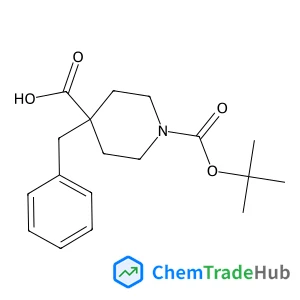
4-Benzyl-1-(tert-butoxycarbonyl)piperidine-4-carboxylic acid
CAS Number:
170838-87-6
Molecular Formula:
C18H25NO4
![1-[3-(4-Morpholinylsulfonyl)phenyl]methanamine structure](https://static.chemtradehub.com/structs/933/933989-32-3-51af.webp "1-[3-(4-Morpholinylsulfonyl)phenyl]methanamine structure")
Recommended Suppliers





Disclaimer
This page provides academic journal information for reference and research purposes only. We are not affiliated with any journal publishers and do not handle publication submissions. For publication-related inquiries, please contact the respective journal publishers directly.
If you notice any inaccuracies in the information displayed, please contact us at support@chemtradehub.com. We will promptly review and address your concerns.