![2,6-Bis({(2R)-2-[hydroxy(diphenyl)methyl]-1-pyrrolidinyl}methyl)-4-methylphenol structure](https://static.chemtradehub.com/structs/877/877395-58-9-70bf.webp "2,6-Bis({(2R)-2-[hydroxy(diphenyl)methyl]-1-pyrrolidinyl}methyl)-4-methylphenol structure")
2,6-Bis({(2R)-2-[hydroxy(diphenyl)methyl]-1-pyrrolidinyl}methyl)-4-methylphenol
CAS Number:
877395-58-9
Molecular Formula:
C43H46N2O3
Wentao Wang, Aiqin Wang, Yitao Cui, Xiaofeng Yang, Yanqiang Huang, Xiaoyan Liu, Wengang Liu, Jin-Young Son, Hiroshi Oji, Tao Zhang
A facile switch of the reaction pathways of aerobic oxidative coupling of alcohols and amines from amidation to imination was realized for the first time by tuning the Au/Pd ratios in ion-exchange resin supported Au–Pd alloy catalysts (Au–Pd/resin). Amides were obtained with high yields on Au6Pd/resin while imines were obtained over AuPd4/resin. Various alcohols and amines underwent oxidative coupling smoothly in water to afford the desired products with good to excellent yields. Further investigation on the reaction mechanism suggested the synergistic effect between Au and Pd determined the adsorption strength of the aldehyde intermediate, which in turn dictated the reaction pathways. That is, on Au-rich alloys (e.g., Au6Pd) absorbed aldehyde species was formed, followed by further oxidation to yield amides, while on Pd-rich alloys (e.g., AuPd4), free aldehyde was generated, which then underwent condensation with amines to produce imines. The discovery might provide avenues to develop new efficient catalysts for the green synthesis of special chemicals.
Taeseok Oh, Jae-Young Choi
DOI: 10.1039/C5AN02516H
Datong Wu, Fei Pan, Gao-Chao Fan, Ziming Zhu, Li Gao, Yongxin Tao, Yong Kong
DOI: 10.1039/C9AN01692A
Jin-wu Yan, Xiao-lin Wang, Qi-feng Tan, Pei-fen Yao, Jia-heng Tan, Lei Zhang
DOI: 10.1039/C6AN00204H
Takahiro Kanamori, Takashi Funatsu, Makoto Tsunoda
DOI: 10.1039/C5AN02617B
Thomas P. Forbes, Jeffrey Lawrence, Jennifer R. Verkouteren, R. Michael Verkouteren
DOI: 10.1039/C9AN01771B
Seung Jun Oh, Tae Seok Seo
DOI: 10.1039/C9AN00900K
Jingjing Xu, Jingying Zhai, Yanmei Xu, Jingwei Zhu, Yu Qin, Dechen Jiang
DOI: 10.1039/C6AN00262E
Jun Yu, Jingyan Lin, Ying Liu
DOI: 10.1039/C9AN00777F
Ting-Hang Liu, Shu-Shen Cheng, Huey-Ling You, Mel S. Lee
DOI: 10.1039/C9AN90087J
This compound is mainly used as an intermediate in the synthesis of antipsychoti...
Waste containing 1-(D-Ribofuranosyl)-1,4-dihydro-3-pyridinecarboxamide (CAS: 191...
2-Methyl-2-propanyl 3-bromo-3-(hydroxymethyl)-1-azetidinecarboxylate (CAS: 20079...
N-(4-Chloro-2-pyridinyl)acetamide (CAS: 245056-66-0) is a chemical compound with...
5-Chloro-2-hydroxybenzoic acid, also known as 5-chlorosalicylic acid, is an arom...
When handling 1,1-Dichloro-1-fluoroethane (CAS: 1717-00-6), it is important to u...
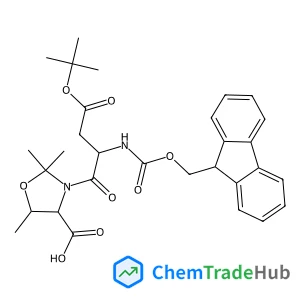
Fmoc-(2S,3R)-3-phenylpyrrolidine-2-carboxylic acid is a white crystalline solid ...
4-Amino-5-bromo-2-pyridinecarboxylic acid is primarily used as a precursor in th...
Handling this compound should be done with personal protective equipment (PPE) i...
When handling 8-bromo-2,2-dimethyl-3,4-dihydro-2H-1,4-benzoxazin-3-one, use prop...

Green Chemistry provides a unique forum for the publication of innovative research on the development of alternative green and sustainable technologies. The scope of Green Chemistry is based on, but not limited to, the definition proposed by Anastas and Warner (Green Chemistry: Theory and Practice, P T Anastas and J C Warner, Oxford University Press, Oxford, 1998). Green chemistry is the utilisation of a set of principles that reduces or eliminates the use or generation of hazardous substances in the design, manufacture and application of chemical products. Green Chemistry is at the frontiers of this continuously-evolving interdisciplinary science and publishes research that attempts to reduce the environmental impact of the chemical enterprise by developing a technology base that is inherently non-toxic to living things and the environment. Submissions on all aspects of research relating to the endeavour are welcome. The journal publishes original and significant cutting-edge research that is likely to be of wide general appeal. To be published, work must present a significant advance in green chemistry. Papers must contain a comparison with existing methods and demonstrate advantages over those methods before publication can be considered. For more information please see this Editorial. Coverage includes the following, but is not limited to: Design (e.g. biomimicry, design for degradation/recycling/reduced toxicity…) Reagents & Feedstocks (e.g. renewables, CO2, solvents, auxiliary agents, waste utilization…) Synthesis (e.g. organic, inorganic, synthetic biology…) Catalysis (e.g. homogeneous, heterogeneous, enzyme, whole cell…) Process (e.g. process design, intensification, separations, recycling, efficiency…) Energy (e.g. renewable energy, fuels, photovoltaics, fuel cells, energy storage, energy carriers…) Applications (e.g. electronics, dyes, consumer products, coatings, pharmaceuticals, preservatives, building materials, chemicals for industry/agriculture/mining…) Impact (e.g. safety, metrics, LCA, sustainability, (eco)toxicology…) Green chemistry is, by definition, a continuously-evolving frontier. Therefore, the inclusion of a particular material or technology does not, of itself, guarantee that a paper is suitable for the journal. To be suitable, the novel advance should have the potential for reduced environmental impact relative to the state of the art. Green Chemistry does not normally deal with research associated with 'end-of-pipe' or remediation issues.